Lama Farouk
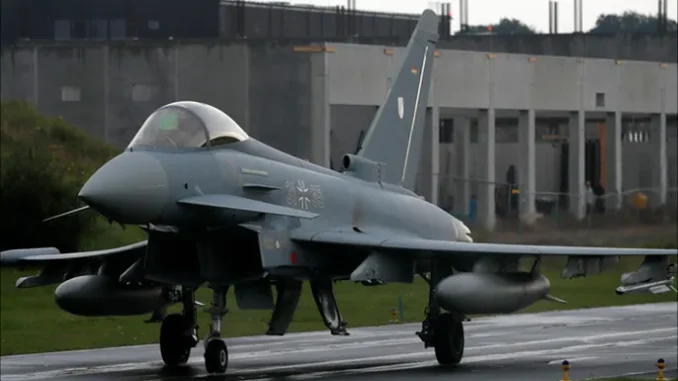
Amid intensifying competition for air superiority, the Eurofighter Typhoon remains one of Europe’s leading fighter aircraft, capable of carrying out a wide range of missions, from air superiority and air defense to air-to-ground strikes, supported by advanced sensing, electronic warfare, and long-range weapons systems.
The importance of the Typhoon is not limited to its current capabilities. Its operators continue to invest in upgrading its radars, electronic warfare systems, and weapons, allowing the aircraft to maintain its combat capabilities and keep pace with the changing requirements of modern air warfare.
For Turkey, these capabilities come at a particularly sensitive time. The Turkish Air Force relies primarily on its F-16 fleet, while the national KAAN fighter program remains in the development and testing phase and will need years before it becomes a major component of the country’s air power.
Between an existing fleet whose capabilities Ankara needs to maintain and a national fighter it is counting on for the future, the Typhoon is entering Turkey’s calculations as a platform capable of helping bridge part of the gap and strengthening its air capabilities during this transition period.
September 7: Moving to Flight Training
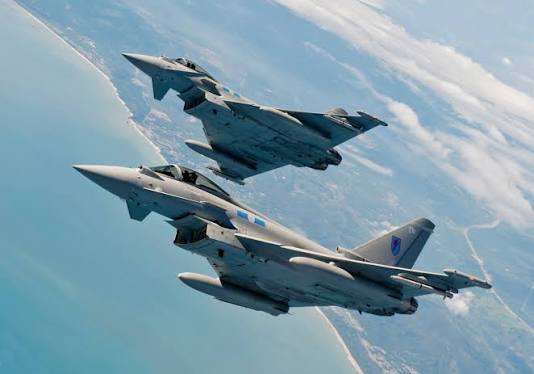
Turkey will enter a new phase of its Typhoon program on September 7, when Turkish pilots begin flight training in the United Kingdom.
The Turkish Ministry of National Defence announced that pilot training had already begun in August 2026, and that pilots who completed terminology training would begin flight training on September 7.
According to the ministry, flight training will last eight months, followed by three months of instructor-pilot training. Additional groups of pilots will be sent to training programs in successive batches.
This means that September 7 does not mark the date when the Typhoon will enter service in Turkey. Rather, it marks the transition to the practical phase of pilot preparation and the beginning of building the personnel needed to operate the fighter and eventually train additional pilots on it.
The £8 Billion Deal: What Is Turkey Buying?
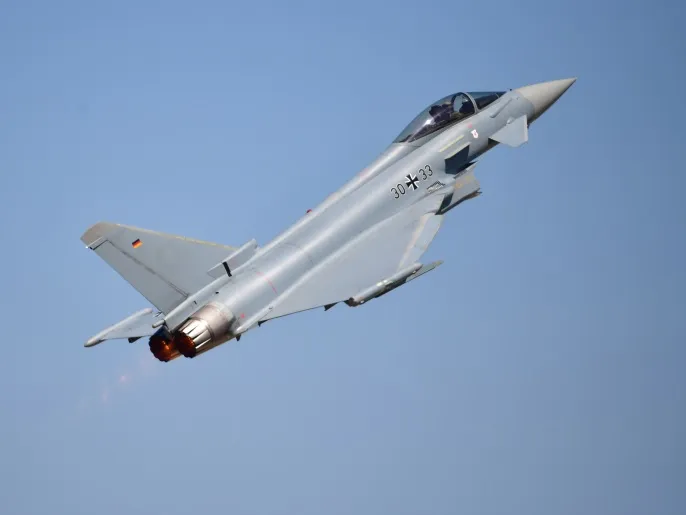
On October 27, 2025, Turkey and the United Kingdom signed an agreement for the purchase of 20 new Eurofighter Typhoon fighters.
According to Reuters, British Prime Minister Keir Starmer put the value of the deal at around £8 billion, or approximately $10.7 billion. The agreement strengthens defense cooperation between the two countries and provides Ankara with advanced European fighters to enhance its air power.
British company BAE Systems is playing a key role in the program, including the manufacture of major sections of the aircraft’s structure, final assembly, and the integration of weapons at its facilities in the United Kingdom.
It is worth noting that different figures have been given for the value of the agreement. The British side put the value of the deal at around £8 billion, while Turkey’s Ministry of National Defence said that the agreement, including the aircraft, equipment, and ammunition, was worth £5.4 billion. The difference reflects the way the overall value of the agreement and its various components are calculated.
Turkey is expected to begin receiving the new fighters from 2030, which partly explains why pilot training is beginning years before the aircraft arrive.
Meteor and Brimstone: The Deal Goes Beyond the Aircraft
The importance of the agreement is not limited to the fighters themselves; it also includes an advanced weapons package.
In a report dated October 29, 2025, Reuters reported that the weapons package includes Meteor long-range air-to-air missiles, as well as advanced short-range air-to-air missiles and Brimstone missiles designed for ground attack, citing a source familiar with the details of the deal.
This weapons package is particularly important for Ankara. The Meteor provides an advanced capability for long-range air-to-air engagements, while Brimstone adds a precision capability against ground targets.
The deal, therefore, is not simply about adding a new fighter to the fleet. It involves the introduction of an integrated combat capability that includes the aircraft, weapons, training, and support.
Why Is Turkey Starting Training Now?
Starting pilot training years before the arrival of the new fighters may appear early, but it is in fact an important part of building operational capability.
The first new fighters are not expected to arrive in Turkey before 2030, giving Ankara time to prepare pilots, technical personnel, and the infrastructure needed to receive the aircraft.
In March 2026, Turkey and the United Kingdom signed a new agreement covering training and support under the Typhoon program, including training for pilots and technical personnel and the provision of the necessary support elements.
Ankara is therefore not waiting for the aircraft to arrive before beginning to build experience on the platform. Instead, it is preparing the human and technical elements in parallel with the delivery process.
The 24 Used Fighters: Bridging the Gap Before 2030
Alongside the purchase of 20 new fighters from Britain, Turkey has also moved to acquire used Typhoon aircraft from other countries.
Reuters reported on October 30, 2025, that Turkey was still in talks with Qatar and Oman to acquire 24 used Typhoon fighters, in an effort to strengthen its air capabilities before the arrival of the new aircraft.
Reuters did not specify the distribution of the 24 aircraft between the two countries in that report. The Turkish Ministry of National Defence later stated, during a press briefing in December 2025, that the plan was based on obtaining 12 aircraft from Qatar and 12 from Oman.
This distinction between the two tracks is important: the 20 new fighters are part of the agreement signed with Britain, while the 24 used aircraft represent a separate track that Turkey was negotiating with Qatar and Oman.
If these arrangements are completed, the used aircraft could play an important transitional role by providing additional capability before deliveries of the new fighters begin in 2030.
Typhoon, F-16 and KAAN: Three Layers of Turkish Air Power
The Typhoon does not appear in Turkey’s calculations as a direct replacement for either the F-16 or the KAAN program. Rather, it is part of a broader approach to managing the transition in Turkish air power.
The F-16 remains the backbone of the Turkish Air Force, and Ankara needs to maintain its readiness and combat capabilities in the coming years.
At the same time, KAAN represents Turkey’s ambition to develop an advanced national fighter. However, the program remains in the development and testing phase, meaning that it will take time before it reaches large-scale production and operational deployment.
The Typhoon, meanwhile, offers Turkey a ready and capable platform that can be introduced during this phase, operating alongside the F-16 and providing additional capability until the KAAN program matures.
From this perspective, the deal can be seen as part of a gradual rebalancing of Turkish air power, rather than simply another fighter procurement.
What Does the Typhoon Add to the Turkish Air Force?
One of the main capabilities the Typhoon adds is the combination of advanced air-combat capabilities, range, weapons-carrying capacity, and the ability to perform multiple missions from a single platform.
But the importance of the Typhoon for Turkey does not lie in the aircraft alone. Acquiring new fighters also means establishing a system of training, weapons, support, and maintenance — elements that directly affect the operational value of any fighter aircraft.
The integration of weapons such as Meteor into the package will give Turkish pilots an advanced capability for long-range air-to-air engagements, while Brimstone provides a precision option for engaging ground targets.
The real value of the program, therefore, extends beyond the number of aircraft to include the development of an integrated operational capability around the fighter.
Conclusion: A Temporary Bridge or a Reshaping of Turkish Air Power?
It appears that Ankara does not view the Typhoon as a standalone solution for the future of its air force, but rather as one of the elements linking the present to the future.
The F-16 remains the foundation of Turkey’s current air power, while KAAN represents its ambition for the future. The Typhoon, meanwhile, provides an advanced capability that can help bridge part of the gap during the years separating the two.
But the key question remains: Will the Typhoon remain merely a temporary bridge until KAAN enters large-scale production and service, or will it become a long-term component of the Turkish Air Force?
The answer will depend on the pace of the KAAN program, the size of the Typhoon fleet Ankara ultimately manages to build, and its ability to integrate these different platforms into a unified air-power structure.
Regardless, the start of practical pilot training on September 7 represents more than just a training milestone. It signals that Turkey has begun building the human and operational capabilities needed to receive a new European fighter, at a time when it is reshaping the structure of its air power for the years ahead.


Be the first to comment