The rapid proliferation of low-cost unmanned aerial systems (UAS) has transformed the security environment for critical infrastructure worldwide. Capabilities once associated primarily with military actors are now increasingly accessible, creating new challenges for the operators of power facilities, ports, telecommunications networks, transportation hubs, and industrial sites. While significant attention has been given to detection and interception technologies, experience from recent conflicts has highlighted a second requirement: infrastructure must remain operational even when active defenses are challenged. Resilience today depends not only on stopping threats, but also on protecting the people, systems, and assets that are essential to maintaining operations.
This is where the work of the Technology Innovation Institute’s Advanced Materials Research Center (AMRC) is making a tangible impact. Drawing on years of research in advanced protective materials and survivability technologies, AMRC has developed a family of protection solutions designed to enhance the resilience of critical infrastructure against fragmentation and drone-related threats. Originally developed to address demanding defense requirements, these solutions are now being adapted to support national infrastructure operators facing an increasingly complex risk landscape.
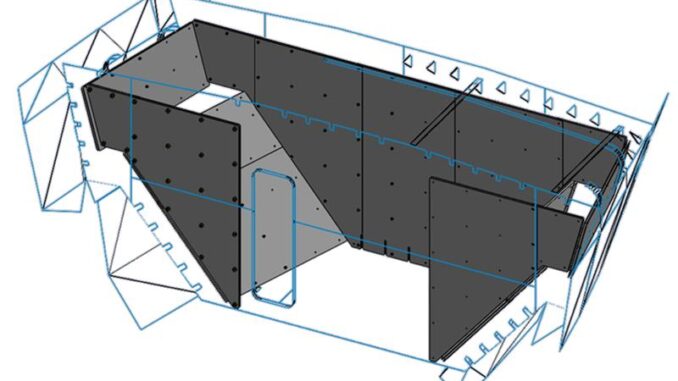
One of AMRC’s key developments is a modular anti-fragmentation shelter that provides rapid, deployable protection for personnel operating in critical facilities. Unlike traditional hardened structures, the system can be installed within existing operational environments with minimal disruption, creating protected spaces for essential personnel responsible for maintaining services during periods of elevated threat. The importance of such protection extends beyond physical safety. In modern infrastructure, operational continuity often depends on a small group of highly specialized personnel working from control rooms, command centers, or operational hubs. Preserving these capabilities during an incident can significantly reduce disruption and accelerate recovery.
AMRC has also developed the MITRAS infrastructure protection concept, a scalable approach designed specifically to address emerging drone threats against critical assets. Rather than focusing on a single protective measure, the concept integrates multiple layers of protection intended to reduce vulnerability and improve survivability across a wide range of infrastructure environments.
What distinguishes these developments is their practicality. Critical infrastructure operators rarely have the option of shutting down facilities for extensive construction or long installation programs. Protection measures must therefore be deployable within existing sites, adaptable to diverse operational requirements, and cost-effective enough to support wider adoption across infrastructure portfolios.
Beyond infrastructure protection, AMRC has extended its survivability research into personal protective equipment through the development of an anti-fragmentation body armor solution for critical personnel. While protective shelters secure key operational spaces, individual protection remains essential for operators who must move throughout a facility, conduct inspections, or respond to incidents during periods of heightened threat. By combining infrastructure hardening with wearable protection, AMRC’s solutions contribute to a comprehensive resilience framework focused on safeguarding the people who sustain mission-critical operations.
Across the Gulf region and beyond, many critical assets are concentrated in strategically important locations that support economic activity, national services, and public well-being. As the threat landscape evolves, enhancing infrastructure resilience will require a combination of active defenses and passive protection measures working together as part of a broader security strategy.
Through initiatives such as MITRAS and its modular anti-fragmentation protection technologies, AMRC is helping bridge the gap between advanced defense research and real-world infrastructure resilience. The objective is simple but increasingly important: ensuring that critical facilities can continue operating, and the people who run them can continue performing their mission, even in the face of emerging threats.


Be the first to comment