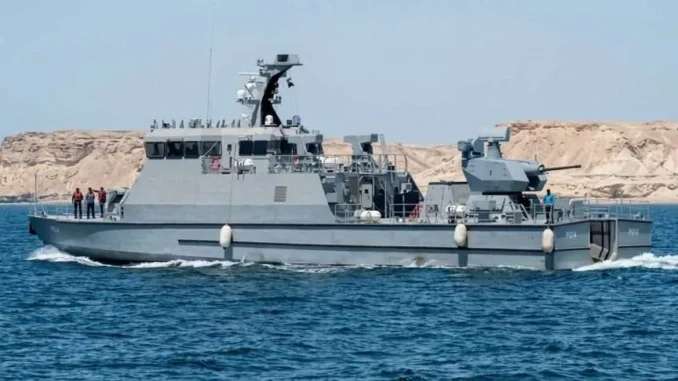
The United Arab Emirates’ FA-400 fast patrol vessel has appeared in a new weapons configuration featuring the Turkish close-in defense system GÖKDENİZ (GÖKDENİZ 100/35StA), alongside what appeared to be two launchers for 70mm guided LOGIR rockets, in the latest public appearance of the platform developed by Abu Dhabi Ship Building (ADSB), a subsidiary of the UAE’s EDGE Group.
On September 3, 2026, EDGE released a video of the vessel underway, showing the GÖKDENİZ system mounted on the aft section of its deck alongside other weapons fittings. According to images and video of the boat, two launchers believed to be dedicated to LOGIR missiles were also visible.
This configuration differs from the fit-out the FA-400 displayed at NAVDEX 2025, when the vessel was shown equipped with a remotely operated weapon station produced by Dynateq, alongside a single LOGIR missile launcher.
A Multi-Mission Emirati Vessel
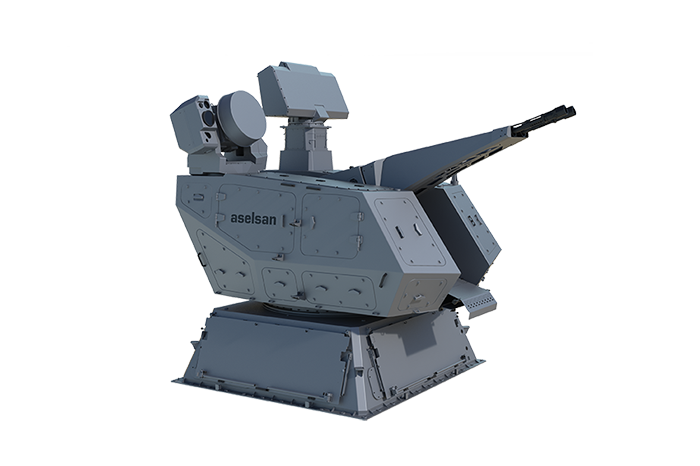
The FA-400 measures approximately 45 meters in length. It is a fast patrol boat developed by Abu Dhabi Ship Building and designed and built entirely in the United Arab Emirates. The company positions it for a range of coastal and maritime missions, including surveillance, patrol, tactical support, and search and rescue, alongside the ability to be fitted with different combat and sensor systems depending on mission requirements.
The vessel’s design allows for the integration of a range of combat and electronic systems, including main guns, remotely operated weapon stations, anti-ship missiles, electronic warfare systems, surveillance radars, as well as electro-optical, combat management, and communications systems.
In 2025, EDGE had announced the integration of systems from Spain’s Indra on the FA-400, including a 3D radar, electronic support systems, and communications and jamming equipment designed to counter unmanned aerial systems.
GÖKDENİZ: 35mm Close-In Defense Artillery
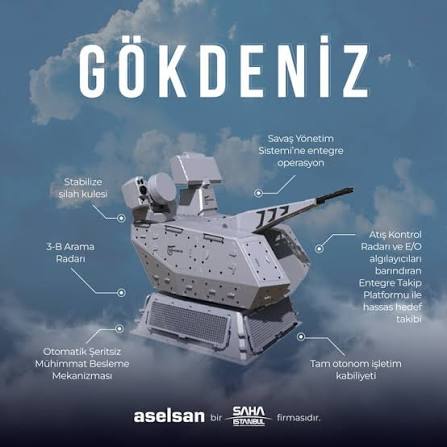
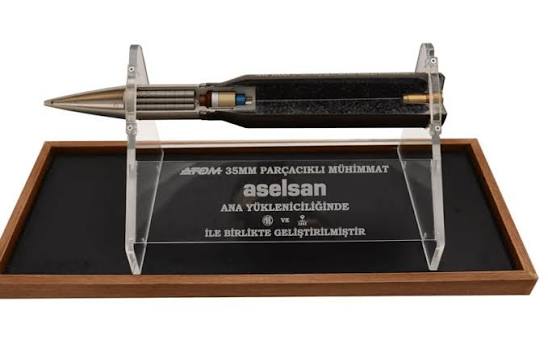
The appearance of GÖKDENİZ on the FA-400 represents a new addition to the vessel’s armament. The system, developed by Turkey’s ASELSAN, is a close-in air defense system built around twin 35mm guns and uses programmable airburst ATOM ammunition.
The system’s rate of fire reaches approximately 1,100 rounds per minute, while its effective range against aerial targets is around 4 kilometers, according to ASELSAN data. GÖKDENİZ is designed to counter a range of aerial threats, including low-flying anti-ship missiles and unmanned aerial vehicles.
Published images show the GÖKDENİZ unit on the vessel fitted with its own search radar, in a visual comparison suggesting a slight difference from the radar antenna seen on the vessel’s model at NAVDEX 2025, though no official confirmation has yet been given regarding the nature of this difference.
LOGIR: 70mm Guided Missiles
Alongside GÖKDENİZ, the vessel appeared fitted with what seemed to be two launchers for 70mm guided LOGIR missiles.
The LOGIR missile traces its origins to a joint US-South Korean program, launched by the US Office of Naval Research (ONR) in cooperation with South Korea’s LIG Nex1 under the designation Low-Cost Imaging Terminal Seeker (LCITS), before LIG Nex1 later took over full development of the complete Korean variant known domestically as “Bigung.” It is a guided missile that relies on an imaging infrared seeker, known by the abbreviation IIR, with a range of up to approximately 8 kilometers.

EDGE employs this munition within the LOGIR Naval Launcher System, developed by its subsidiary HALCON. HALCON offers the system primarily as part of surface warfare capabilities, particularly for countering fast boats and small maritime targets.
Accordingly, the appearance of LOGIR alongside GÖKDENİZ does not necessarily mean that the two missile systems constitute a confirmed second layer of air defense against drones; LOGIR’s stated role is focused primarily on engaging surface targets, while GÖKDENİZ handles close-in air defense duties.
A New Weapons Configuration
The FA-400’s appearance in this fit-out points to continued testing and integration of various combat systems on the Emirati platform. The vessel also displayed a new electro-optical system, alongside a remotely operated weapon station whose exact model could not be precisely identified, which differs from the Dynateq station seen on the boat during NAVDEX 2025.
No official information is yet available specifying how many FA-400 vessels will be fitted with this configuration, or whether the fit-out shown represents a test configuration or will become part of the vessel’s operational equipment.
The Emirati authorities have also not officially stated that this configuration is linked to any specific threat or theater of operations, making the appearance of these systems in this form evidence of testing a new weapons configuration for the platform rather than an announcement of a defined operational doctrine.


Be the first to comment