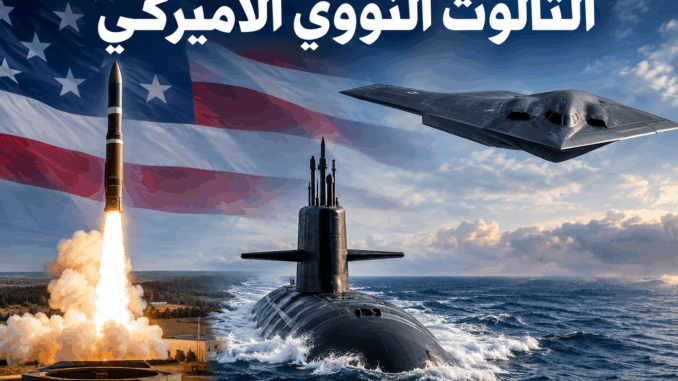
Exclusive:Defense Arabia
Strategic competition between the United States and China is no longer confined to aircraft carriers, long-range missiles, or technological superiority in traditional domains. It is increasingly extending into the nuclear domain, where Washington and Beijing are seeking to ensure a deterrent capability that can withstand advances in the other side’s capabilities.
Despite the significant disparity in the size of the two countries’ nuclear arsenals, the landscape is gradually changing. The United States possesses a larger and more established nuclear arsenal, underpinned by an integrated nuclear triad comprising intercontinental ballistic missiles, ballistic missile submarines, and strategic bombers. China, by contrast, is rapidly expanding its arsenal and developing its land-, sea-, and air-based components, moving toward more integrated nuclear capabilities across these three domains and bringing it closer to the nuclear triad model. The Stockholm International Peace Research Institute (SIPRI) estimated that the United States possessed approximately 5,177 nuclear warheads in total in January 2025, compared with approximately 600 for China. In its January 2026 estimates, China’s nuclear stockpile was projected to have increased to approximately 620 warheads, while the U.S. estimate stood at approximately 5,042 warheads.
This raises the central question: Does the United States’ current advantage in arsenal size and operational experience ensure the continuation of the deterrence gap, or could China’s rapid expansion and rebuilding of its nuclear force components reshape the strategic balance between the two powers in the coming years?
The U.S. Nuclear Triad: A Force Built on Diversity and Survivability
The United States relies on a strategic nuclear triad consisting of three main components: land-based intercontinental ballistic missiles (ICBMs), nuclear-powered ballistic missile submarines (SSBNs), and strategic bombers capable of carrying nuclear weapons. The U.S. Department of Defense considers these components complementary capabilities, as each offers distinct characteristics in terms of response speed, survivability, and flexibility. Combining them also provides a hedge against vulnerabilities or problems that could affect any single component.
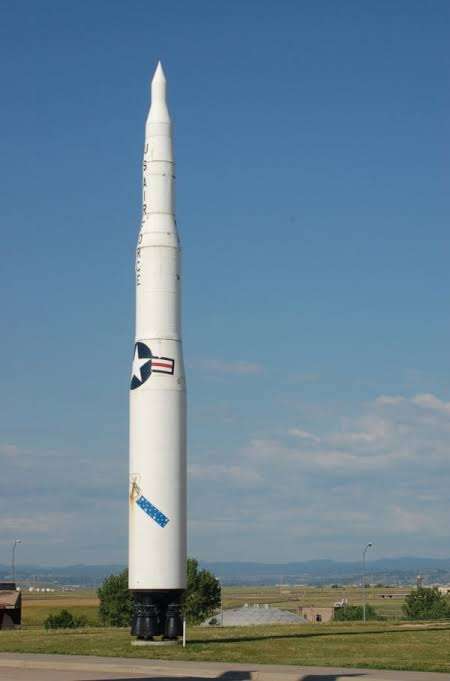
The land-based component forms an important foundation of this triad. The United States currently operates a force of 400 Minuteman III intercontinental ballistic missiles, distributed across three missile bases. These are awaiting gradual replacement by LGM-35A Sentinel missiles under the program to modernize the land-based component of the nuclear triad. The Minuteman III will remain in service during the transition to avoid a gap in deterrence capability.
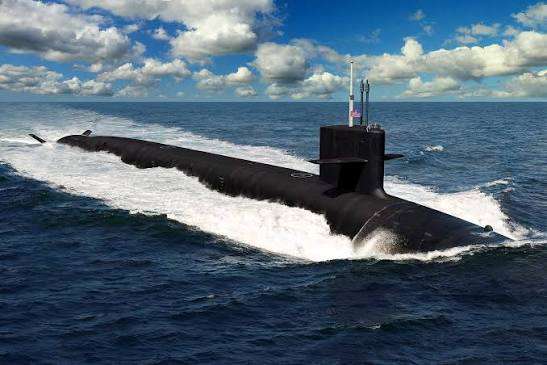
By contrast, the sea-based component offers a major advantage in survivability. Nuclear-powered ballistic missile submarines (SSBNs) can deploy across the oceans and operate in ways that make them difficult to detect and target, preserving the United States’ ability to deliver a second strike even if its nuclear forces come under a first strike. Washington considers this capability a fundamental element of credible nuclear deterrence.
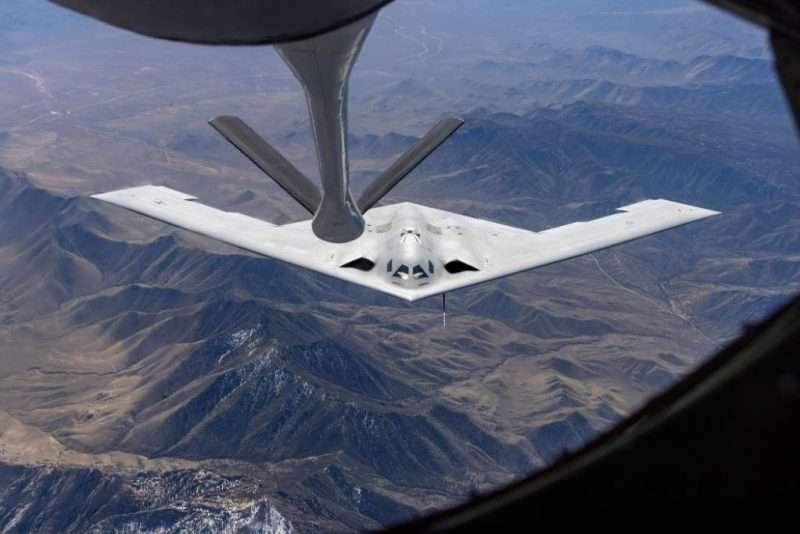
The air-based component provides the United States with additional deterrence flexibility and multiple operational options for responding to strategic threats. Washington is simultaneously modernizing this component through programs that include the B-21 Raider and upgrades to the B-52 fleet, alongside the development of long-range weapons such as the Long Range Standoff Weapon (LRSO), while also modernizing its nuclear command, control, and communications systems (NC3). These programs form part of broader efforts to maintain the effectiveness of the nuclear triad’s air component and strengthen its ability to operate in future threat environments.
Thus, U.S. superiority rests not only on the number of nuclear warheads, but also on the diversity of their delivery systems and their ability to survive, deploy, and retaliate from land, sea, and air.
China: Expanding Nuclear Power and Building Capabilities Across Three Domains
On the other side, China’s nuclear forces are undergoing rapid expansion and modernization. After decades in which its arsenal was far smaller than those of the United States and Russia, Beijing has entered a period of extensive expansion that includes increasing its stockpile of nuclear warheads, expanding and modernizing its intercontinental ballistic missile force, developing its sea-based nuclear component, and broadening air capabilities relevant to nuclear missions. These moves form part of a wider trajectory through which China seeks to strengthen its nuclear forces and develop more integrated land-, sea-, and air-based capabilities.
The Stockholm International Peace Research Institute (SIPRI) estimates that China possessed approximately 620 nuclear warheads in January 2026, compared with approximately 600 in January 2025. The institute indicates that China is expanding its arsenal faster than any other nuclear-armed state, while simultaneously enlarging its missile infrastructure. China has loaded hundreds of missiles into three large fields of intercontinental ballistic missile silos, while continuing work on additional silos in other areas.
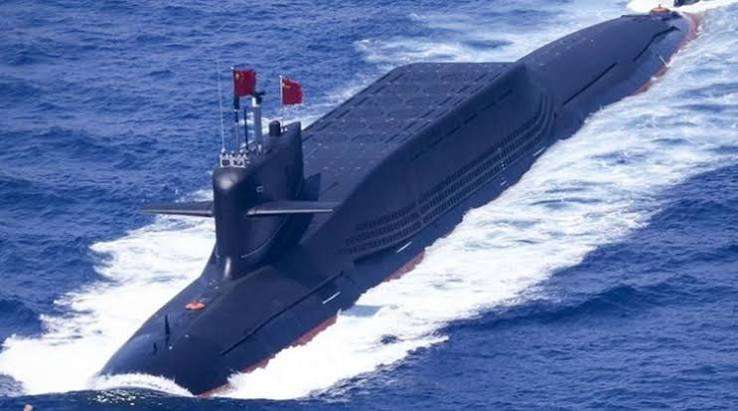
In the maritime domain, China continues to develop its sea-based nuclear component through its Type 094 (Jin-class SSBN) nuclear-powered ballistic missile submarines, which operate the JL-3 submarine-launched intercontinental ballistic missile. The introduction of the JL-3 into service represents an important development in China’s ability to conduct nuclear deterrence from the sea, as part of Beijing’s efforts to improve the survivability of its sea-based component and expand its strategic deterrence options.
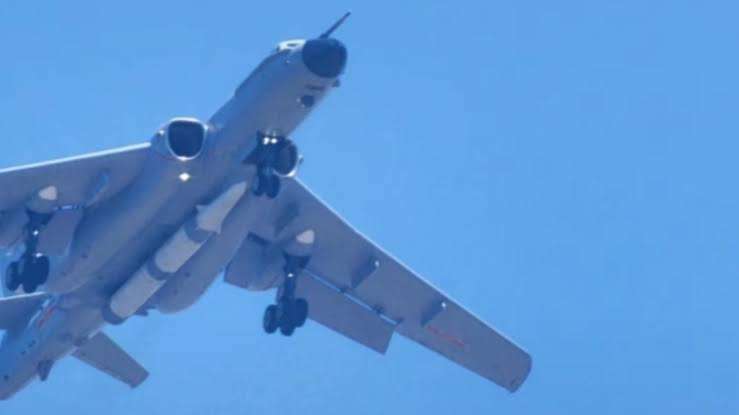
As for the air-based component, Beijing is working to develop the capabilities of its long-range bombers and strengthen their ability to conduct nuclear missions, including the integration of an air-launched ballistic missile with the H-6N bomber, a step that supports its efforts to build a more integrated nuclear force. In September 2025, China displayed land-, sea-, and air-based nuclear systems together in a single military parade for the first time, indicating the development of the air component within its nuclear force structure.
In testimony before the U.S. Senate Armed Services Committee on March 26, 2025, the then commander of U.S. Strategic Command, General Anthony Cotton, affirmed that China had acquired a nuclear triad, in the context of a discussion about the rapid expansion of its land-, air-, and sea-based capabilities. Senator Tom Cotton described this trajectory as a move toward a “fully operational nuclear triad.”
The Arms Race: Minuteman III Versus DF-41
One aspect of U.S.-Chinese competition becomes particularly clear when comparing two intercontinental ballistic missiles: the American Minuteman III and the Chinese DF-41.
The Minuteman III is one of the oldest components of the U.S. nuclear triad still in service. It entered service in 1970 but has undergone decades of life-extension and modernization programs covering rocket motors, guidance systems, and other components to preserve its readiness and reliability until it is gradually replaced by the Sentinel system. One of its strengths is its continued operation within an extensive infrastructure distributed across three missile bases, together with its integration into a secure and reliable command and communications network and a nuclear deterrence system that has been operating for decades. Its principal challenge is the aging missile and associated infrastructure, prompting the United States to implement a comprehensive program to rebuild and modernize the triad’s land-based component, covering missiles, silos, launch control centers, communications systems, and supporting infrastructure.
By contrast, the DF-41 is one of the most prominent intercontinental ballistic missiles in China’s nuclear arsenal and belongs to a newer generation of Chinese capabilities in this field. The missile uses solid fuel and can be deployed on mobile platforms. The U.S. Department of Defense has also indicated that China is considering additional deployment options, including silo-based launch. The development of the DF-41 is part of a broader expansion of China’s intercontinental ballistic missile force, alongside the construction of hundreds of silos and the expansion of the missile force’s infrastructure.
In September 2024, China conducted a test of an intercontinental ballistic missile carrying no nuclear warhead, launched from the Hainan area toward the Pacific Ocean. Chinese authorities did not officially announce the model used. However, open-source analyses suggested that it belonged to the DF-31 family, while Janes analysts identified the model as the DF-31AG. This identification should therefore be treated as an analytical assessment, not as officially confirmed information from China. According to published reports, the missile traveled across the ocean before falling into the predetermined area.
The development of the DF-41 does not mean that China has displaced the United States from its position in the nuclear balance of power. The comparison extends beyond missile characteristics to include arsenal size, operational experience, nuclear command, control and communications, and the ability of forces to survive a first strike. While China continues to expand and modernize its forces, the United States faces the challenge of renewing aging and costly systems simultaneously, making the pace of modernization and industrial sustainability essential factors in the competition.
Accordingly, comparing range, payload, or launch methods alone is insufficient to determine the effectiveness of deterrence. A missile operates within a broader system that includes early warning, reconnaissance, command and control, communications, and facility protection. Its true effectiveness is tested by its ability to maintain reliable communications, make decisions, and execute a retaliatory response after a nuclear attack. These factors determine the actual deterrent capability a missile system provides a country, rather than the missile’s specifications in isolation.
Maritime Deterrence: JL-3 Versus Trident II D5
While the DF-41 reflects China’s expansion of its land-based missile component, the JL-3 represents an important step in developing its sea-based component. It is a submarine-launched ballistic missile (SLBM), and China’s Type 094-class ballistic missile submarines are equipped to carry it alongside the JL-2. The JL-3 represents a significant advance over the previous generation, particularly in range. The U.S. Department of Defense estimates its range at approximately 5,400 nautical miles, compared with approximately 3,900 nautical miles for the JL-2. This gives Chinese submarines a greater ability to threaten parts of U.S. territory from areas closer to China’s coastal waters, enhancing China’s maritime deployment and deterrence options.
The United States, by contrast, relies on the Trident II D5, a submarine-launched strategic ballistic missile that entered service in 1990 and constitutes a major element of the sea-based component of the U.S. nuclear triad. The missile carries multiple independently targetable reentry vehicles (MIRVs) and is deployed aboard Ohio-class SSBNs, while the D5LE program continues to modernize system components and extend their operational service life. The next-generation D5LE2 is progressing through successive development, production, and testing phases. The plan calls for submarines to begin receiving fully operational payloads of the system in 2039.
The comparison between the JL-3 and Trident II D5 highlights differences in operational maturity, not merely disparities in range. China is working to strengthen its nuclear submarines’ ability to conduct sea-based deterrence, while the United States relies on a strategic maritime system with a long operational record and successive modernization programs. Nevertheless, publicly available information alone is insufficient for a comprehensive comparison of the two missiles’ reliability or readiness under wartime conditions, as important details concerning testing, operational performance, and actual deployment remain not fully available.
Where Is This Arms Race Heading?
In the foreseeable future, U.S.-Chinese nuclear competition does not appear likely to be limited to increasing the number of nuclear warheads. Instead, it is moving toward improving the accuracy of delivery systems, enhancing survivability, accelerating response times, and developing early-warning capabilities, space-based assets, and undersea capabilities. This means that assessing the balance of power now requires examining how these elements interact, rather than focusing solely on arsenal size.
The paradox is that nuclear deterrence is intended to prevent war by raising the cost of using nuclear weapons, yet arsenal modernization and the development of new technologies may make strategic calculations more complex. Artificial intelligence, space systems, and hypersonic weapons could affect how quickly an attack is detected, its nature assessed, and the time available to make a decision. This raises questions about the risks of miscalculation and escalation, particularly during crises in which the time available to verify information is shrinking.
SIPRI estimates published in June 2026 indicate that the nine nuclear-armed states continue to modernize their nuclear forces, amid rising risks associated with geopolitical tensions and the decline of arms-control frameworks. The institute also notes that the United States and Russia are continuing extensive modernization programs, while China’s arsenal is expanding faster than those of other nuclear-armed states. The expiration of the New START Treaty in February 2026 has placed the future of bilateral limits on U.S. and Russian strategic nuclear weapons in a state of increasing uncertainty.
In light of these developments, the strategic question is no longer limited to which country possesses the greater number of nuclear warheads. It also concerns how Washington and Beijing manage deterrence in an environment where nuclear missiles intersect with space, artificial intelligence, early warning, and maritime capabilities. The challenge lies in maintaining credible deterrence without increasing the likelihood of false alarms or hasty decisions during crises.
Ultimately, the most important shift in U.S.-Chinese nuclear competition is not simply the expansion of arsenals, but the development of systems capable of sustaining operations, responding effectively, and coordinating across different domains. The nature of the future balance will depend on each side’s ability to modernize its forces, maintain reliable command and control, and manage the risks of escalation. The measure of nuclear power, therefore, will not be arsenal size alone, but a country’s ability to make its deterrent credible without turning its new capabilities into additional sources of instability.


Be the first to comment