Center for Analysis of World Arms Trade[2]
Ahead of Competitors
Along with China and the USA, Russia is one of the top three global powers as a supplier and operator of armored vehicles. The sale of such products through military-technical cooperation (MTC) brings significant foreign currency revenues.
In the 21st century the most popular newly-built armored vehicles on the global market have been the family of main battle tanks (MBTs) produced by the Uralvagonzavod Concern (part of the Rostec State Corporation). In addition to direct deliveries (to Vietnam, Iraq, Algeria, Azerbaijan, etc.), licensed production of tanks was organized in certain countries: the T-72S MBT in Iran; the T-72, and later the more advanced T-90S “Bhishma,” in India.
The head of Rostec State Corporation, Sergey Chemezov, explains: “Today MTC is not limited to supplying finished products. We have a large portfolio of technological cooperation projects in different regions of the world. This includes production localization and joint developments” (quote from his interview with “Razvedchik” magazine, published on June 10, 2025).
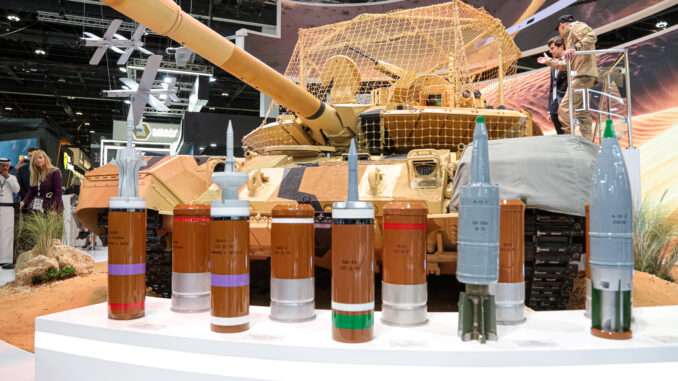
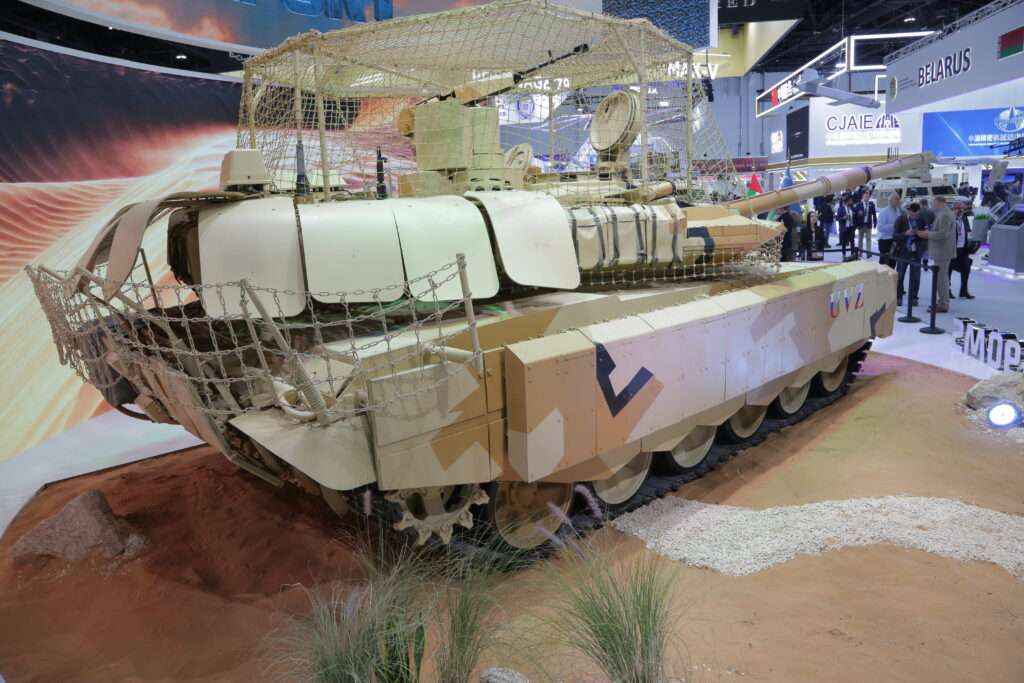
In light of the special military operation (SMO) in Ukraine, specialist interest in the products of the Russian defence-industrial complex remains high. For example, visitors to the IDEX-2025 exhibition were greatly impressed by the T-90MS tank with its upgraded protection against kamikaze attack drones, modern anti-tank systems and rocket-propelled grenade launchers. “The vehicle is maximally adapted to anti-tank threats, capable of repelling numerous attacks from new types of weapons,” – noted Sergey Chemezov. “It is so maintainable that tanks can return to service multiple times without losing their combat qualities”.
The export prospects of the T-90MS tank upset Russia’s adversaries. Using unfair competition tactics, the “collective West” is attempting to reduce the volume of Russia’s military-technical cooperation with foreign countries by imposing various economic sanctions against states that purchase Russian weapons.
However, this raises the question: who could act as an alternative supplier if a client were to hypothetically refuse further MTC with Russia in the field of armored vehicles?
Tank Production by NATO Countries
Based on realistic capabilities in the near future, only Germany among all the countries of the NATO military-political bloc could attempt to replace Russian MBTs on the global arms market. Other key members of the North Atlantic Alliance do not conduct large-scale production of such military products.
For instance, the USA ceased production of new MBTs thirty years ago. The production of the Abrams tank family for the Pentagon was carried out from 1980 to 1995. Since then, the state-owned LATP plant in Lima, Ohio, has only been engaged in overhauling and modernizing previously manufactured armored vehicles. New variants of upgraded Abrams tanks appear regularly, but the process is accompanied by a steady increase in weight while retaining the old 1500 hp Avco-Lycoming AGT-1500 engine. As a result, the power-to-weight ratio of new American tank modifications has decreased from 27.6 hp/t (for the original M1 model) to 22.45 hp/t for the M1A2 SEP V3.
The weight increase is explained by the need to enhance the tank’s protection against modern weapons. Cases of Abrams losses from enemy fire have been repeatedly noted in Iraq and Ukraine.
From Pentagon warehouses, 31 tanks were transferred to the armed forces of Ukraine; most of the Abrams have been lost, and at least five were captured by Russian troops as trophies.
“Overall, an interesting machine…”, but “there is nothing to take from it” [for subsequent implementation in domestic tanks], explained the head of Rostec, Sergey Chemezov.
The production of new heavy armored vehicles in the UK was halted back in 1990. From 1993 to 2002, previously manufactured Challenger 1 MBTs were converted into the Challenger 2 variant.
Due to additional armor, the weight of the modernized British tank increased from 62 to 75 tons (with additional protective modules) while using the same engine, reducing the power-to-weight ratio from 18.75 to 16 hp/t (although a short-term boost from 1200 to 1500 hp is available, increasing the ratio to 20 hp/t).
As part of military aid provided by the UK to the Zelensky regime, the armed forces of Ukraine (AFU) received up to 14 such vehicles. The first British tank was knocked out near Rabotino (Zaporozhye Region), after which the Ukrainian military ceased using British-made armored vehicles during the so-called “autumn counter-offensive” of 2023.
After some modifications the Challengers were used in the Kursk direction, where three of them were knocked out. Plans for additional deliveries were never realized due to negative feedback from Ukrainian tankers. They complained about the low speed of the British tanks (less than 60 km/h on highways), poor cross-country mobility, and insufficient protection against modern Russian anti-tank weapons.
Production of the Leclerc MBT in France ceased in 2007. These vehicles were exported only to the UAE and were used against armed formations of the “Ansar Allah” movement in Yemen. After a few skirmishes, the French-made tanks were hastily withdrawn from the combat zone.
The German Leopard
As of 2025, Germany is the only European manufacturer of new tanks. The base model Leopard 2, adopted in 1979, continues to be improved.
As improved variants appeared, they were supplied to the Bundeswehr and wealthy foreign clients, while older tanks from existing stock were sold off at residual value to developing countries. Old tanks constituted two-thirds of German export deliveries. Clients included Chile (172 units), Indonesia (103 units) and Singapore (about 100 units). Meanwhile, the only Asian buyer of the most advanced production model to date, the Leopard 2A7, was Qatar, with an order for 62 units.
Currently, the Leopard 2A7 is giving way in production to the more modern Leopard 2A8 variant. According to Bundeswehr plans, it will achieve full operational readiness by 2027.
The export prospects for new German tanks in developing world markets remain uncertain due to the heavy workload on the KNDS Deutschland (formerly Krauss-Maffei) production line with orders from the Bundeswehr and other NATO armies.
From a technical solutions standpoint, the Leopard 2A8 is an interesting vehicle, but it has yet to be tested in real combat conditions. And the marketers at KNDS Deutschland have to clean up the negative image of the Leopard as being highly vulnerable to enemy fire. This image arose from widely circulated internet photos of knocked-out German tanks of the A4 modification in Syria (from the Turkish army, which has over 350 of them), as well as A6 and other modifications in Ukraine.
In the spring of 2023, NATO countries transferred 54 Leopard 2A4 MBTs and several A6 modifications (armed with an upgraded Rheinmetall Rh-120 gun with a barrel length increased from 44 to 55 calibers) to the Zelensky regime.
The first of these was knocked out during the AFU’s autumn 2023 “counter-offensive” in the Zaporozhye direction by a shot from a Russian rocket-propelled grenade launcher.
Realizing the high vulnerability of the German armored vehicles, the AFU removed them from the front lines, preferring to use these tanks as mobile firing points instead.
Leopard deliveries continued: to date, the AFU has received 114 such tanks, including 74 A4 modifications and 21 A6 modifications. Of these, at least 24 have been destroyed, another 14 were abandoned by Ukrainian tankers, and some were captured by Russian forces as trophies.
In an interview with “Razvedchik” magazine, Sergey Chemezov said that “domestic specialists study all trophies” and “take what is useful for themselves.” “Sometimes we look and understand that the equipment is good, but completely inapplicable in our realities,” – he noted.
According to Chemezov, among all the Western equipment sent to Ukraine, the Leopard was “made to a high standard: modern components, fire control system, powerful engine, albeit with strange temperature limitations.” However, “we did not see any breakthrough design solutions,” – he explained. – “That is, there is nothing for us to take from the Leopard and apply to our own.”
Alternative Suppliers
According to a statement from the Turkish government, the development of the first national MBT, the “Altay,” is complete, production is being prepared, and deliveries of serial products are expected in the coming years. The capacities of the Turkish industry are limited, so in the foreseeable future, all products will go to the national army.
It should be noted that the “Altay” is not a completely new development but is based on the “Black Panther” tank. It has been produced since 2014 by the South Korean firm Hyundai Motors. With a weight of 55 tons and a 1500 hp engine, the K2 “Black Panther” has high mobility. Its main weapon is a 120 mm smoothbore gun. The power plant, armament, and onboard systems are copies of German and American originals, mastered by local industry.
Until recently, South Korea produced the “Black Panther” exclusively for its own needs. The first foreign order came just a couple of years ago from Poland for 180 machines. By March 2025, about 110 units have been exported, to the detriment of previously made plans for rearmament of the South Korean army (260 K2 units delivered, another 150 ordered). The future export prospects of the K2 “Black Panther” tank depend on the consent of the US and Germany to expand production under previously issued licenses.
Previously, Israel’s political and technological dependence on NATO countries did not allow it to realize its plans to export the “Merkava” tank, which has been produced for the IDF since 1979. In particular, a 2014 order from Singapore for fifty Mk. 4 variant MBTs has not yet been fulfilled (according to available data, the only type of tank in the arsenal of this island state remains the Leopard 2).
Although Western experts give the “Merkava” high marks for protection, there have been numerous cases of this type of IDF tank being hit by enemy fire. Accordingly, Israeli specialists introduced additional protection. As a result, the weight of the “Merkava” tank increased to 70 tons; to maintain mobility, the power of the engine was increased from 900 to 1500 hp (first American, then German diesels were installed). However, during the Second Lebanon War in 2006, dozens of Israeli armored vehicles were knocked out by Russian-made anti-tank missiles transferred to the Lebanese by the Syrian army.
The events of 2023-2025 in the Gaza Strip included cases of “Merkava” Mk. 4 modification tanks being hit by kamikaze drones and RPG-7 rocket launchers, resulting in crew fatalities.
Ambitions to create modern MBTs have been expressed by a number of other countries (Japan, India, etc.), but this has not progressed beyond the production of limited batches for their own armies; such products have not been exported.
Summarizing the above, the following conclusion can be drawn. By introducing one after another additional economic sanctions aimed at undermining Russia’s military-technical cooperation with foreign arms buyers, the “collective West” itself, even with its satellites, is unable to meet the needs of the developing world for new armored vehicles.
Moreover, most developing countries are not ready to buy Western military products, both for political reasons and because of excessive cost, as well as the mismatch of tactical and technical characteristics with the operating conditions in a specific theater of military operations.
The weak point of Western tanks is “problems with passability, which is why they cannot move normally off-road, through fields,” emphasizes Sergey Chemezov. “They get stuck in the black soil and, due to their huge size, become an easy target.”
After comparing them with captured Western models, Russian military specialists established that the T-90M “Proryv” has an advantage in firepower, armor and mobility. “It has a longer ‘reach’ due to its guided missile and all-round dynamic protection,” – explains Sergey Chemezov. “There have been cases where a vehicle was hit by dozens of Ukrainian drones but remained combat-effective.”
The NORINCO Model Range
In fact, the only alternative supplier of armored vehicles to the traditional markets for Russian military products is the Chinese holding company NORINCO. It has already fulfilled a number of orders from developing countries.
The state-owned multidisciplinary holding company NORINCO (China North Industries Group Corporation Limited) was formed in 1980. Among the tasks set for it was the creation of a completely new Chinese-made tank.
Practical work was carried out by the Inner Mongolia First Machinery Group factory based on a Soviet T-72 export model tank, which was brought from the Middle East. Due to a lack of necessary skills and technology, the Chinese were unable to copy it. Therefore, they decided to continue developing their own platform, incorporating some solutions from the Ural designers.
The 125 mm smoothbore gun, paired with an automatic loading system, attracted particular attention. Since 1997, PLA tanks Type 96 and Type 99 have been equipped with such a weapon, and to date, about five thousand of them have been produced. Of these, only a few units have been exported: in 2021, Tanzania received several VT-2 tanks, which are a simplified version of the Type 96A.
Independent experts consider the Type 96 and Type 99 to be quite modern MBTs, on par with foreign counterparts. However, when evaluating the vehicles that the Chinese industry supplies for export, the expert community is not so unanimous. In this case, we are talking about the MBT-2000 and MBT-3000 platforms, developed by NORINCO designers specifically for export.
To reduce the purchase cost, the MBT-2000 and MBT-3000 are simplified: the delivery package does not include systems that are standard on PLA equipment.
Thus, when analyzing the models offered by NORINCO to foreign customers, one should carefully assess their real combat qualities, setting aside the thoughtless transfer of the above-mentioned perception of the quality of PLA armored vehicles and the general level of development of the Chinese defence-industrial complex.
A Strange Presentation
The generally accepted practice for the first international showing of a newly developed armored vehicle model is to present a prototype to visitors and guests of a major exhibition specializing in land forces weaponry. The NORINCO holding company did otherwise, choosing the 2014 airshow in Zhuhai as the venue for the VT-4’s debut!
As is known, airshows are attended by a completely different set of experts than those who visit army weapons exhibitions. However, the few specialists in the field were more confused by something else. They were taken in by the advertising announcements of the Air China 2014 organizers that a new item would be exhibited in the NORINCO pavilion – a modern tank with outstanding tactical and technical characteristics, recently created by Chinese gunsmiths.
In fact, the VT-4 turned out not to be a completely new product at all, but some combination of solutions used on previously known MBT models. But here too, foreign specialists were disappointed. Instead of the expected export version of the Type 99B – the newest MBT in the PLA’s arsenal – the tank exhibited at the airshow actually incorporated more from the previous export model VT-1A and the outgoing Type 96B.
It also turned out that the VT-4 was the physical embodiment of the interactive model of the “promising MBT-3000 platform,” which was also demonstrated as a desktop model at the Chinese exposition during the Eurosatory 2012 arms exhibition (France).
In short, when analyzing the prospects of the MBT-3000 (VT-4), one should clearly understand that this is a purely export model, replacing the previous MBT-2000.
By the way, at the Airshow China 2024 in Zhuhai, the VT-4 broke down during a demonstration. The incident occurred while attempting to climb a hill, where the tank unexpectedly stalled and could not complete the maneuver, remaining motionless until the end of the presentation. The incident raised serious concerns about reliability of Chinese military equipment, especially among potential buyers and current operators of the VT-4, as noted by Indian media, in particular.
Licensed Production in Pakistan
It is known that the “MBT-2000 platform” was based on the Type 90-II tank developed for the PLA but not accepted by the customer. Despite NORINCO’s marketing efforts, deliveries were limited to two countries: in 2021, Bangladesh ordered 44 tanks for $162 million and Myanmar purchased another dozen.
The MBT-2000 platform was taken as the basis for the Pakistani “Al-Khalid” tank, with the Chinese engine replaced by Ukrainian 6TD-2 diesel and introduction of a number of Western-made components.
According to available data, Pakistan has 300 “Al-Khalid” tanks of the initial configuration and another 110 of an improved modification with an increased ammunition load. Saudi Arabia, Malaysia, Sri Lanka and Peru were interested in similar products, but after a comparative analysis, they refused to purchase them.
The main reason is the serious competition in the global armored vehicle market, where strong players such as Russia, the USA, and Germany are present with their products.
An attempt to improve the MBT-2000 led to creation of the VT-1A, which appealed to Morocco. The order was for 54 units, and deliveries have been completed. Comprehensive strengthening of the protection increased the tank’s weight by three tons – to 49 tons. To maintain mobility, a Chinese diesel engine with a power of 1200-1300 hp was installed.
The solutions implemented on the VT-1A were useful in development of a new model – the VT-4. Its production has been underway since 2017; Nigeria has purchased six such tanks, and Thailand has purchased 62.
Pakistan chose the VT-4 as the basis for its own tank variant called “Haider.” It will be built at the facilities of the state-owned “Heavy Vehicles Taxila” (HIT) association, which includes the Tank Manufacturing Factory (TMF).
The choice in favor of the “Haider” is a forced one, as it is not so much about replacing an old tank with a more modern one, but about the fact that such a product change opens up the possibility of maintaining the TMF’s specialization and sustainable operation of the plant.
The fact is that during the special military operation in Ukraine, key enterprises of the Ukrainian military-industrial complex were put out of action, including the Kharkiv Tractor Plant (KhTZ), also known as the State Enterprise “Malyshev Plant”. In addition to tanks, it produced engines of the 5TD/6TD family, including those for the Pakistani “Al-Khalid” MBTs.
Accordingly, the military-political leadership of Pakistan decided to switch TMF from producing the “Al-Khalid” to the “Haider.” In 2023 the Pakistani Ministry of Defence ordered 680 tanks. Arrival of serial models in the troops is expected in the near future.
This is about a rapid reorientation of TMF to the production of alternative tank, largely similar to the “Al-Khalid,” but (unlike the latter) having no Ukrainian components. In a sense, the transition from “Al-Khalid” to “Haider” represents a certain regression, as it is accompanied by the replacement of the proven Ukrainian diesel with a less reliable Chinese power unit.
Comparison with Competitors
The choice of the VT-4 is also convenient because it was developed as an export model using individual engineering solutions and technologies tested on the Type 96 and Type 99 MBTs.
Although the VT-4 appeared later, it is inferior to its “parents” in combat potential, as it was originally conceived as a simplified vehicle for customers with small military budgets from developing countries.
The VT-4 tank suited Pakistan because it is a development of the line to which the “Al-Khalid” also belongs. Both are armed with the same 7.62 mm and 12.7 mm machine guns and a 125 mm cannon, and also use a number of identical or similar components and parts.
In essence, the VT-4 represents a further development of the export line of Chinese tanks with the introduction of individual solutions tested on vehicles operated by the PLA. In particular, a 52-ton tank is driven by an automatic transmission gear box paired with a diesel engine of 1200-1300 hp.
The same engine (diesel VT/E1 V12) was previously installed on the VT-1A tank in conjunction with the Ch1000B automatic transmission (a variant of the Ch1000 on the Type 99). It has also been retained on the VT-4A1 – a modification of the base VT-4 (MBT-3000), first shown at the Airshow China 2022. The differences from the original model are: inclusion of small kamikaze drones in the tank’s arsenal, installation of an active protection system against projectiles flying towards the tank, which are detected by radar.
Conclusion
Who will buy purely export tanks from the NORINCO holding? Presumably, the bet is on those states of the modern world that, for reasons of principle, do not purchase military products from the USA and its satellites, but follow an anti-Western course. For the market in such countries, the VT-4 will compete mainly with products from Russia and, possibly, from South Korea and Turkey.
Compared to its Russian and South Korean competitors, the VT-4 has a significant drawback. It is not in service in its country of manufacture. This is because as Chinese tank building developed, the following approach emerged: the best was supplied to the PLA, while less successful models of armored vehicles were sold abroad. At the same time, as can be seen from the example of the “Al-Khalid” tank, the NORINCO holding agreed to introduce various kinds of improvements into the models approved for export in order to better take into account the wishes of foreign customers.
Acting in this way, the Chinese armored industry respected the choice of its own country’s military (without imposing products they disliked on them), but was in no hurry to “throw on the scrap heap” products that for one reason or another did not suit the PLA. Instead, NORINCO specialists tried to “shape up” their creation by introducing foreign components for subsequent sale to developing countries.
This practice has led to the fact that for the last few decades, the PLA has been receiving one type of product, while another, “simpler and cheaper,” is exported.
On the one hand, this allows NORINCO to hold on to its previously occupied market niche and also to gradually expand its client base by including new developing countries that pay special attention to the cost per unit of production.
On the other hand, understanding is growing in the expert community that the Chinese weapons intended for sale abroad are cheap stuff, made with a view to the lowest possible price at the expense of combat qualities.
Added to this is the fact that since the armed conflict with Vietnam in 1979, the Chinese military has not conducted combat operations against a worthy adversary. Moreover, those countries to which modern Chinese weapons are supplied do not conduct “existential” conflicts either, limiting themselves to counter-terrorism operations against illegal armed formations.
Meanwhile, Russian weapons are undergoing much tougher trials by fire, which contributes to their continuous improvement based on the experience of combat operations against a high-tech enemy. Thus, during more than three years of the special military operation in Ukraine, numerous modifications have been made to equipment whose production has been discontinued (including T-62B, T-72B3/M, T-80BVM, T-90 early modifications, etc.), as well as those in serial production (T-90M, etc.).
At the same time, almost the entire line (with sometimes minor changes in the export version) is offered to interested countries through military-technical cooperation (for example, the T-90MS). Thus, states that traditionally orient themselves towards Russia in military-technical cooperation are guaranteed to receive battle-proven weapons of the highest class.
[1] https://oborona.ru/product/zhurnal-nacionalnaya-oborona/mirovoj-rynok-bronetankovoj-tekhniki-favority-i-autsajdery-47329.shtml


Be the first to comment