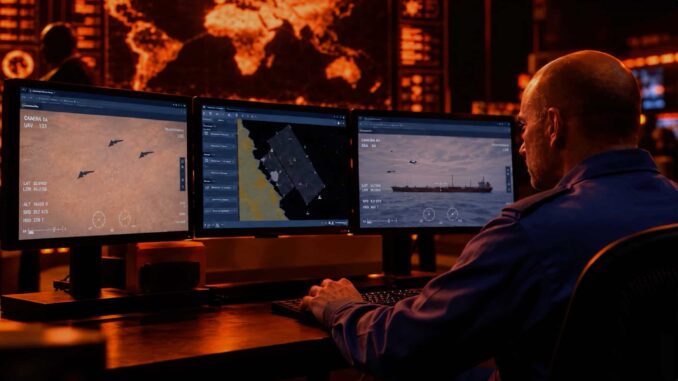
As maritime security challenges have intensified across the globe, Exail introduces Neptis, a new integrated unmanned system designed to deliver persistent maritime surveillance.
From the Strait of Hormuz to the Bab el-Mandeb and the Red Sea, the Middle East’s strategic waterways play a vital role in global trade and energy security. Protecting shipping routes, offshore energy infrastructure and coastal facilities requires continuous awareness of activities above, on and below the surface.
With the proliferation of asymmetric threats, including aerial and surface drones, maintaining this surveillance is becoming increasingly complex. Deploying high-value crewed warships for continuous monitoring also places considerable pressure on naval resources.
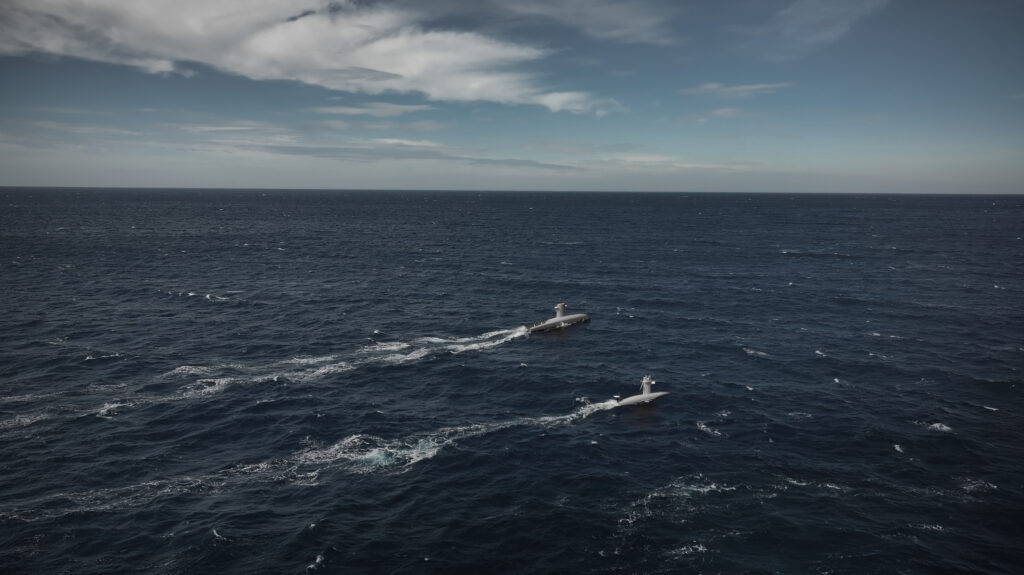
Persistent surveillance across multiple maritime domains
Neptis combines Exail’s new Oryx family of Unmanned Surface Vessels (USVs), defense-grade sensors and command-and-control (C2) software within a modular, integrated architecture. Oryx builds on the proven technological and operational heritage of the DriX USVs, which have accumulated over 1,5 million of nautical miles at sea, including in the Arabian Gulf.
Designed to support persistent Intelligence, Surveillance and Reconnaissance (ISR) operations, Neptis enables naval forces to extend surveillance coverage across air, surface and underwater environments.
By deploying uncrewed platforms forward, including into high-risk or contested areas, navies can maintain situational awareness while reducing crew exposure and preserving high-value vessels for critical missions.
Detecting emerging threats and protecting critical infrastructure
Neptis addresses key regional priorities, from monitoring strategic chokepoints and maritime approaches to Critical Undersea Infrastructure Protection (CUIP), including subsea pipelines, communication cables and offshore energy installations.
Depending on mission configuration, its sensors ( Radar, EO/IR, Electronic Warfare (EW), Sonars, Towed Acoustic Arrays) can contribute to detecting and tracking suspicious surface activity, low-flying aerial threats and underwater threats.
Relevant information can be shared with naval command structures and other defence assets to support faster, better-informed operational decisions.
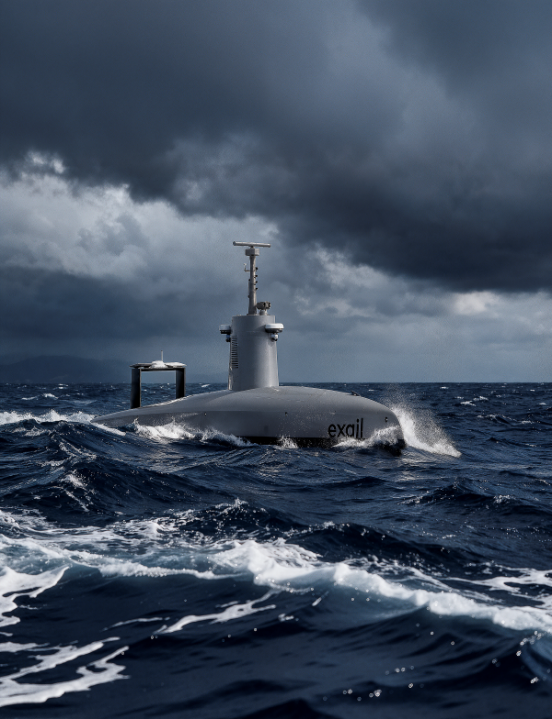
A modular approach to naval autonomy
Rather than offering a standalone drone, Neptis provides a scalable system architecture tailored to each navy’s operational requirements. It is designed to accommodate national requirements for data sovereignty and integration with existing command systems.
The Oryx USV family offers different platform sizes and payload capacities, enabling navies to expand progressively from individual surveillance missions to coordinated multi-platform operations.
For Middle Eastern navies, Neptis offers a new approach to maritime security: extending surveillance further, maintaining it longer and reducing the exposure of crews and strategic naval assets.


Be the first to comment