
The Doha International Maritime Defence Exhibition and Conference (DIMDEX) has evolved markedly since its inception. Once a predominantly naval-focused exhibition, its ninth edition underscores a clear strategic shift toward land-based defence systems and the integration of advanced and emerging technologies across domains.
On the sidelines of DIMDEX, we spoke with Mike Duckworth, Business Development Director – MENA at KNDS, to discuss the company’s long-standing partnership with the Qatar Armed Forces, the combat-proven design philosophy behind the VBCI MK 2, and the adaptation of the RapidFire system from the maritime to the land domain.
——————————————————————————–
Q: This is the ninth edition of DIMDEX. How has the event evolved, and why is it such a critical platform for KNDS?
A: KNDS has participated in all nine editions, and over that period, we have significantly developed our relationship with the Qatar Armed Forces. While we remain focused on the Qatar market and its opportunities, the exhibition has grown to include more international participation each year. It now serves as a vital platform for us to interface with new global customers. Interestingly, despite DIMDEX’s naval origins, over 50% of the current activity at the show is now focused on land defense.
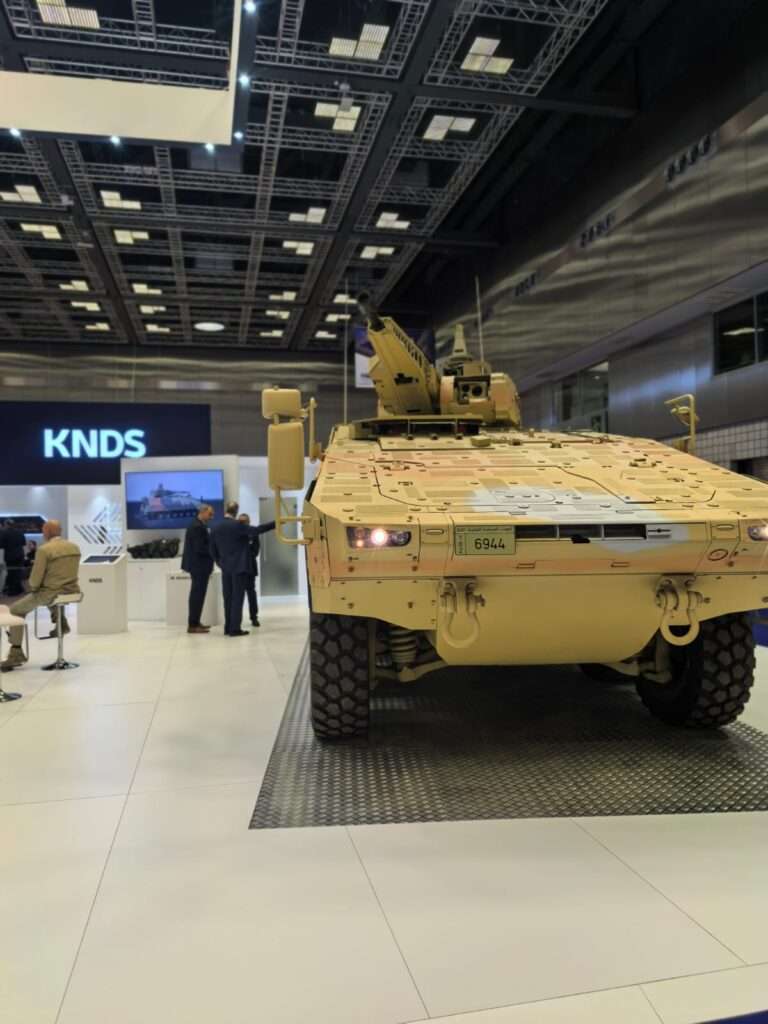
Q: You are showcasing the VBCI MK 2 here. What distinguishes this vehicle from other infantry fighting vehicles (IFVs) on the market?
A: First, it is important to stress that we are discussing the Mark 2 variant, which is arguably one of the most combat-proven 8×8 infantry fighting vehicles in service today. It has formed the backbone of protected mobility for the French Army since 2010.
What truly differentiates the VBCI is that it is a “native” infantry fighting vehicle. Many competing platforms are essentially 8×8 troop carriers that have had turrets added later, often resulting in compromises in internal volume, ergonomics, and signature management. By contrast, the VBCI was specifically defined and designed from the outset by the French Army as a wheeled IFV—capable of transporting a full infantry section, integrating a turret seamlessly, and operating as a coherent combat system.
Q: How has real-world combat experience shaped the design of the MK 2 specifically?
A: The design incorporates the doctrine and operational thinking of the French Army, which is one of the most active and frequently deployed armies globally. For example, the signature management—both thermal and heat—is superior to any other 8×8 on the market.
The MK 2 specifically features a slightly larger, deeper body than the Mark 1, which allows for more headroom and, consequently, a better level of blast protection. We have also added more engine power and a third steerable axle to specifically increase mobility in dense urban environments.
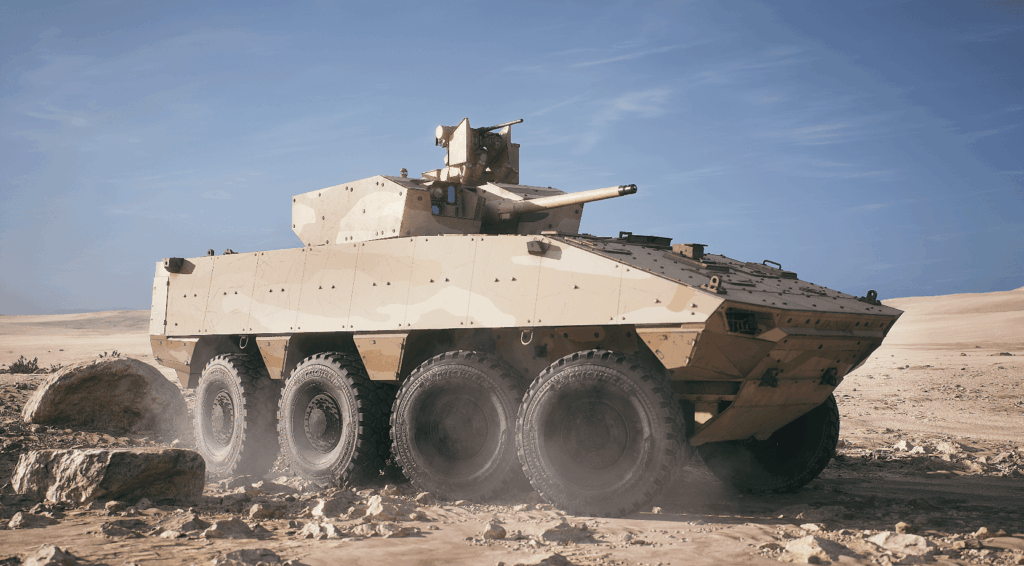
Q: You’ve emphasized the use of aluminium in the hull. What are the benefits of that material choice?
A: The VBCI is the only vehicle in its class manufactured on aluminium. This allows us to optimize the balance between weight and protection. It results in lower contact pressure on the ground, meaning the vehicle can navigate steeper inclines and looser terrain, such as desert conditions, while maintaining the speed necessary to evade modern threats.
Q: Turning to aerial threats, counter-drone defense is now a top priority. How is KNDS responding to this?
A: Much of this focus stems from recent combat experience in Ukraine. KNDS manufactures both attack drones and the systems to counter them. Our primary solution is the RapidFire system. It uses a 40 mm caliber, which is significantly more effective than 30 mm or 35 mm alternatives because the mass and volume of the projectile increase by the cube of the dimension. We are firing a 1.4 kg projectile using telescoped ammunition (CTA).
Q: The RapidFire system was originally naval. How has it been adapted for land use?
A: After entering service with the French Navy in 2023 using programmable air-burst ammunition, the system’s success led us to configure it for a mobile land platform. It can be integrated onto an 8×8 chassis—similar to the 8×8 Caesar—or placed on a standard droppable pallet. This flexibility allows it to protect static infrastructure or move with a convoy. It is a direct transition of proven naval technology to the land domain.
Q: Finally, how is Artificial Intelligence (AI) changing the way these systems engage in warfare?
A: AI is crucial because it significantly reduces the time base of an engagement scenario. By taking the man “out of the loop” for high-speed autonomous calculations—while keeping the man “in the oversight” role—the system can respond much faster to drone threats. On a system like RapidFire, AI handles the detection, scenario analysis, and the complex engagement decisions required to intercept a target. While the RapidFire has not yet been used in Ukraine, it is fully battle-tested and currently deployed.


Be the first to comment