Col. Zafer Mourad
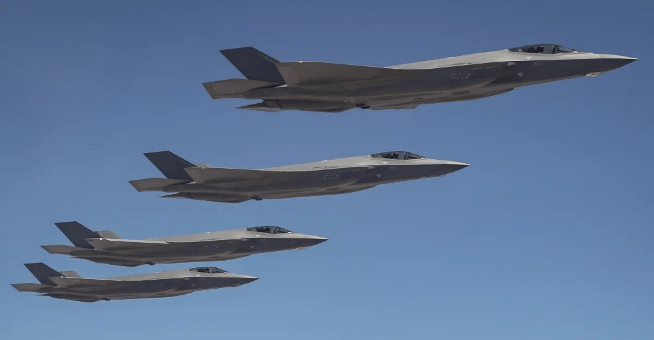
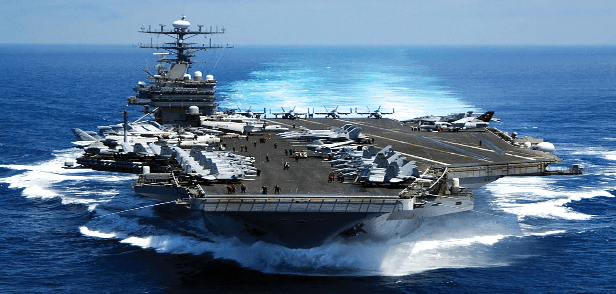
The United States, along with allied and Western forces, has begun deploying additional military assets to the Middle East. A third aircraft carrier is reportedly on its way to join the ongoing campaign, significantly increasing the operational capacity in the theater. As the conflict expands, the theater of operations is becoming wider and the targets clearer, suggesting that the confrontation will likely extend beyond Iran and Lebanon.
Iran’s future is uncertain and its borders have become fragile. Israeli operations in Lebanon are open to a major escalation that may include the invasion of the south and the Bekaa. The American campaign on Iran includes several stages, the stage of strategic bombing and the disorientation of the center of gravity has ended, and the transition is now to strike critical military capabilities.
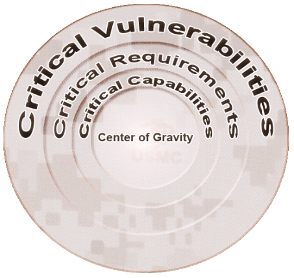
In the Iranian case, the strategic Center of Gravity lies in the revolutionary power structure dominated by the Islamic Revolutionary Guard Corps and the authority of Ali Khamenei, which integrates military command, ideological legitimacy, and regional influence.
This center of gravity is sustained through several critical capabilities, including:
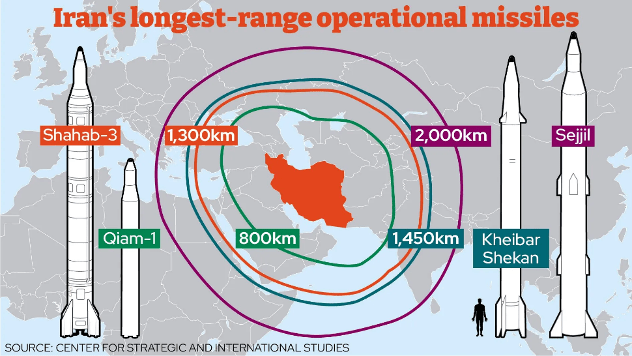
- Strategic missile forces, providing regional deterrence and long-range strike capacity.
- Proxy warfare networks, involving actors such as Hezbollah and Ansar Allah, enabling Iran to project influence indirectly across multiple theaters.
- Asymmetric maritime capabilities, allowing Iran to threaten vital chokepoints such as the Strait of Hormuz.
- Unmanned aerial and precision strike systems, including the Shahed-136.
As it currently stands, the situation can be split up across two levels, as follows:
1. Strategic Level
A regional war is ongoing following the launch of Operation Epic Fury on 28 February 2026, carried out by United States and Israel against military targets inside Iran. The campaign aims to degrade Iran’s missile forces, air defenses, and military infrastructure.
The conflict escalated rapidly after the killing of Ali Khamenei and senior Iranian commanders in the initial strikes.
2. Operational Level
After targeting the strategic center of gravity through the killing of Ali Khamenei, the United States will shift the focus to target the critical capabilities, with the aim of destroying them and nullifying their effects. According to the statements of American military officials, the stage of destruction of the Iranian critical capabilities will last between 4 to 6 weeks. This period is considered the most complicated and most dangerous, as foreign powers will intervene, within allyships that have started to appear, represented by the arrival of French, British, Italian and Australian military assets, which indicates that the theater of operations will expand in a similar fashion to that of a third Gulf war. Additionally, at this point, non-governmental forces might start participating in ground military operations, such as the Kurdish forces, in cooperation with special American and Israeli forces which will conduct special ground operations within Iran, preparing for the control of key areas.
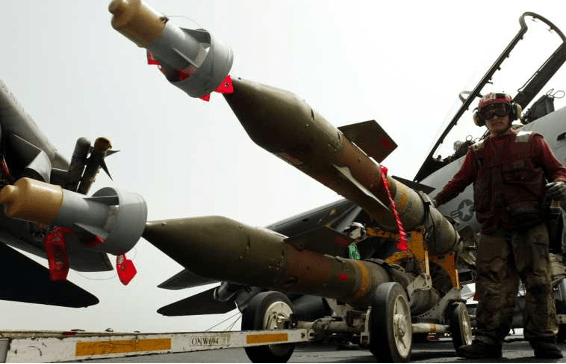
The destruction of critical capabilities marks the transition to a new strategic phase rather than the end of the confrontation. Once key systems enabling coordination, power projection, and precision strike are degraded, the adversary’s ability to conduct coherent operations declines significantly. This creates a condition of strategic paralysis, where remaining assets exist but cannot be effectively integrated or employed. In such a context, the objective is not only physical destruction, but the erosion of the adversary’s capacity to act as a coordinated strategic system.


Be the first to comment