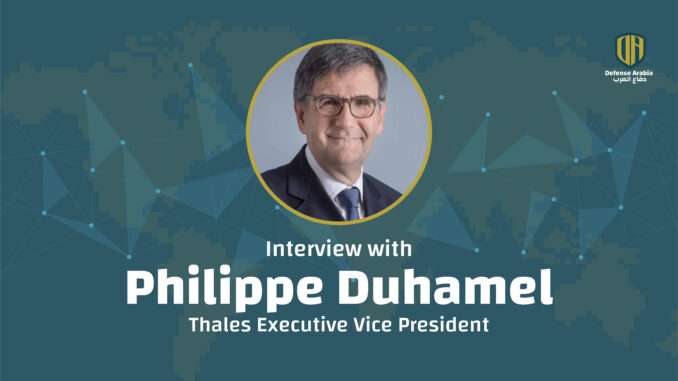
Defense Arabia obtained an exclusive interview at the Dubai Airshow with Philippe Duhamel, Executive Vice President for Defence Mission Systems at Thales. This interview aimed to explore Thales’s innovative electronic warfare (EW) solutions and to reveal its strategy for adapting to the fast-paced, complex evolving threat landscape that is reshaping modern defence concepts.
The new frontiers of electronic warfare: advanced payloads for unmanned platforms
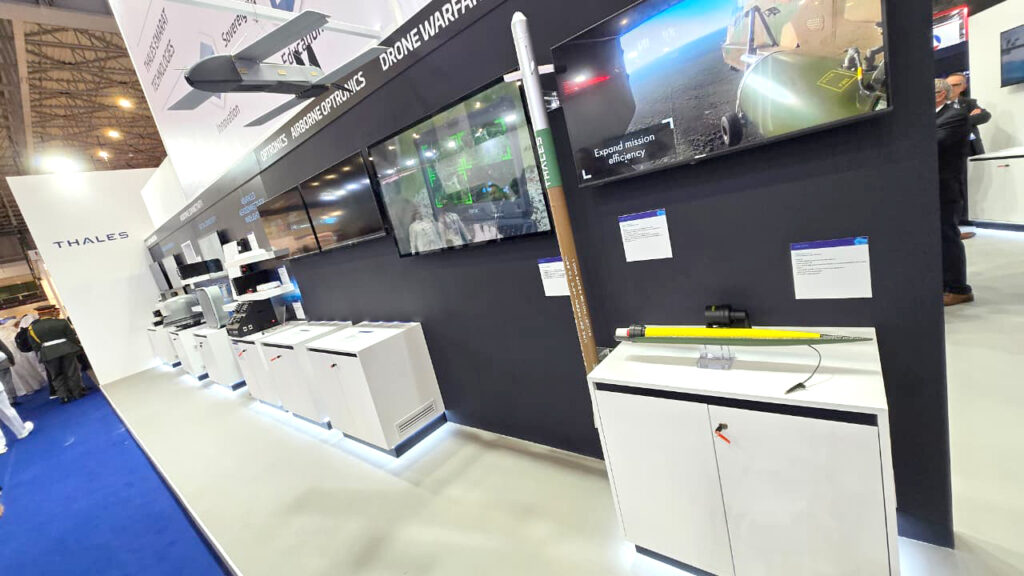
Thales exhibited at the show EW solutions tailored for both airborne and naval platforms, but the most prominent innovation it highlighted is the development of specialised payloads for drones and unmanned systems of all sizes.
The CURCO system is a primary example of this approach. It is an electronic intelligence (ELINT) payload designed for very small drones, capable of detecting radars and guidance systems.
Philippe Duhamel explains that Thales’s concept of electronic warfare is built on “sensors first,” followed by systems that enable operators to take the necessary actions based on the data those sensors collect.
This evolution in specialised payloads for unmanned systems did not come from nowhere; rather, it is an inevitable response to radical changes in the nature of threats faced by modern forces on the digital battlefield.
The changing battlefield: a denser, more agile threat environment
The electronic warfare threat environment is evolving very rapidly, driven by three main factors, as Philippe Duhamel analyses:
Spectrum density: In the past, the detection mission was limited to “two or three radars.” Today, the spectrum is crowded with “20 or 30 or 50” radars, making detection and discrimination among them much harder and more complex.
Threat agility: Modern radars have become “agile,” meaning they no longer use a fixed waveform but can continuously change it, which makes recognising and identifying them a major challenge.
New types of threats: New threats have appeared, such as air-carried jamming systems mounted on small UAVs, which add a new layer of complexity to the battlefield.
Recent conflicts, such as those witnessed in Eastern Europe, have demonstrated that electronic warfare has become “much more important than we thought five years ago.” This mix of density, agility, and emergent threats requires a radical strategic rethink, which Thales has articulated in a multifaceted innovation doctrine.
Thales’s adaptation strategy: four pillars of innovation
To confront this growing complexity, Duhamel explains that Thales’s strategy is not just a single technical achievement but an integrated architecture he likens to “a three-legged chair and a base,” a framework in which every part is indispensable to achieve stability and success.
Electronic components (hardware): The first pillar is a fundamental shift from analog detection to digital detection. This transition requires new, powerful hardware components able to operate across a very wide frequency spectrum, ranging from a few megahertz to tens of gigahertz.
System architecture: These new components and the massive amounts of data they generate necessitate the design of entirely new systems capable of processing and organising this huge information flow.
Software and artificial intelligence: Artificial intelligence represents the third critical pillar. But Duhamel emphasises that its application has only become possible thanks to the new hardware and architectures that produce massive amounts of data. Whereas old analog systems produced data at a rate of one kilobyte per second, modern digital systems produce an entire terabyte, an increase by a factor of one billion.
Development methodologies: This is the “base of the chair” that ties the legs together. Although systems have become “a million times more complex,” modern engineering methods enable Thales to compress development timelines and manage this complexity effectively.
Among these pillars, artificial intelligence stands out as a key enabler, not merely an option but an essential necessity to handle this new digital reality.
The mind of the operation: the role of “trusted AI”
This deluge of data, which exceeds what previous systems produced by a factor of one billion, makes solely human analysis impossible. This reality drives Thales’s deep investment in the concept of “trusted AI” to translate raw data into actionable intelligence. The company offers concrete examples of how this AI works:
Smart Radar: Helps operators quickly identify high-value targets in highly congested, dense tactical situations.
The “Golden AI” tool: A specialised tool that accelerates mission preparation for electronic warfare by analysing large datasets to identify potential threats and plan optimal responses.
Thales asserts its core AI policy through its own concept.
Trusted AI: AI proposes recommendations and solutions to the operator, but the final operational decision is always made by a human. This principle ensures human control over decision-making.
To ensure application of this principle, Thales established a global AI organisation called “CortAIx,” responsible for ensuring that AI systems are safe, reliable, and not vulnerable to compromise. These trusted technologies pave the way for a new wave of future innovations.
Outlining the future: the next wave of electronic warfare innovations
Thales has identified technological trends for electronic warfare over the next five to ten years, which include:
Expanding sensor bandwidths: to cover higher and lower frequencies to keep pace with radar evolution.
Increasing digital detection speed: with the goal of multiplying digital detection speed by a factor of up to 10 within 5–7 years.
Developing new algorithms: especially in AI, to handle congested environments more efficiently.
Collaborative EW: where systems communicate and share data across multiple platforms to achieve a comprehensive picture.
Multi-sensor detection: integrating EW data with other electronic sensors to form a more accurate tactical picture.
This future vision is not limited to technical development only; it also includes a deep commitment to adapting these capabilities to meet the unique requirements of the Middle East region.
A tailored approach for the Middle East: meeting the region’s operational needs
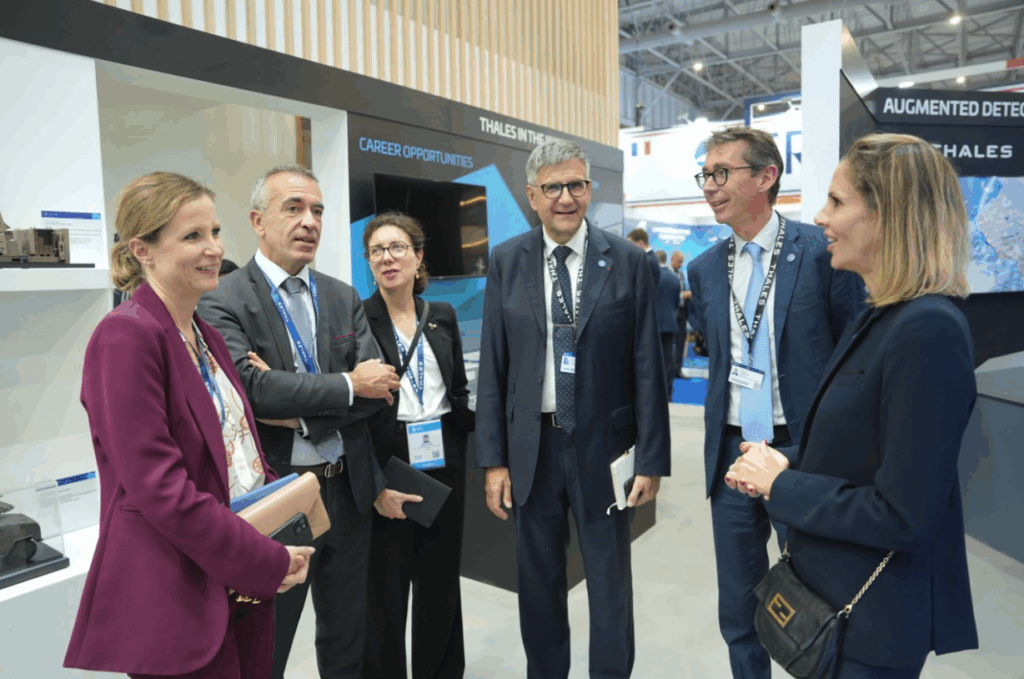
Thales emphasises its strong commitment to its customers in the Middle East, including the United Arab Emirates and the Kingdom of Saudi Arabia. Its local company, “Thales Emarat Technologies” is considered an essential part of its strategy to provide development, production, and support services, granting regional forces “the highest levels of independence.”
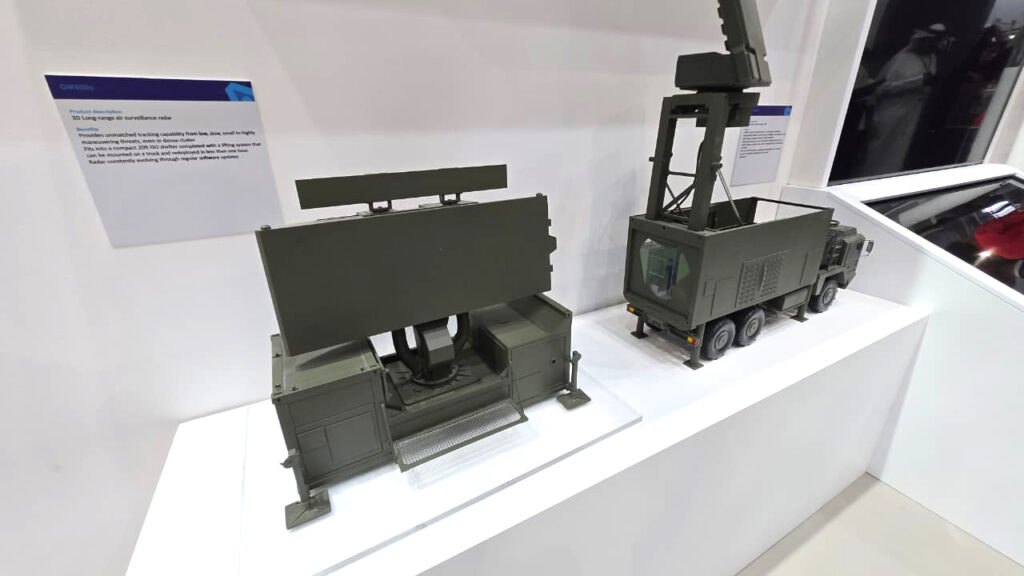
When asked about adapting products to suit the harsh environment of the region, Duhamel explained that systems are designed “from day one” to meet global requirements, which include the heat, dust, and sand that characterise the Middle Eastern environment. He cited the “Grandmaster” radar as an example, which was designed with these conditions in mind from the start of its development.
Duhamel concluded his remark with a touch of humour, noting that the only important modification that needs to be made is to change the paint colour from green to “desert camouflage.”
An integrated strategy to face tomorrow’s challenges
Philippe Duhamel’s interview reveals that Thales does not merely keep pace with developments in electronic warfare, but seeks to shape its future through a comprehensive strategy. This strategy combines advanced hardware, intelligent software, trusted AI, and advanced development methodologies.
With its firm commitment to supporting its partners’ operational needs in the Middle East, Thales positions itself among the leading companies capable of delivering effective defence solutions to confront the complex challenges of tomorrow.


Be the first to comment