By Mohammad Hassan Sangtarash
Introduction: More Than an Arms Transaction
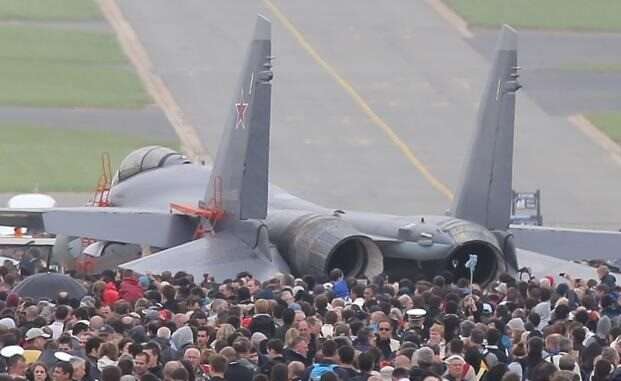
Ethiopia’s announcement that it has received Russian Su-35 fighter aircraft and intends to acquire four batteries of the S-400 air-defence system represents a significant development in the evolving security architecture of the Horn of Africa. Announced by Prime Minister Abiy Ahmed during his visit to Moscow on 28 October 2026, the agreement signals a renewed phase in the military relationship between Addis Ababa and Moscow. It also raises broader questions about the interaction between military modernisation, regional rivalries, access to maritime routes, and the competition among external powers for influence across Africa. The significance of the agreement therefore extends beyond the technical capabilities of two Russian weapons systems. It should be understood in the context of Ethiopia’s increasingly complex security environment and Russia’s efforts to sustain and expand its strategic presence beyond the European theatre.
The announcement requires one important qualification. The Ethiopian government stated that the country had received its first twelve Su-35 fighters. However, Russia’s state-owned arms exporter, Rosoboronexport, separately confirmed to Reuters that the first delivery consisted of two aircraft. Images released during Abiy Ahmed’s visit also showed two Su-35s bearing Ethiopian markings. The distinction does not invalidate the Ethiopian announcement, but it does mean that the precise delivery status of the full twelve-aircraft order should not be treated as independently established. The delivery schedule for the four S-400 batteries, their eventual deployment locations, and the financial terms of the agreement have not been publicly disclosed. These uncertainties matter because the operational and strategic consequences of the acquisition will depend not only on the equipment ordered but also on the pace of delivery, training, maintenance, integration, and the development of a wider air-defence network.
The central argument of this article is that the agreement should be interpreted through three interconnected strategic dimensions. First, it is part of Ethiopia’s effort to strengthen its conventional military capabilities amid domestic conflict and rising tensions with neighbouring Eritrea. Second, it potentially enhances the country’s position in a region where maritime access, the Red Sea, and the wider balance of power are increasingly important. Third, it provides Russia with an opportunity to deepen its influence in the Horn of Africa through a combination of defence cooperation, diplomatic engagement, and economic relations. None of these dimensions should be reduced to a single explanation: the acquisition is not demonstrably an anti-Egyptian measure, a direct response to the Grand Ethiopian Renaissance Dam dispute, or evidence that Ethiopia is abandoning its relations with Western countries. Rather, it reflects the convergence of several security and geopolitical calculations.
Ethiopia’s Security Environment: Internal Conflict and External Deterrence
Ethiopia’s military modernisation is taking place against a background of serious internal and regional security challenges. The renewed fighting in Tigray, instability in Amhara, and the deterioration of relations with Eritrea have increased the pressure on the federal government to strengthen its capacity to respond to different forms of military threat. These challenges are not interchangeable. Internal armed conflicts require intelligence, mobility, ground-force coordination, and the ability to control territory. A potential interstate confrontation, by contrast, may involve air power, air defence, logistics, and the protection of strategic infrastructure. The acquisition of advanced combat aircraft and long-range air-defence systems can therefore be interpreted as an attempt to improve Ethiopia’s capacity across a wider spectrum of contingencies, although neither system can independently resolve the political and institutional causes of domestic instability.
The Su-35 is a multirole fighter designed for air-superiority and strike missions. Its acquisition could improve the Ethiopian Air Force’s ability to patrol national airspace, conduct interception missions, and provide a more capable platform for conventional air operations. It would also add a technologically advanced aircraft to a force that has historically relied heavily on Russian and Soviet-origin platforms. Yet the introduction of a sophisticated fighter does not automatically produce a sophisticated air force. Operational effectiveness depends on pilot training, maintenance infrastructure, spare-parts availability, weapons integration, command-and-control systems, and the ability to sustain aircraft at an appropriate readiness rate. These requirements are particularly important for Ethiopia because the country must maintain operational capacity while facing competing demands on its defence budget and military institutions.
The S-400, if delivered and successfully integrated, would add another layer to Ethiopia’s air-defence architecture. Its strategic value would lie in the protection of selected military installations, command facilities, and other high-value assets against certain categories of aerial threats. However, the system should not be portrayed as an impenetrable shield. Modern air defence depends on the integration of sensors, interceptors, electronic warfare, shorter-range systems, and effective command networks. It must also adapt to the proliferation of relatively inexpensive unmanned aerial vehicles and other forms of saturation attack. As analysts quoted by Al Jazeera have observed, conventional air-defence systems may be useful against traditional aircraft and some aerial threats, but they can face serious challenges when confronted with large numbers of low-cost drones. The S-400 could therefore strengthen Ethiopia’s defensive posture without eliminating its vulnerabilities.
The relationship between the new systems and Ethiopia’s domestic conflicts should also be assessed carefully. Advanced fighter aircraft and long-range air-defence systems are not direct substitutes for the capabilities required to address insurgencies or restore political stability in contested regions. Their primary value is more closely associated with conventional air threats, deterrence, and the protection of strategic assets. Nevertheless, their acquisition can have indirect domestic consequences. It may strengthen the federal government’s perception of military security, increase its bargaining position in regional crises, and signal to internal and external actors that Addis Ababa intends to preserve a credible conventional military capability. Whether this produces greater stability will depend on the political management of Ethiopia’s internal divisions as much as on the performance of its new weapons systems.
Eritrea, Maritime Access, and the Strategic Geography of the Red Sea
One of the most important contexts for understanding Ethiopia’s military procurement is its relationship with Eritrea. Since Eritrea’s independence in 1993, Ethiopia has been a landlocked state. This geographical transformation has had enduring economic and strategic consequences, particularly because access to reliable maritime routes is essential for international trade, energy imports, and the movement of goods. Ethiopia’s dependence on ports outside its sovereign territory has consequently become a persistent feature of its national security debate. The issue has acquired greater political sensitivity as Ethiopian leaders have increasingly presented access to the sea as a matter of long-term economic and strategic importance.
The dispute is not simply about commercial logistics. Maritime access is connected to national sovereignty, regional influence, and Ethiopia’s relationship with neighbouring states. Any attempt to secure new arrangements for access to the Red Sea must take account of Eritrea, Djibouti, Somalia, and the wider interests of external powers. Ethiopia’s search for maritime options therefore intersects with the security calculations of states that possess coastlines, ports, or strategic positions along the Red Sea and Gulf of Aden. In this environment, military modernisation can serve as a means of strengthening deterrence and improving bargaining power. It does not, however, establish that Ethiopia intends to use force to obtain maritime access. Such a conclusion would go beyond the available evidence and risk confusing a strategic capability with a declared political intention.
The Su-35 and S-400 acquisitions may nevertheless influence the regional perception of Ethiopia’s military posture. A more capable air force, supported by an integrated air-defence system, could increase the costs and risks associated with conventional military pressure against Ethiopian territory. It could also encourage neighbouring states to reassess their own defence requirements. This possibility is particularly relevant to relations with Eritrea, where tensions have been aggravated by renewed conflict in northern Ethiopia and mutual accusations concerning support for armed actors. Addis Ababa has accused Asmara of supporting rebels, while Eritrea has denied the allegations. In such circumstances, even a procurement programme officially presented as defensive can become part of a wider regional security dilemma if neighbouring governments interpret it as a change in the balance of power.
The Red Sea dimension extends beyond the immediate Ethiopia–Eritrea relationship. The waterway connects the Mediterranean to the Indian Ocean through the Suez Canal and the Bab el-Mandeb Strait. It is therefore a major artery for international trade, energy transportation, and military mobility. Instability around the Horn of Africa can affect the security environment of the Red Sea, the Gulf of Aden, and the western Indian Ocean. Ethiopia’s strategic choices should consequently be viewed as part of a wider regional process in which landlocked states, coastal states, port operators, and external military powers compete to secure influence over transport corridors and maritime infrastructure. The Su-35 and S-400 agreement does not give Ethiopia direct control over maritime routes, but it may strengthen its position within the political and security environment surrounding them.
This distinction is essential. Ethiopia’s air power cannot substitute for a coastline, a port agreement, or a sustainable regional settlement. Nor can the acquisition of advanced weapons resolve the political sensitivities surrounding sovereignty and maritime access. The most durable route to maritime security would require diplomatic arrangements that are economically viable and politically acceptable to the relevant states. Military capability may shape the negotiating environment, but it cannot replace regional diplomacy.
Russia’s Return to the Horn of Africa
For Moscow, the agreement offers an opportunity to reinforce a relationship with one of Africa’s most strategically significant states. Russia and Ethiopia have a long history of military cooperation, extending back to the Cold War. The current agreement builds on that legacy while reflecting the changing conditions of international politics. Russia’s military engagement in Africa is not limited to the sale of individual weapons platforms. Defence relationships can create long-term connections through maintenance, training, spare parts, technical support, ammunition supplies, and future procurement. These arrangements can generate revenue for Russian defence industries while also providing Moscow with continuing diplomatic and strategic access to partner governments.
The wider context is significant. According to the Stockholm International Peace Research Institute, Russia accounted for 15 per cent of African imports of major arms during 2021–2025, placing it behind the United States, with 19 per cent, and China, with 17 per cent. These figures indicate that Russia remains an important arms supplier to the continent, but they also show that it operates in a competitive environment rather than enjoying an uncontested position. The United States and China remain major suppliers, while France and other states maintain their own defence relationships. Ethiopia’s decision to acquire Russian systems should therefore be interpreted as part of a broader pattern of African governments diversifying their security partnerships and seeking to preserve room for manoeuvre among competing external powers.
The strategic value of Ethiopia for Russia is not solely military. Ethiopia is one of Africa’s most populous countries and occupies a central position in the Horn of Africa. Its political influence, diplomatic role, and geographical location make it a valuable partner for any external power seeking a durable presence in the region. The Russia–Ethiopia relationship can also provide Moscow with an additional channel for engagement with African governments and multilateral institutions. The Russia–Africa Summit, during which the announcement was made, illustrates the importance Moscow attaches to this diplomatic dimension. By combining arms cooperation with high-level political engagement, Russia can present itself as a partner willing to offer military technology and strategic cooperation without making its relationship entirely dependent on the political priorities of Western governments.
The economic relationship may reinforce this process. During the Moscow visit, the two governments discussed trade and wider bilateral cooperation. Russian President Vladimir Putin stated that bilateral trade had exceeded $1.3 billion in the first nine months of 2026, more than twice the total recorded for 2025, according to Al Jazeera’s account of the meeting. This figure should be understood as an indication of expanding economic engagement, not proof that the arms agreement is part of a single integrated economic package. The value of the defence contract itself has not been disclosed, and there is insufficient public evidence to establish that specific mineral or infrastructure investments have been directly exchanged for the military systems.
Russia’s broader objective is best understood as strategic diversification. The war in Ukraine and the resulting Western sanctions have increased the importance of maintaining relationships beyond Europe and the transatlantic system. Africa provides diplomatic opportunities, markets for defence exports, and potential partnerships in energy, infrastructure, and natural resources. Yet the extent of Russia’s influence should not be exaggerated. Its capacity to provide sustained investment, large-scale infrastructure finance, and long-term economic support is constrained by its own economic and geopolitical pressures. The Ethiopian agreement is therefore a meaningful instrument of Russian influence, but it is not evidence that Moscow has acquired a dominant position in the Horn of Africa.
The Nile, the GERD, and the Egyptian Dimension
The Ethiopian acquisition inevitably raises questions about Egypt and the long-running dispute over the Grand Ethiopian Renaissance Dam (GERD). The dam is one of the most consequential infrastructure projects in contemporary African politics because it is closely connected to Ethiopia’s development ambitions and Egypt’s concerns about water security. Ethiopia regards the project as a central element of its national development strategy and its ambition to expand electricity generation. Egypt, whose population and economy depend heavily on the Nile, has consistently emphasised the importance of predictable arrangements for the filling and operation of the dam. Sudan also has significant interests in the management of the river, including dam safety, water regulation, and agricultural requirements.
It would nevertheless be premature to interpret the Su-35 and S-400 agreement as a direct military response to Egypt’s position on the Nile. The acquisition may affect the broader balance of conventional military capabilities in Northeast Africa, but there is no publicly established evidence that the systems were purchased specifically to deter Egypt or to influence negotiations over the GERD. Ethiopia’s immediate security challenges, including internal conflict and tensions with Eritrea, provide independent reasons for strengthening its air force and air-defence capabilities. The Nile dispute is therefore an important strategic context, but it should not be presented as the confirmed operational purpose of the procurement.
The comparison with Egypt’s earlier effort to purchase Russian Su-35 fighters is nevertheless instructive. In 2019, reports indicated that Egypt was considering a deal for more than twenty Su-35 aircraft, potentially worth around $2 billion. The Congressional Research Service discussed the possibility that such a purchase could trigger sanctions under Section 231 of the Countering America’s Adversaries Through Sanctions Act (CAATSA), which concerns significant transactions with entities associated with Russia’s defence or intelligence sectors. The episode demonstrated the extent to which Russian arms procurement can create complications for states with important security and economic relationships with Washington.
However, the Egyptian and Ethiopian cases should not be treated as identical. Egypt has a long-standing and substantial military relationship with the United States, including access to American equipment, assistance, and defence cooperation. Ethiopia’s external relationships and degree of dependence on Washington are different. The political and economic costs of a potential sanctions decision would consequently vary from one case to another. Furthermore, the existence of a possible CAATSA exposure does not mean that sanctions will automatically be imposed in every instance. The legal framework, the nature and significance of the transaction, and the foreign-policy calculations of the US administration all matter. Ethiopia’s procurement may test the practical limits of Washington’s influence, but it does not by itself demonstrate the collapse or defeat of American sanctions policy.
For Egypt, the development is relevant because it adds another dimension to the military and diplomatic environment surrounding the Nile. Cairo will need to assess the implications of a more capable Ethiopian air force and a potential long-range air-defence network, while continuing to manage its relationships with Washington, Moscow, and regional partners. Yet the most consequential question for the Nile is unlikely to be decided by the performance of fighter aircraft. It will depend on whether Ethiopia, Egypt, and Sudan can establish a sustainable framework for cooperation over water management, information exchange, dam safety, and the prevention of unilateral actions that could intensify mistrust. Military modernisation may influence perceptions and bargaining positions, but it cannot substitute for an agreement on the shared management of a transboundary river.
Turkey, China, the United States, and Israel: A Competitive Regional Environment
Russia’s growing defence relationship with Ethiopia should also be considered alongside the interests of other external powers. Turkey, China, the United States, and Israel each approach the Horn of Africa from different strategic perspectives. Their policies are not necessarily organised around a single competition with Russia, and it would be misleading to portray every regional development as a direct consequence of the Moscow–Addis Ababa relationship. Nevertheless, the arrival of advanced Russian aircraft and the planned acquisition of the S-400 may influence how these actors assess Ethiopia’s future military position and their own interests in the region.
Turkey has developed a significant presence in the Horn of Africa through defence cooperation, commercial engagement, infrastructure, and diplomatic initiatives. Its relationship with Somalia has been particularly important, while its engagement with Ethiopia has included efforts to reduce regional tensions. The Ankara Declaration of December 2024, following Turkish mediation between Ethiopia and Somalia, illustrated Ankara’s ambition to play a constructive diplomatic role in the region. Turkey’s position is therefore more complex than that of a competitor seeking to prevent Russian influence. Ankara may cooperate with Moscow in some areas, compete with it in others, and maintain separate relationships with Ethiopia and other regional governments. The expansion of Ethiopia’s Russian-supplied air capabilities could affect the regional military environment, but it does not necessarily mean that Turkish influence will decline.
China’s position is different again. Beijing has a substantial economic presence in Ethiopia and a wider strategic interest in the security of the Red Sea, the Gulf of Aden, and the maritime routes connecting Asia with Europe. Its engagement includes infrastructure, trade, investment, and diplomatic cooperation. China is also a major arms supplier to Africa, accounting for 17 per cent of the continent’s imports of major weapons in 2021–2025, according to SIPRI. Russia’s agreement with Ethiopia may create additional competition in the defence sector, but it does not necessarily challenge China’s broader economic position. In fact, Ethiopia’s pursuit of multiple external partnerships may allow Addis Ababa to obtain different forms of support from different powers rather than relying on a single strategic patron.
For the United States, the development presents a policy challenge rather than a simple strategic reversal. Washington has interests in regional stability, counterterrorism, the security of maritime routes, and the prevention of wider conflict in the Horn of Africa. It also has a longstanding relationship with Ethiopia, although that relationship has experienced periods of tension, particularly over internal conflict and human-rights concerns. A Russian arms agreement could complicate US policy, especially if it deepens Ethiopia’s dependence on Russian maintenance, training, and military technology. At the same time, an approach that treats Ethiopia’s procurement as an automatic reason for diplomatic confrontation could reduce Washington’s influence without necessarily changing Addis Ababa’s security calculations. The United States will therefore face a familiar dilemma: how to respond to Russian military influence while preserving channels of communication with a strategically important African state.
Israel’s interests are connected primarily to the wider security of the Red Sea and the eastern Mediterranean–Indian Ocean maritime corridor. The security of the Bab el-Mandeb Strait, the movement of commercial shipping, and the regional balance involving states around the Red Sea all have implications for Israeli strategic planning. Ethiopia’s geographical position and its relationships with states across the Horn of Africa make it relevant to this wider environment. However, there is no sufficient public evidence to conclude that the Su-35 and S-400 agreement was designed to target Israeli interests or that it represents a direct Russian–Ethiopian response to Israeli policy. A more defensible assessment is that the agreement adds another variable to an already complex regional security environment in which several external powers seek to protect their interests and maintain diplomatic access.
Beyond Arms: Nuclear Energy, Trade, and Economic Cooperation
The military agreement is taking place alongside a broader effort to expand Russian–Ethiopian economic and technological cooperation. One particularly important area is civilian nuclear energy. Ethiopia has been developing plans for nuclear power cooperation with Russia for several years, and the two countries have pursued institutional arrangements intended to prepare the way for a possible nuclear energy programme. This cooperation should not be confused with the acquisition of military nuclear technology. Its stated purpose is civilian electricity generation and the development of technical and regulatory capacity.
The distinction between an announced nuclear ambition and an operational nuclear power programme is essential. As of October 2026, the project remains at the planning and preparatory stage. Public reporting has described discussions concerning a possible intergovernmental agreement and plans for large-scale reactor capacity, but the completion of such a project would require regulatory development, site assessment, financing, infrastructure, workforce training, and years of construction. Nuclear cooperation may therefore become a significant long-term component of the bilateral relationship, but it should not be presented as an immediate source of energy security or as an already completed Russian investment in Ethiopia.
The potential importance of this cooperation lies in its long-term institutional effects. A civilian nuclear programme can create relationships that extend across several decades, involving engineering, training, fuel arrangements, safety regulation, technical services, and scientific exchange. Such partnerships can strengthen diplomatic ties because they require sustained coordination between governments and specialised institutions. For Russia, civilian nuclear cooperation offers an additional channel of engagement beyond arms exports. For Ethiopia, it could support a long-term strategy of diversifying its energy mix and expanding electricity generation as the economy grows. Whether the project becomes viable will depend on its financial and technical feasibility, as well as on Ethiopia’s ability to establish the necessary regulatory and institutional foundations.
Mineral resources and industrial investment may offer further opportunities, but these should be approached with similar caution. Ethiopia has sought to attract investment into mining and other productive sectors, and its natural resources could become relevant to the country’s industrial development. Gold, potash, iron ore, and other mineral resources have attracted attention from domestic and foreign investors. Yet the existence of investment opportunities does not demonstrate that Russia has secured a major position in Ethiopia’s mining sector or that mineral access forms part of the Su-35 and S-400 agreement. Without specific contracts or confirmed investment commitments, claims of a direct arms-for-minerals arrangement would be speculative.
The more persuasive argument is that defence cooperation could contribute to a wider political environment in which economic partnerships become easier to develop. Military relations can generate trust between state institutions, create regular high-level contacts, and provide a foundation for negotiations in other sectors. But this relationship is neither automatic nor guaranteed. Ethiopia will continue to assess external partnerships according to its economic requirements, development priorities, and desire to preserve strategic autonomy. Russia, meanwhile, will have to demonstrate that it can provide not only weapons but also reliable technical support and economically sustainable cooperation. The future of the bilateral relationship will depend on whether both sides can translate diplomatic announcements into durable institutional and commercial arrangements.
Strategic Limitations: What the Agreement Can and Cannot Achieve
The significance of the agreement should not obscure its limitations. The Su-35 and S-400 are sophisticated systems, but their effectiveness depends on a wider military ecosystem. Ethiopia will need trained personnel, maintenance facilities, reliable supply chains, suitable infrastructure, and the ability to integrate the systems with its existing air-defence and command networks. These requirements may become more difficult if international sanctions, export restrictions, or disruptions in Russia’s defence-industrial supply chains affect the availability of components and technical support. The acquisition therefore creates a long-term relationship of dependence as well as an immediate increase in military capability.
There is also a risk that the procurement could intensify regional perceptions of insecurity. If neighbouring states interpret Ethiopia’s modernisation as preparation for coercive action, they may respond by expanding their own military capabilities or seeking additional external security partnerships. Such a process could produce a security dilemma in which measures presented by one government as defensive are interpreted by others as offensive. The risk is particularly relevant in a region where political disputes, territorial sensitivities, and unresolved conflicts already complicate relations among neighbouring states. Military deterrence can contribute to stability when it is accompanied by credible communication and diplomacy; without these elements, it can also increase mistrust.
The same caution applies to the broader interpretation of Russia’s role. The agreement demonstrates that Moscow retains the ability to conclude significant defence arrangements with African governments despite its confrontation with Western states. It does not, however, establish that Russia has replaced the United States, China, Turkey, or other external actors in Ethiopia. Nor does it show that Ethiopia has chosen an exclusive strategic alignment with Moscow. The Ethiopian government appears to be pursuing a policy of widening its external options, seeking to obtain military, economic, and diplomatic benefits from different partners. This approach is consistent with the broader efforts of many African states to avoid excessive dependence on a single external power.
For Ethiopia, the ultimate test will be whether the new systems contribute to a more secure national environment without encouraging a costly regional arms competition. The country faces challenges that cannot be resolved through military technology alone: internal political fragmentation, the management of relations with Eritrea, the search for reliable maritime access, economic development, and the need for sustainable arrangements over the Nile. The Su-35 and S-400 may strengthen particular dimensions of national defence, but they cannot resolve these interconnected political and economic problems.
Three Possible Strategic Trajectories
The first possible trajectory is a limited and primarily defensive modernisation. Under this scenario, Ethiopia receives the aircraft and air-defence systems, develops the necessary technical infrastructure, and uses the new capabilities mainly to protect its airspace and strategic installations. The acquisition would strengthen deterrence while remaining part of a broader policy of diplomatic engagement with neighbouring states. This would be the least destabilising outcome, particularly if Ethiopia simultaneously pursues political solutions to its internal conflicts and maintains dialogue with Eritrea, Somalia, Egypt, and Sudan.
A second trajectory would involve the gradual expansion of Russian influence through a broader security and economic partnership. In this scenario, the delivery of aircraft and air-defence systems would be followed by long-term maintenance arrangements, training programmes, additional defence contracts, and progress in civilian nuclear cooperation. Russia would gain a more durable institutional presence in Ethiopia, while Addis Ababa would benefit from an additional strategic partner. Such an outcome would not necessarily produce an exclusive alliance, but it could increase Ethiopia’s dependence on Russian technology and strengthen Moscow’s diplomatic position in the Horn of Africa.
A third, more problematic trajectory would emerge if military modernisation coincided with a deterioration in Ethiopia’s relations with Eritrea or other neighbouring states. Under these circumstances, the new systems could become part of a wider regional arms competition, particularly if neighbouring governments sought additional weapons or external guarantees in response. The consequences would extend beyond bilateral relations. Greater instability around the Horn of Africa could affect the security of the Red Sea and Gulf of Aden, increase risks to commercial shipping, and complicate the interests of external powers operating in the region. This scenario is not inevitable, but it illustrates why the political management of Ethiopia’s military modernisation will be as important as the equipment itself.
These trajectories are not mutually exclusive. Ethiopia could strengthen its defence relationship with Russia while maintaining economic ties with China, diplomatic engagement with the United States, and regional cooperation with Turkey and other partners. The decisive variable will be whether Addis Ababa can manage these relationships without allowing military procurement to become a substitute for political settlement. The same principle applies to Moscow: the long-term value of its relationship with Ethiopia will depend on its ability to contribute to stability and development rather than merely expanding arms sales.
Conclusion: A New Variable in the Strategic Balance of the Horn of Africa
Ethiopia’s acquisition of Russian Su-35 fighters and its planned purchase of S-400 air-defence systems represent an important development in the security environment of the Horn of Africa. The agreement reflects Ethiopia’s effort to strengthen its conventional military capabilities at a time of internal conflict, rising tensions with Eritrea, and growing strategic interest in maritime access. It also provides Russia with an opportunity to reinforce its position in a region that connects the Red Sea, the Gulf of Aden, and the wider Indian Ocean. The agreement is therefore significant not simply because of the capabilities of the weapons involved, but because of the strategic relationships and regional calculations that surround them.
For Moscow, the deal demonstrates the continuing relevance of defence diplomacy as an instrument of international influence. For Addis Ababa, it offers an opportunity to diversify its security partnerships and strengthen deterrence, although the long-term value of the acquisition will depend on operational sustainability and the management of regional relationships. For Egypt, Eritrea, Somalia, Sudan, and other states with interests in the Horn of Africa and the Red Sea, the development introduces another factor into an already complex strategic environment. Yet it should not be interpreted as proof of an imminent confrontation or as evidence that Ethiopia has adopted an exclusively Russian strategic orientation.
The most important question is ultimately political rather than technological. Will Ethiopia’s new military capabilities support a more stable regional balance, or will they contribute to a cycle of mistrust and competitive military modernisation? The answer will depend on how the acquisition is integrated into Ethiopia’s wider foreign and security policy. Military strength can provide deterrence and improve a state’s negotiating position, but durable security requires more than advanced aircraft and air-defence systems. It also requires credible diplomacy, economic cooperation, and regional arrangements that recognise the legitimate security and development interests of neighbouring states.
The Su-35 and S-400 agreement should therefore be understood as a new variable in the strategic balance of the Horn of Africa—not as a decisive transformation of that balance in itself. Its wider consequences will emerge over time, through the interaction of Ethiopia’s domestic stability, its relations with Eritrea and other neighbours, Russia’s capacity to sustain its commitments, and the ability of regional and external powers to prevent competition from turning into confrontation.
Reference
1. Reuters, “Ethiopia says it received Russian Su-35 jets, S-400 air defence systems to follow,” 28 October 2026. Read Reuters report
2. Al Jazeera, “Ethiopia receives 12 Russian Su-35 jets, plans S-400 acquisition,” 28 October 2026. Read Al Jazeera report
3. Al Jazeera, “Why is Russia sending fighter jets and air defences to Ethiopia?”, 29 October 2026. Read Al Jazeera analysis
4. Janes, “Ethiopia announces Su-35, S-400 acquisitions,” October 2026. Read Janes report
5. Stockholm International Peace Research Institute (SIPRI), Trends in International Arms Transfers, 2025, March 2026. Read SIPRI report
6. Congressional Research Service, Egypt: Background and U.S. Relations, section on the possible Egyptian purchase of Russian Su-35 aircraft and CAATSA, 2019–2020. Read CRS report
7. Turkish Ministry of Foreign Affairs, Joint Ankara Statement by Türkiye, Ethiopia and Somalia, 1 July 2024. Read the Ankara Statement


Be the first to comment