Col. Zafer Mourad
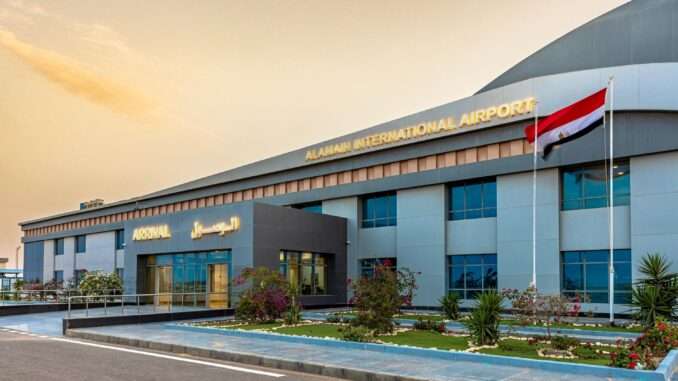
International defense exhibitions, particularly air and space shows, offer countries and manufacturers a crucial opportunity to demonstrate, in practice, their superiority in air combat and in managing air-space operations, as well as their ability to gain air supremacy or control over airspace amid war or anticipated and unanticipated geopolitical tensions. Yet despite the importance of this dimension, these exhibitions also create even more consequential opportunities: meetings and encounters among decision-makers, government officials, and influential figures who shape and define states’ defense policies. Through these gatherings, billions of dollars are not merely spent; opportunities are also opened for cooperation, coordination, and the exchange of expertise, information, and training on security and defense matters, on countering shared threats, and on protecting national interests — all of which currently rank among the foremost priorities of government policy worldwide. Behind every air display lie other messages tied to the defense industry, military capability, markets, partnerships, and foreign policy. Seen in this light, the El Alamein International Airshow, hosted by Egypt in the city of El Alamein from September 8 to 10, 2026, cannot be viewed merely as an occasion to showcase the latest aircraft and aerial systems. In reality, it operates on several fronts simultaneously: as an arms marketplace, a platform for displaying capabilities, an arena for testing doctrines, and an instrument of defense diplomacy.
Official Egyptian data point to expected participation by more than 250 exhibitors from 50 countries, over 100 aircraft, more than 50 aerial displays, and around 12,000 visitors, alongside official delegations from various nations. From an expert’s vantage point at Defense Arabia, the pressing question is not what will be displayed at El Alamein, but rather how to analyze and understand the messages that states and companies intend to send through what they choose to exhibit.
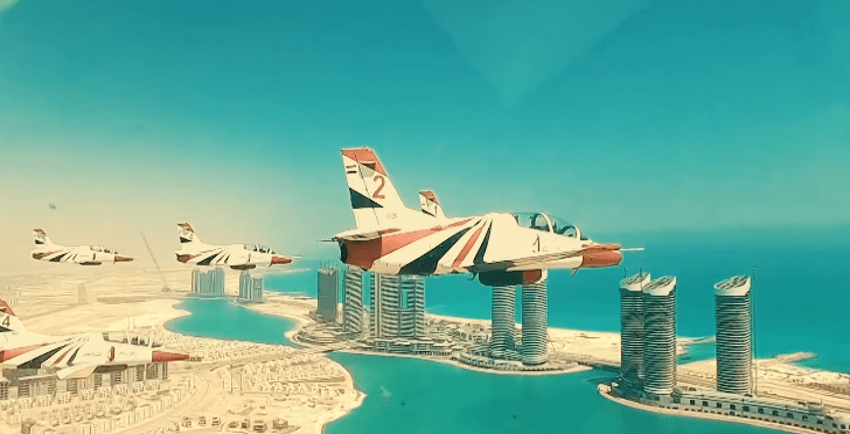
The primary function of any defense exhibition is marketing, but military marketing differs fundamentally from conventional commercial marketing. A company is not merely selling a product; it is attempting to convince a military institution that its system is capable of becoming part of that state’s future combat architecture. This is precisely what the show’s official website affirms, describing El Alamein as a platform targeting senior government and military officials, civil aviation authorities, procurement officials, and company representatives, and offering opportunities to discover partnerships, investment prospects, technology transfer, and industrial localization. In this sense, company pavilions become a strategic marketplace whose purpose is not limited to attracting the public, but is aimed squarely at the decision-maker and the end user. The presence of major corporations at El Alamein does not necessarily mean they intend to sell an aircraft on the spot. The objective may run deeper: building a relationship with an air force, gauging a particular country’s interest in a new system, searching for partners, marketing maintenance or training programs, opening the door to joint manufacturing, and — perhaps most importantly — monitoring competitors’ trends and the capabilities of their aircraft and aerial systems. Here the exhibition transforms from a marketplace for products into a marketplace for information as well, where competitors are tracked, customer interest is assessed, market trends are explored, emerging technologies are monitored, and signals about the needs of clients and armed forces are picked up.
Although air shows carry clear marketing value, they also carry doctrinal, operational, and strategic weight, becoming an arena where military doctrines and philosophies on the use of air and space power — held by manufacturing nations on one side — confront, directly or indirectly, the needs and geopolitical and security particularities of client states on the other. Every system on display is not merely a technical product; in part, it also reflects how the manufacturing state envisions warfare and the management of air and space. The choice of fighter jets, the nature of munitions, the extent of reliance on drones, reconnaissance and early-warning capabilities, air defense, and electronic warfare — all of these are tied to an operational philosophy that determines how air superiority is achieved, maintained, and exploited in battle.
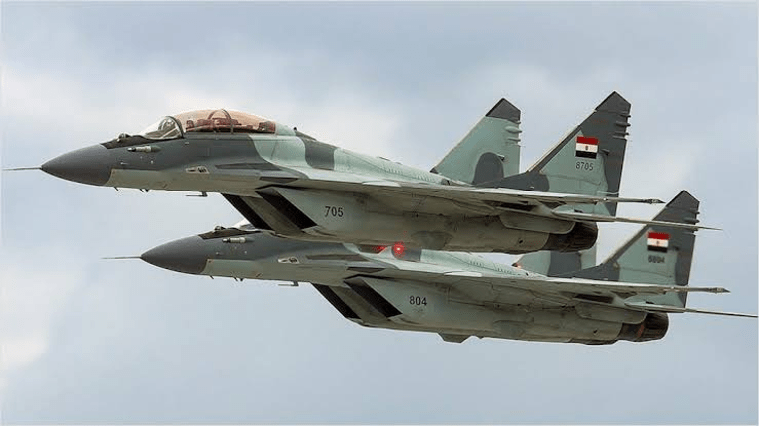
Conversely, the client does not view these systems solely through the lens of technical specifications; it approaches them through the prism of its geographic environment, potential threats, the nature of its theater of operations, its resources, and its capacity to absorb the technology. What suits a country with vast strategic depth facing long-range aerial threats may not suit a smaller nation confronting dense missile and drone threats. Likewise, the needs of a state focused on protecting critical infrastructure differ from those of a state seeking to build power-projection capability beyond its borders. Air shows, therefore, are in truth spaces of interaction between the operational proposition of the product and the client’s geopolitical reality, as manufacturing states attempt to convince buyers that their systems can address the challenges and neutralize the risks they face, while participating states search for the systems and technologies that can be aligned with their doctrine and security environment.
For the host nation, Egypt, there is a dimension that goes beyond the commercial, one embodied in political messages directed at more than one regional and international party. Egypt’s Ministry of Defense has affirmed that organizing the show reflects the armed forces’ commitment to hosting major international events on Egyptian soil, noting the involvement of the Air Force, the Ministry of Civil Aviation, the Egyptian Space Agency, and EgyptAir in preparing for the event. This makes the exhibition an opportunity to showcase the state’s institutional capacity, not merely the air power of its armed forces. Egypt is presenting itself at El Alamein as a nation that possesses air power, a defense industry, civil aviation infrastructure, space capability, and a geographic position that allows it to serve as a connecting link and regional hub for interaction in the aerial defense industries between Africa, the Middle East, and Europe.
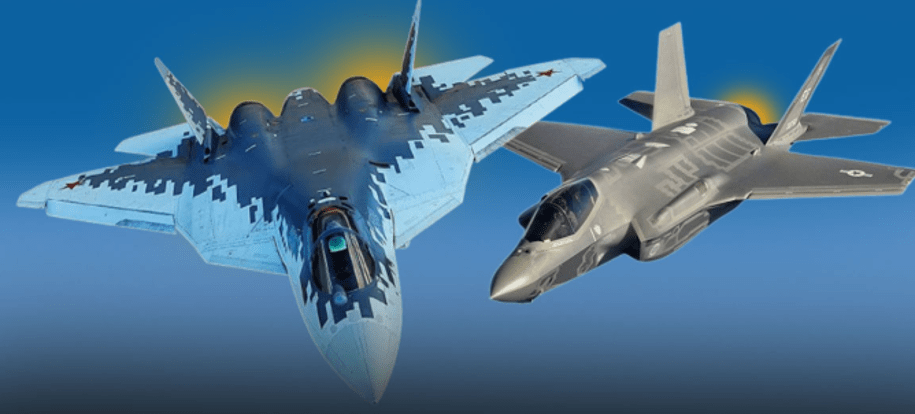
Among the most notable aircraft expected to be displayed are France’s Rafale, Greece’s F-16, and Spain’s F-18. As for the F-35 and the Su-57, there is no confirmation yet that either will perform any aerial displays, which leaves their presence — or absence — among the most closely watched elements, given what it would signify about fifth-generation fighters appearing at this event.
Different schools of thought on the use of air power will be represented at the El Alamein show, and through this opportunity, Defense Arabia’s presence at El Alamein will not be mere media coverage of the event, but an effort to read what lies beneath the surface: What does each aircraft contribute to doctrine? How does each system respond to threat? And what do the interests of participating states and clients reveal about the hidden strengths and weaknesses of their armed forces? At El Alamein, we will not settle for observing what flies overhead; we will read and analyze every military and political message conveyed there, and we will seek to explore and interpret the military doctrines and operational philosophies poised to shape the wars of the future.


Be the first to comment