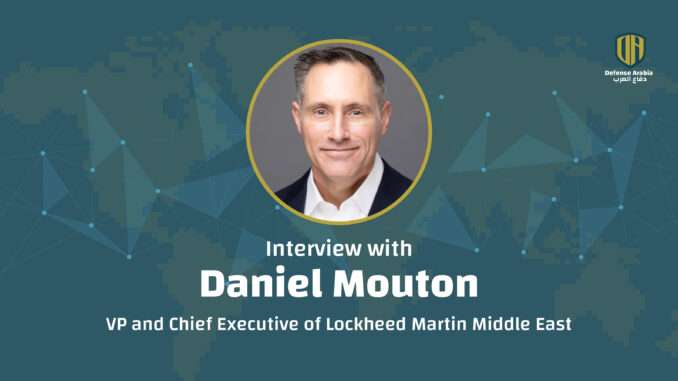
Six decades of partnership in the Middle East have taught Lockheed Martin that trust in this region is never transferred with a signature. It is built over time, through people, shared risk and follow-through. Daniel Mouton, Vice President and Chief Executive of Lockheed Martin Middle East, took the helm of the company’s regional operations in January 2026 with that principle firmly in mind. Rather than opening his tenure with a product briefing, he convened an Industry Week in Abu Dhabi that brought together local technology firms, government partners and Lockheed Martin engineers to explore joint development, a signal of intent that reflects a broader shift underway across the region’s defense sector.
From the UAE to Qatar and Kuwait, Gulf nations are moving beyond procurement toward sovereign capability. They want to train their own engineers, build their own suppliers and eventually shape the systems they operate, not simply purchase them. In this interview with Defense Arabia, Mouton discusses how Lockheed Martin is adapting to that shift through initiatives such as the Center for Innovation and Security Solutions in Abu Dhabi, the Tawazun and EDGE Group chiplet design agreement, a new Cybersecurity Center of Excellence with Data7, and a Letter of Intent with Barzan Holdings in Qatar. He outlines what meaningful localization requires beyond assembly lines, where near-term opportunities lie across integrated air and missile defense, space, cyber and autonomy, and what a genuinely localized Lockheed Martin presence in the Middle East should look like five years from now.
1. Lockheed Martin has been present in the region for more than six decades. How does that legacy shape the relationships you are building now?
When I assumed leadership of Lockheed Martin Middle East in January 2026, I made a deliberate choice about how to begin. I did not lead with a product briefing, nor did I focus on the sale of a marquee platform. I hosted an Industry Week in Abu Dhabi, bringing together local technology companies, government partners and Lockheed Martin engineers to explore how we could build something together.
The message was straightforward: our partners across the region do not just want to buy defense systems. They want to build the capability to sustain, adapt and, where appropriate, help develop those systems at home. Lockheed Martin’s role in this region must evolve accordingly, from supplier to genuine industrial partner.
That approach is grounded in more than six decades of partnership across the Middle East. For me, that history is not an abstraction. I have spent much of my own career working in this part of the world, and I have seen the relationship from more than one vantage point. Over that time, our relationships have matured from platform delivery into deeper collaboration across training, sustainment, technology, industrial participation and workforce development.
Today, we view the region not simply as a market, but as a community of long-standing partners who are shaping the future of security with us. From the UAE to Qatar to Kuwait and beyond, our focus is on building durable partnerships that support national defense priorities, economic development and sovereign capability. In this region, trust is personal, and it is earned over time rather than transferred with a contract. That is the foundation we are building on.
That is central to our 21st Century Security® vision: connecting advanced technologies, trusted relationships and industrial partnerships to strengthen deterrence and readiness.
2. You invest in people, manufacturing capability and technology. Which of these matters most in building a strong national defense industry?
All three matter, but people are multipliers that reach beyond a single project. Technology provides the operational edge, and manufacturing provides the industrial foundation. But without a skilled national workforce, neither can be sustained over time.
A strong national defense industry depends on engineers, technicians, software developers, operators and leaders who can absorb advanced technologies, maintain them, adapt them and eventually improve them. That is where localization becomes real. It is not only about where something is assembled. It is about whether a country has the talent, infrastructure and institutional confidence to sustain and advance critical capabilities over decades.
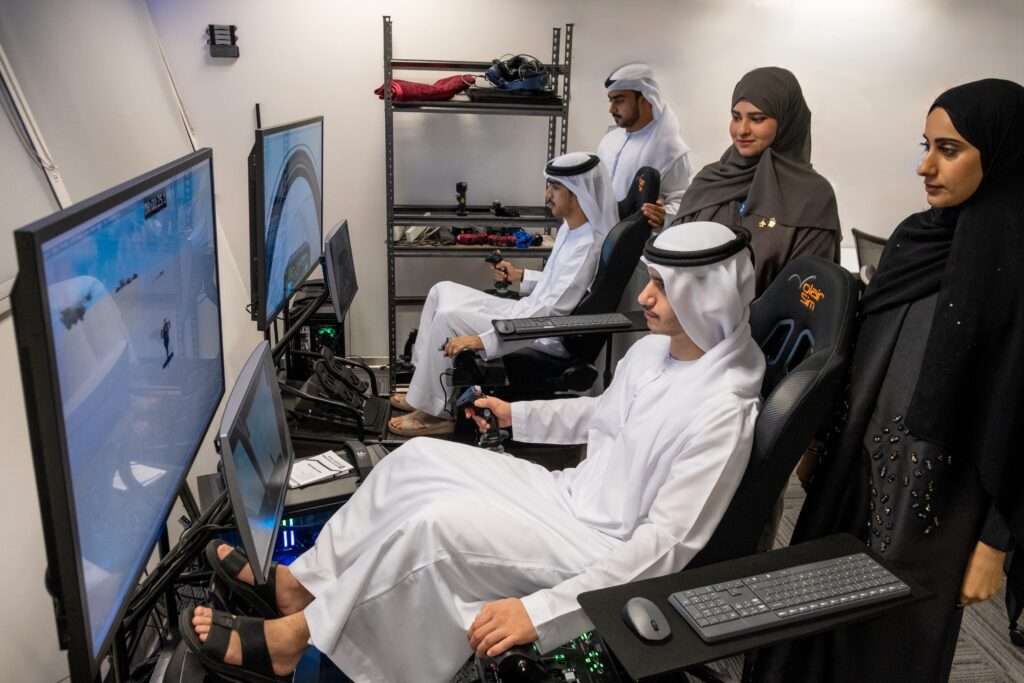
This is the approach we have taken in the UAE through our Center for Innovation and Security Solutions in Abu Dhabi, which has supported hands-on training, mentorship and applied innovation in fields including operational analysis, machine learning, artificial intelligence and aerospace and defense applications. Importantly, knowledge transfer is not one-way. Projects developed by interns and young engineers in the region have helped inform Lockheed Martin thinking and applications in the United States.
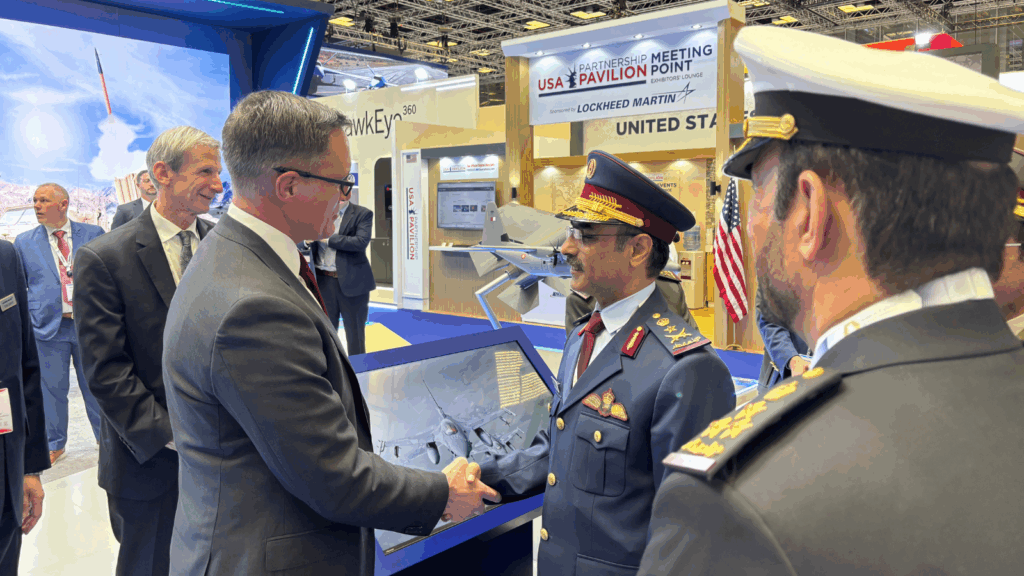
We are applying the same model elsewhere in the region. At DIMDEX 2026 in Qatar we signed a Letter of Intent with Barzan Holdings that reflects a shared focus on skills development, applied learning and knowledge exchange as the foundation for long-term sovereign capability, aligned with Qatar Armed Forces priorities and Qatar’s long-term security objectives.
Technology, manufacturing and people have to move together. But if you ask what makes a national defense industry resilient, my answer is clear: it begins with people.
3. Regional partners increasingly want production on their soil, not just finished products. How does Lockheed Martin define meaningful localization, and how do you move beyond assembly toward genuine local capability?
Meaningful localization is not a checklist exercise. It is not simply doing a one-time purchase order and calling it industrial development. For us, meaningful localization means building transferable capability: local talent, local suppliers, local sustainment capacity, engineering depth and, where there is a clear strategic, commercial and regulatory basis, advanced manufacturing and technology collaboration.
Across the GCC, national strategies are converging around economic transformation through indigenous industrial capacity. This is a significant shift in what our partners expect from their defense relationships. The traditional model, where a nation procures a finished system and depends on overseas sustainment, no longer fully meets the needs of our customers or the complexity of the threat environment they face.
In response, we are working with partners to identify where Lockheed Martin can bring real industrial value. That may include training, sustainment, supplier development, engineering support, software capability, advanced manufacturing or structured pathways toward co-production.
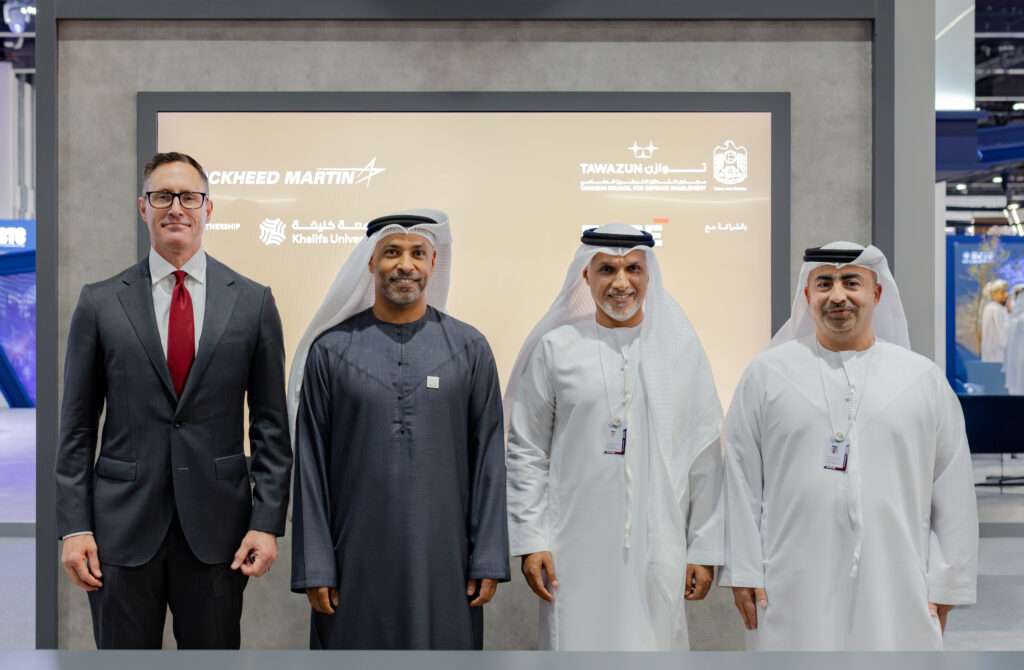
The UAE is a good example. At Make it in the Emirates in Abu Dhabi, Lockheed Martin and Tawazun announced two important initiatives: a strategic agreement with EDGE Group and Khalifa University to establish a chiplet design and assembly facility, and a Cybersecurity Center of Excellence developed with Data7 in coordination with the UAE Cyber Security Council. These are exactly the kinds of partnerships that move beyond platform delivery and into high-value technology, workforce development and sovereign capability.
That is the standard we apply: localization must create lasting capability, not temporary activity.
4. Across your markets, from the Gulf to Jordan, Iraq and others, where do you see the strongest near-term opportunities for expanding Lockheed Martin’s footprint?
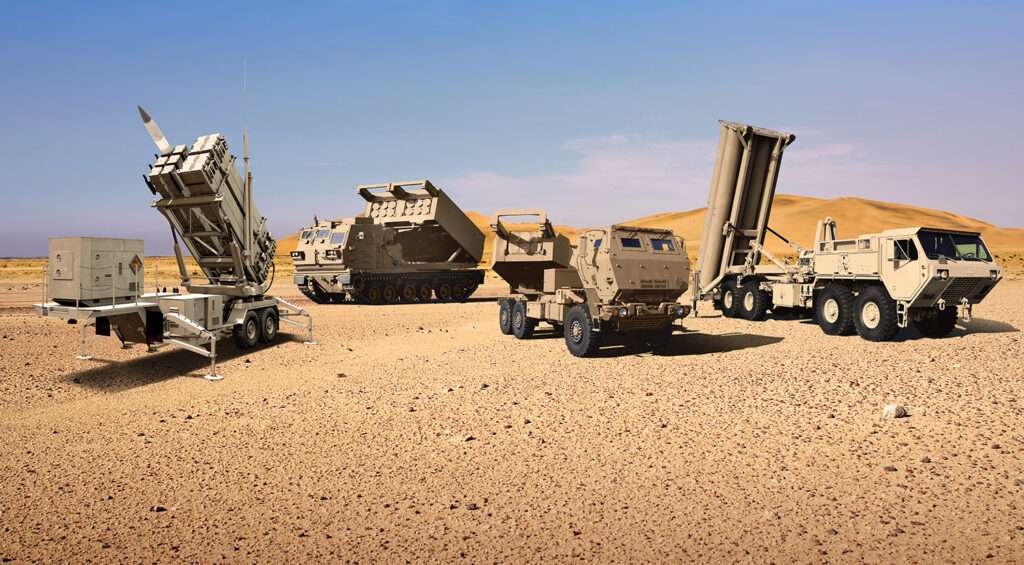
Across the Middle East, the strongest near-term opportunities are in innovation and advanced capabilities that directly respond to the region’s evolving threat environment. Our partners are focused on integrated air and missile defense, air power, command and control, maritime security, cyber resilience, space-enabled capabilities and emerging technologies such as artificial intelligence and autonomy.
These are not isolated requirements. They are connected capabilities that must operate across land, air, sea, cyber and space, while remaining interoperable across national armed forces, regional partners and allied forces. That is increasingly important as the region faces more complex missile, drone, cyber and asymmetric threats that require faster decision-making, greater integration and resilient operational networks.
For Lockheed Martin, expanding our footprint does not simply mean increasing our corporate presence. It means helping partners field, sustain and adapt advanced capabilities that strengthen their own deterrence and readiness. That work serves our partners’ priorities first — their security, their sovereignty and their freedom of action in a demanding environment. It is also consistent with the historic US commitment to strengthening partner capability and interoperability, but the starting point is always what each nation is working to achieve for itself.
The most immediate opportunities are in the Gulf, where advanced defense modernization and industrial ambition are moving together. Other important markets are looking for our support to bolster readiness, sustainment, training and overall modernization.
In the UAE, we see significant opportunities in advanced technology collaboration, including semiconductors, cybersecurity and digital resilience. The agreements with Tawazun at Make it in the Emirates, now moving from signature into execution, reflect that direction and show how defense-industrial partnerships can support both security and economic priorities.
The common thread is capability. Our customers are looking for trusted partners who can deliver advanced technologies, integrate them into complex operating environments and help build the local skills and industrial base needed to sustain them over time.
5. Five years out, what does a more localized Lockheed Martin presence in the Middle East look like?
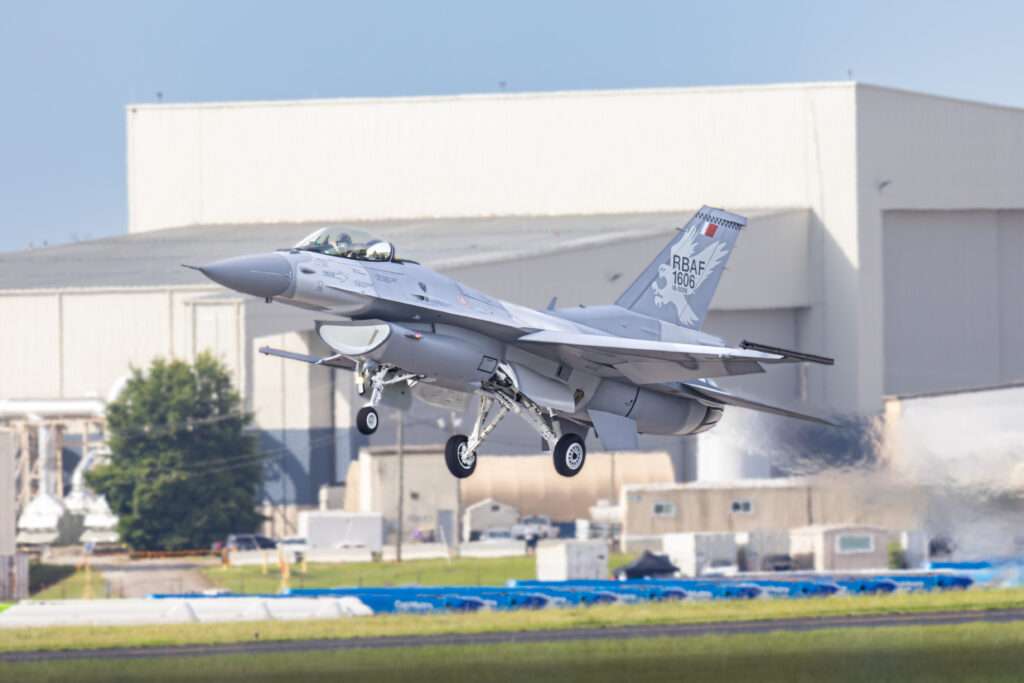
Five years from now, a more localized Lockheed Martin presence in the Middle East should be measured not only by the systems we deliver, but by the capabilities we help build.
That means more regional talent trained in advanced technologies. More local companies integrated into relevant supply chains. More sustainment, engineering support and applied innovation taking place in the region. More partnerships that help nations strengthen readiness while advancing their own industrial ambitions.
It also means a deeper, more practical form of collaboration. Our partners are not content to remain operators alone. Over time they intend to shape and help advance the capabilities they field. This is a sovereign right and responsibility and one that we support. That requires long-term investment, trusted relationships and a clear understanding of each country’s priorities and institutional framework.
For Lockheed Martin, success will be measured by engineers trained, capabilities transferred, local capacity built and partnerships strengthened. That is how we move beyond individual programs and build the foundation for the next generation of US-Middle East defense cooperation.
Ultimately, our goal is not simply to maintain a presence in the region. It is to remain a trusted partner in helping nations solve complex security challenges, strengthen their defense readiness and build resilient industrial ecosystems that deliver value well beyond any single platform. I have spent much of my life in this part of the world, and one lesson has held throughout: the partnerships that endure are the ones built on respect, presence and follow-through. That is the standard I want Lockheed Martin to be measured against here.


Be the first to comment