Paulo Dominonni
Gulf defense manufacturers have entered a new phase of their industrial trajectory. Having built — in less than two decades — sophisticated domestic capabilities across armored vehicles, autonomous systems, defense electronics, and integrated security platforms, several companies from the region are now actively pursuing international positioning as a strategic objective in its own right.
This shift is qualitative, not merely commercial. Global engagement for these manufacturers no longer means export transactions. It increasingly means long-term industrial presence, partnership architecture, and the establishment of durable positions in markets with structural procurement potential.
Within this context, Latin America is emerging as a region of growing strategic interest.
Defense modernization across Latin America advances at an uneven pace, shaped by fiscal constraints, political cycles, and diverse operational requirements. Yet several countries are entering identifiable cycles of capability renewal — particularly in tactical mobility, armored platforms, and security-related systems. These procurement processes unfold across complex geographic environments, from dense urban corridors to vast border regions and remote terrain, creating differentiated demand that international manufacturers with versatile platforms are well positioned to address.
For companies evaluating sustained engagement in Latin America, however, one market stands apart as the essential point of entry: Brazil.
Brazil’s Strategic Weight in the Region
Brazil is the largest defense market in Latin America by a considerable margin — both in procurement volume and industrial depth. Annual defense expenditure has consistently placed the country among the top thirty globally, and its land systems and security vehicle procurement alone represents a market estimated in the range of several billion dollars over the current decade.
Over the past decades, Brazil has developed a defense industrial base that extends well beyond final assembly. It encompasses aerospace manufacturing, land systems integration, naval platforms, defense electronics, and security technologies — supported by an extensive network of specialized suppliers, engineering centers, and public research institutions.
This industrial depth is strategically significant. It means that partnerships in Brazil are not limited to distribution or representation arrangements. They can involve genuine industrial cooperation, supply chain integration, and co-development initiatives with local entities that possess real technical capacity.
Beyond its domestic scale, Brazil exercises considerable institutional influence across the region. Procurement decisions and industrial frameworks adopted in Brasília frequently serve as reference models for neighboring markets. A manufacturer that establishes credible positioning in Brazil does not simply access one market — it acquires regional visibility.
The Institutional Architecture of Brazilian Defense Procurement
Entering the Brazilian defense market requires navigating an institutional environment more complex than those typically encountered in comparable emerging markets.
Procurement processes involve multiple actors operating across overlapping mandates: the armed forces, the Ministry of Defense, strategic planning bodies, and government institutions responsible for industrial and technological policy. Decision cycles are longer than in many other markets, and final acquisition decisions rarely reflect technical evaluation alone.
Several factors beyond platform performance consistently influence procurement outcomes in Brazil:
Local industrial participation is an increasingly formal requirement in major programs. Proposals that demonstrate a credible commitment to engaging Brazilian industry — whether through partnerships, subcontracting, or supply chain integration — are structurally advantaged over those that do not.
Technology transfer has become a standard expectation in strategic acquisitions. Brazilian defense policy explicitly prioritizes programs that contribute to the development of domestic technical knowledge and reduce long-term dependency on foreign supply.
In-country sustainment capability is evaluated as an integral component of total program value. The ability to maintain, upgrade, and support platforms through local structures — rather than relying exclusively on overseas provision — is a significant differentiator in competitive evaluations.
These requirements are not simply procedural constraints. They reflect a coherent long-term policy orientation: strengthening Brazil’s national technological and industrial autonomy in the defense sector. Manufacturers that understand this orientation — and structure their proposals accordingly — are far better positioned than those that approach Brazil as a standard export market.
Industrial Alignment as a Competitive Factor
In recent years, industrial alignment has evolved from a compliance requirement into a genuine competitive differentiator in the Brazilian defense market.
Proposals that integrate well-structured industrial cooperation components tend to generate stronger institutional support — not only within the armed forces, but also among the broader network of government bodies and policymakers involved in strategic acquisition decisions.
Industrial alignment in Brazil can take several forms. Partnerships with established local defense companies provide institutional legitimacy and accelerate access to relevant networks. Integration of Brazilian suppliers into production or maintenance chains demonstrates long-term commitment to the domestic industrial ecosystem. The establishment of local technical and sustainment capabilities signals durability of engagement beyond the initial transaction.
When structured with genuine industrial logic — rather than as a compliance exercise — these arrangements tend to generate compounding returns. They create relationships that outlast individual procurement cycles and position manufacturers as long-term partners within Brazil’s defense industrial base rather than external suppliers.
For Gulf manufacturers accustomed to operating within complex industrial cooperation frameworks in their home markets, this orientation is not unfamiliar. The challenge lies in translating that experience into the specific institutional and regulatory context of Brazil.
Opportunities for Gulf Defense Manufacturers
The capabilities Gulf defense manufacturers have developed over the past decade align closely with several of the most significant demand vectors in Latin America.
In armored vehicle platforms, companies from the region have moved from licensed production into original design and export — offering wheeled and light-protected platforms with proven operational records across diverse environments. These characteristics address requirements frequently encountered across Latin American security and defense procurement, where versatility, operational reliability, and lifecycle cost are prioritized alongside raw performance specifications.
In modular tactical mobility, Gulf manufacturers have demonstrated the ability to configure platforms across multiple mission profiles — a capability with direct relevance to the diverse operational requirements of Latin American armed forces and security agencies.
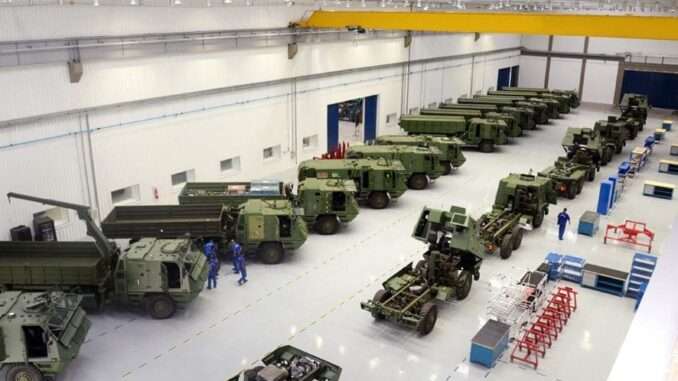
In advanced manufacturing and integrated systems, the region has built capabilities that enable meaningful industrial cooperation rather than simple supply arrangements — an important distinction in a market like Brazil, where the quality of industrial partnership is evaluated, not merely its existence.
Brazil’s openness to international industrial cooperation — reflected in policy frameworks and in the historical record of its major programs — creates genuine space for new partnership models between Gulf manufacturers and Brazilian industrial partners.
The Architecture of Local Representation
For international manufacturers entering the Brazilian defense market, the structure of local representation is not a secondary operational consideration. It is a strategic variable that directly influences institutional access, partnership quality, and long-term positioning.
In Brazil, effective representation extends well beyond commercial intermediation. It functions as an institutional interface between the international manufacturer and the full ecosystem of actors involved in defense procurement — the armed forces, ministerial bodies, strategic planning institutions, industrial partners, and the broader network of stakeholders that shape acquisition outcomes.
Representation structures that operate primarily as sales intermediaries frequently encounter significant limitations in Brazil. They may facilitate initial contact but lack the institutional depth required to navigate complex procurement processes, build durable industrial partnerships, or engage credibly with policy-level interlocutors.
By contrast, representation architectures designed around institutional engagement, industrial alignment, and long-term market positioning tend to generate substantially different outcomes. They enable manufacturers to build the kind of durable presence in Brazil that transforms a market entry into a strategic platform.
For Gulf manufacturers evaluating engagement in Brazil, the design of the representation structure should therefore be treated as a foundational element of market entry strategy — not an afterthought to be resolved once commercial opportunities have been identified.
Brazil as a Regional Platform
As Gulf defense manufacturers continue expanding their international presence, Latin America is likely to occupy an increasingly significant position in their global strategies. The region’s procurement cycles are entering phases of renewal, its operational requirements are diversifying, and its openness to international industrial cooperation is growing.
Within this landscape, Brazil occupies a position that no other Latin American market can replicate. Its procurement scale, industrial depth, and institutional influence across neighboring countries make it the natural anchor point for any manufacturer seeking durable regional positioning.
LAAD Defense & Security 2026 — scheduled for April in São Paulo and one of the most significant defense events in the Western Hemisphere — will bring together decision-makers, industrial partners, and international manufacturers in a concentrated environment of strategic engagement. For Gulf manufacturers evaluating or advancing their Latin American positioning, it represents a structurally important moment.
Long-term success in Brazil will require technological competitiveness. But it will depend equally on the ability to align industrial strategies, navigate institutional dynamics, and build partnership architectures suited to the specific characteristics of the Brazilian defense ecosystem.
Manufacturers that invest in understanding that ecosystem — and in structuring their engagement accordingly — will be significantly better positioned to convert Latin America’s emerging opportunities into durable industrial and commercial presence.


Be the first to comment