Lama Farouk
In recent years, military cooperation between Egypt and China has moved beyond the framework of traditional arms deals, gradually evolving toward a broader model of defense cooperation within the context of the comprehensive strategic partnership established between the two countries in 2014. This trajectory is not limited to the acquisition of military systems and equipment; it also extends to joint training, the exchange of expertise, and cooperation in military manufacturing and technology. Tracing this relationship over the past two decades shows that the current rapprochement, which has been particularly visible on the ground through the “Eagles of Civilization 2026” exercise, is not a recent phenomenon, but rather the continuation of a military and industrial relationship that has steadily accumulated since the beginning of the millennium.
From Customer to Industrial Partner
The nature of Egyptian-Chinese cooperation shows that the strategic value of the relationship cannot be measured solely by the number of systems Cairo acquires from Beijing or the value of announced contracts, but also by the extent to which both sides are involved in broader stages of the weapons production cycle. Since the K-8E program, Chinese involvement has not been limited to supplying a ready-made system; it has been associated with establishing local production and manufacturing capabilities in Egypt. This model was later extended to the unmanned aircraft sector and began to emerge in other defense-industrial cooperation arrangements. Such cooperation gives Cairo an opportunity to accumulate industrial expertise and expand the pool of skills associated with the production, maintenance, and development of military equipment.
This dimension is particularly important for Egypt, which has maintained a defense-industrial base for decades that includes the Arab Organization for Industrialization and factories and companies affiliated with the Ministry of Military Production, while seeking to expand its capabilities in defense industries and localize technology. From this perspective, Egypt’s opening toward China can be understood as part of a broader policy aimed at acquiring technology and industrial expertise alongside the weapons themselves. For Cairo, the equation is not simply about obtaining a system that meets operational requirements, but also about the extent of Egyptian participation in its production, maintenance, and development.
Several industrial milestones illustrate this trajectory more clearly. In 2000, the Aircraft Factory of the Arab Organization for Industrialization began producing the K-8E trainer aircraft in cooperation with China, with the local manufacturing share of the aircraft’s structure reaching 94.5 percent, according to data from the Arab Organization for Industrialization. About a decade later, the same model was extended to the unmanned aircraft sector, when the Aircraft Factory began producing the ASN-209 unmanned aerial vehicle in 2010, with the organization stating that the local manufacturing share of its airframe reached 99.5 percent. Thus, within a few years, cooperation expanded from a manned training platform to unmanned systems, accompanied by a clear increase in the level of Egyptian industrial participation.
In 2025, indications emerged that cooperation was entering a new phase, with the Arab Organization for Industrialization signing a memorandum of understanding with China’s NORINCO for joint manufacturing in the defense-industrial field. The organization stated that the areas of cooperation included technology localization, strengthening local production of defense systems, and making use of the capabilities of the Aircraft Factory. Although a memorandum of understanding does not, in itself, mean that production has begun or that a new system has entered service, it does indicate an effort to expand cooperation beyond existing manufacturing programs toward new arrangements aimed at technology localization and strengthening local industrial capabilities.
This trajectory does not mean that Cairo is seeking to replace its traditional suppliers with China. Egypt’s arms procurement pattern over the past decade shows continued defense relations with France, Germany, Italy, the United States, and Russia, alongside expanding cooperation with China and other countries. This diversification gives Egypt greater flexibility in selecting sources of weapons and technology, while allowing it to distinguish between the objective of acquiring an immediately available operational capability and that of building a domestic industrial capability over the longer term.
Accordingly, the rise of Egyptian-Chinese defense cooperation should not be interpreted as Egypt shifting toward Chinese weapons at the expense of its traditional suppliers, but rather as a gradual transformation in the nature of the relationship itself. Available evidence shows that China is no longer present solely as a supplier of military systems, but has also become, in specific sectors, a partner in manufacturing, assembly, technology localization, and the exchange of expertise. At the same time, Cairo is using this opening to broaden its industrial and defense options while maintaining an extensive network of defense relationships with other international powers. This equation may ultimately prove more important than any individual arms deal, as it could shape the direction of Egyptian-Chinese military cooperation in the years ahead.
Diversifying Arms Suppliers… Numbers Reveal a More Complex Picture
Data from the Stockholm International Peace Research Institute (SIPRI), which provides one of the world’s most comprehensive and consistent databases on transfers of major arms, shows that Egypt’s diversification path is not moving in a straight line toward China, but instead reflects broader and more complex shifts. Egypt’s imports of major arms increased by 212 percent between the 2010–2014 and 2015–2019 periods, making Cairo the world’s third-largest importer of major arms during the latter period. These imports then increased by another 73 percent between the 2012–2016 and 2017–2021 periods, with Egypt again ranking third globally among the largest importers of major arms.
The trend subsequently reversed significantly. Egypt’s imports of major arms declined by 44 percent between 2015–2019 and 2020–2024, according to SIPRI data published in 2025, moving Egypt from third place globally to eighth among the world’s largest importers of major arms. SIPRI notes that Egyptian imports during the past decade reflected a clear focus on strengthening long-range strike capabilities and naval power.
Egypt’s recent procurement record also demonstrates the expansion of its supplier base, rather than a simple U.S.-China procurement axis. During the 2019–2023 period, Egypt’s major imports included three frigates and two submarines from Germany, two frigates from Italy, and 20 combat aircraft from Russia, in addition to three frigates and long-range missiles from France, according to SIPRI data. France, Italy, Germany, and Russia have consequently become among Egypt’s major arms suppliers alongside the United States, reflecting the clear diversification of Egypt’s sources of military equipment.
This diversification was particularly evident in several major contracts concluded by Cairo since 2015. These included the French agreement signed by Egypt in February 2015, worth €5.2 billion, or approximately $5.9 billion, covering 24 Rafale fighter aircraft and one FREMM-class frigate. The agreement represented the first export order for the Rafale fighter since the aircraft was introduced to the international market. That same year, Egypt contracted France for two Mistral-class helicopter carriers, which had originally been built for Russia before being transferred to Egypt. The Egyptian Navy received the two vessels in 2016.
In this broader context, China’s share of the arms market in the Middle East and North Africa remains relatively limited so far. China accounted for only 1.2 percent of major-arms imports by countries in the region during 2020–2024, compared with 50 percent for the United States, 12 percent for Italy, 9.7 percent for France, and 7.6 percent for Germany. China’s share had also declined from 3 percent during 2015–2019 to 1.2 percent during 2020–2024. Therefore, Egypt’s growing military relationship with China does not represent a shift toward dependence on Beijing as a principal arms supplier. Rather, it reflects Cairo’s effort to broaden its defense and industrial options and benefit from cooperation with China in selected fields.
“Eagles of Civilization”… An Air Exercise or a Prelude to a Major Arms Deal?
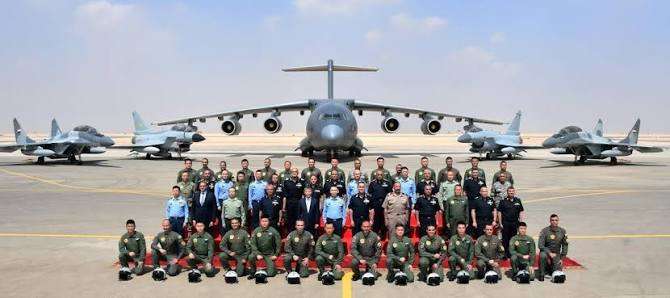
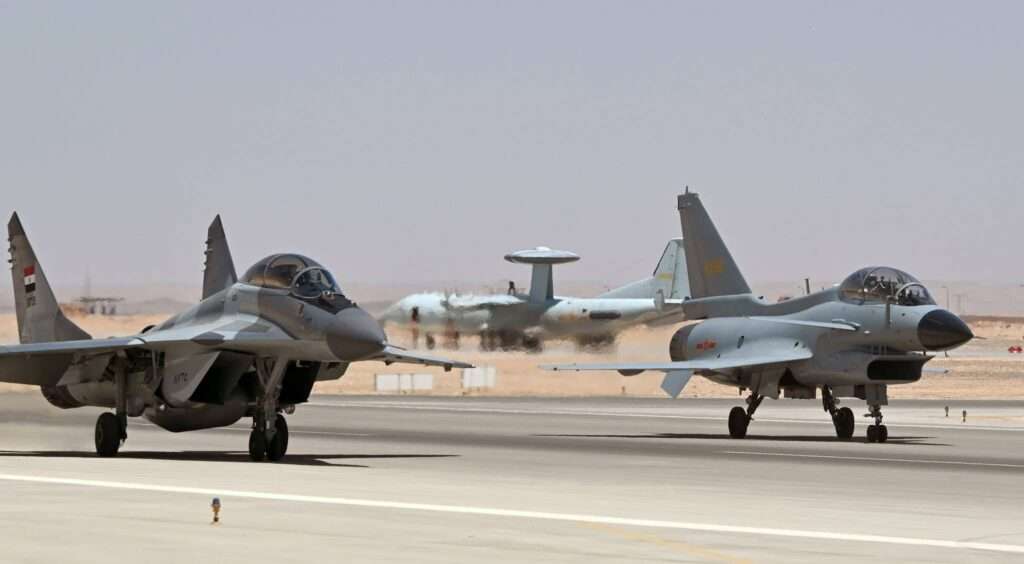
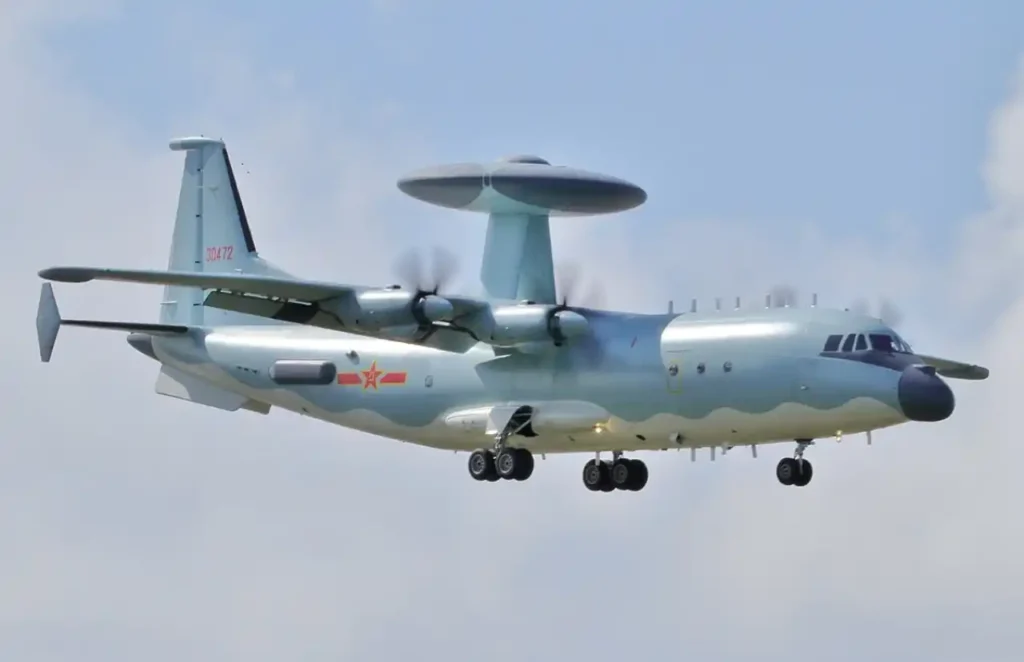
The “Eagles of Civilization” exercise was launched for the first time in April 2025 as the first joint air exercise between the Egyptian and Chinese air forces. The first edition was conducted at an Egyptian air base between April 17 and May 4, 2025, while air-combat and aerial-refueling activities began on April 19. It involved Chinese J-10C fighter aircraft, a KJ-500 airborne early-warning and control aircraft, aerial refueling aircraft, and Egyptian MiG-29 fighters. The exercise included theoretical and practical lectures aimed at developing common operational concepts, joint sorties, air-operations planning and management, and the exchange of experience.
The deployment of the Chinese air contingent to Egypt involved the use of Y-20 strategic transport aircraft. Flight-tracking data and open-source imagery showed several aircraft of this type during the deployment, with stopovers in Dubai before reaching Egypt. The Chinese contingent also included aerial refueling aircraft and a KJ-500 airborne early-warning aircraft, enabling the participating forces to train with fighter aircraft and supporting air platforms as part of an integrated operational package.
In August 2026, the Egyptian and Chinese air forces returned to joint training as part of the second edition of “Eagles of Civilization.” The Egyptian Armed Forces announced on August 22 that the exercise had begun with the participation of a number of multirole fighter aircraft. The initial stages included theoretical and practical lectures, joint sorties, training in planning and managing air-combat operations, and the exchange of expertise. The exercise is scheduled to continue for several days at a number of Egyptian air bases.
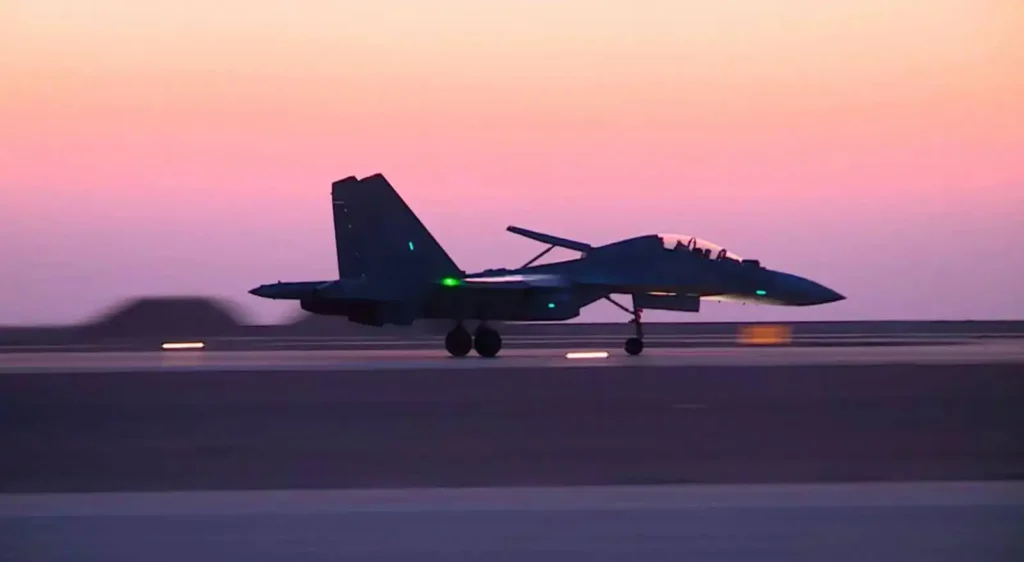
The most notable development in the 2026 edition is the first participation of China’s heavy J-16 fighter aircraft, whereas the Chinese participation in the previous edition had been centered primarily on J-10C fighters, along with support, early-warning, and aerial-refueling aircraft. According to open-source imagery and monitoring, at least six J-16 fighters were observed during their deployment to Egypt, accompanied by support aircraft, on a journey exceeding 6,000 kilometers. The deployment represents a notable test of the Chinese air force’s ability to deploy heavy fighters together with air-support assets over long distances.
The current edition also witnessed an important development on the Egyptian side, with Egyptian Rafale fighters participating in air-combat training with Chinese J-16 fighters. China’s Ministry of National Defense stated that pilots from both countries conducted medium- and close-range air-combat training and released photographs and video footage showing the participation of both aircraft types. This represents the first documented participation of Chinese J-16s in an air exercise with Egyptian Rafales as part of “Eagles of Civilization.”
The significance of the exercise is not limited to the fighters themselves. The current edition also involves supporting air platforms, including airborne early-warning and aerial-refueling aircraft, allowing Egyptian and Chinese crews to train in operating within multi-role air formations. Official Chinese statements indicate that the program includes medium- and close-range air-combat training, air combat and air-superiority missions, combat search and rescue, as well as force employment, operational planning, and the exchange of experience.
The participation of J-16 and Rafale fighters has once again brought questions about the possibility of expanding Egyptian-Chinese defense cooperation to include other fighter aircraft and airborne systems. Earlier reports had linked the exercise to possible Egyptian interest in the J-10C, but such reports alone are insufficient to establish the existence of a contract. China’s Ministry of National Defense had also denied, in February 2025, reports concerning the sale or delivery of J-10 fighters to Egypt. Therefore, any potential future deal remains separate from the exercise itself, and the participation of J-10C or J-16 aircraft cannot in itself be considered evidence that an arms deal has been concluded.
Beyond speculation over potential arms deals, a comparison between the 2025 and 2026 editions reveals a clear development in the technical level of the training. In the first edition, Egyptian and Chinese forces trained with J-10C and MiG-29 fighters in joint formations, alongside airborne early-warning and aerial-refueling aircraft. The 2026 edition added the heavy J-16 fighters alongside Egyptian Rafales, while continuing air-combat training, operational planning, and the exchange of expertise. From this perspective, “Eagles of Civilization” appears to represent an incremental process of expanding the scope of joint air training rather than merely a recurring standalone activity.
Why Is Egypt Opening Up to China Despite the Challenges of an Alternative?
Diversifying arms suppliers gives Egypt different options for upgrading capabilities that can be difficult to develop while relying on a single weapons ecosystem. This is particularly relevant in the field of air combat, where the Egyptian Air Force operates a large fleet of F-16 fighters, significant portions of which belong to earlier production generations. There are no publicly available indications that Egypt has introduced AIM-120 AMRAAM missiles into the armament of its F-16 fleet, while its F-16s have historically been associated with AIM-7 Sparrow beyond-visual-range air-to-air missiles.
The Chinese option, by contrast, offers access to a different air-combat weapons ecosystem. The J-10C, as well as its export version, the J-10CE, is designed to operate with long-range PL-15-family air-to-air missiles, including the export PL-15E. From a theoretical operational perspective, this type of weapon provides a beyond-visual-range engagement capability that differs from the older missile systems still present in some regional air fleets. However, this possibility does not mean that Egypt has actually acquired J-10CE fighters or PL-15E missiles, as there has been no official Egyptian announcement confirming such a deal.
This opening also extends to the unmanned aircraft sector, which has become one of the areas of Egyptian-Chinese defense cooperation. Egypt already operates a number of Chinese unmanned systems, including the ASN-209 and Wing Loong, while the 2025 EDEX exhibition saw indications of Egyptian interest in the Chinese WJ-700 unmanned aircraft, a jet-powered system designed for reconnaissance and strike missions. However, reports concerning an Egyptian contract to acquire the WJ-700 have not, so far, received an official public confirmation from the Egyptian Ministry of Defense or the Chinese manufacturer. It is therefore difficult to treat the reported deal as confirmed.
The WJ-700, if eventually introduced into Egyptian service, offers capabilities that differ from some of the Chinese unmanned systems currently operated by Cairo. It combines higher speed, high-altitude flight, and long endurance with the ability to carry a variety of guided weapons. Operationally, this could provide an additional capability for reconnaissance and long-range strike missions, although its actual role within the Egyptian Air Force would depend on whether Cairo ultimately contracts for the system and on the specifications and weapons package selected.
This trend is not limited to Egypt. In May 2023, the South China Morning Post, citing Tactical Report, reported that Saudi military industries were holding discussions with China’s NORINCO over a range of systems, including the Sky Saker FX80 unmanned aircraft, the CR500 unmanned helicopter, Cruise Dragon 5 and 10 loitering munitions, and the HQ-17AE short-range air-defense system. These reports concerned potential negotiations, rather than an announcement of a completed arms deal.
These cases indicate that engagement with Chinese defense industries is not limited to the acquisition of individual fighter aircraft or weapons systems. It also encompasses areas such as unmanned systems, air defense, guided munitions, and industrial cooperation. For Egypt, the value of the Chinese option therefore does not necessarily lie in replacing one weapons ecosystem with another, but rather in adding a new source of technology and military systems and expanding the range of options available to the Egyptian Armed Forces in selected areas.
Ultimately, Egypt’s growing engagement with China can be understood as part of a policy of diversifying capabilities and sources rather than a complete shift from one weapons ecosystem to another. Egypt continues to operate and develop American, European, and Russian systems while simultaneously expanding cooperation with China in selected fields. The relationship with Beijing therefore appears closer to the addition of a new track to Egypt’s defense-industrial and military architecture than to the replacement of one supplier with another.


Hi, thank you for sharing this insightful article. I found your explanation particularly useful and easy to follow. The points you discussed provide valuable information for readers who are looking to understand this topic better. I also have a website about travel haji dan umroh ,just let me know if we have another super usefull article.