
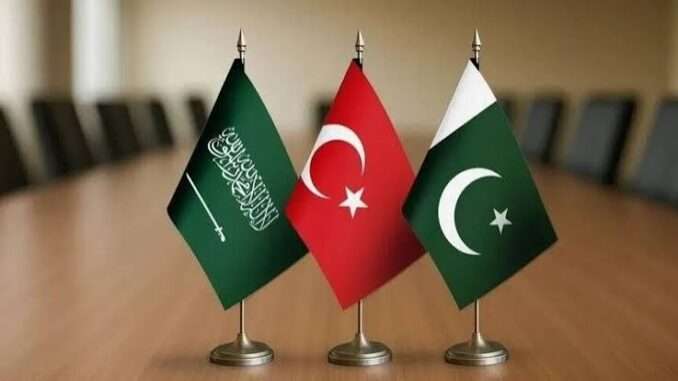
Saudi Arabia, Pakistan, and Turkey signed the “Mecca Mutual Defense Agreement” on Friday in Mecca, aimed at strengthening collective deterrence against any act of aggression, according to a joint statement carried by the Saudi Press Agency (SPA).
The statement clarified that the agreement stipulates that any armed attack on one of the three states will be considered an attack on all of them, with the goal of enhancing their security and expanding the scope of defense cooperation between them. It added that the signing reflects the three countries’ commitment to strengthening their collective security and achieving security, peace, and stability in the region and the world, in pursuit of a safer and more prosperous future.
What Does the Agreement Mean?
The agreement differs from existing bilateral defense pacts, including the Saudi-Pakistani defense agreement, as it establishes a trilateral defense framework bringing together Riyadh, Ankara, and Islamabad, based on the principle of collective defense, whereby an attack on any one of the three countries is treated as an attack on the entire system.
The correspondent added that the agreement came as the culmination of sustained political and diplomatic engagement, amid regional developments and growing concerns over regional security and the safety of maritime corridors. Al-Rabeean cited Saudi sources as saying the trilateral agreement was the most prominent item on the agenda at the Mecca summit, noting that work on it had continued for roughly two years and included ongoing technical and political meetings.
According to the same sources, a general secretariat and headquarters may be announced in the coming period to manage the cooperation and organize its activities, with Riyadh initially being proposed as a potential host for this framework.
Al-Rabeean noted that the agreement elevates relations between the three countries to a more organized and integrated level, drawing on each country’s respective strengths: Saudi Arabia is pushing toward localizing its military industries, Turkey possesses advanced expertise in defense manufacturing, while Pakistan brings extensive military and operational experience. He added that this complementarity in capabilities takes the agreement beyond political coordination into more comprehensive defense cooperation, at a time when the region is witnessing rising tensions and security challenges.
For its part, the Turkish presidency stated that an armed attack on any of the three countries would be considered an attack on all of them.
What Messages Does the Agreement Send?
Experts anticipated that the agreement could form the nucleus of a broader regional alliance, given the security challenges in the region, chief among them Israeli policies and tensions with Iran. They suggested these developments could prompt other countries to join the alliance in the future, potentially leading to the formation of a political and military bloc capable of contributing to a rebalancing of regional power, without necessarily conflicting with American interests.
It was added that the alliance’s expansion could send a message to regional powers that imposing facts on the ground through force is no longer acceptable, and that a political and defense bloc now exists capable of influencing the regional balance of power. Al-Zuwairi suggested the alliance might be met with understanding or respect from the United States, given the relationships all three countries maintain with Washington, arguing it does not constitute a direct threat to American interests so much as an indirect message urging Washington to reconsider some of its regional policies. He predicted Washington would engage closely with the new defense bloc, particularly if its membership expands over time, granting it greater weight in the region’s political and security equations.
Context of the Signing
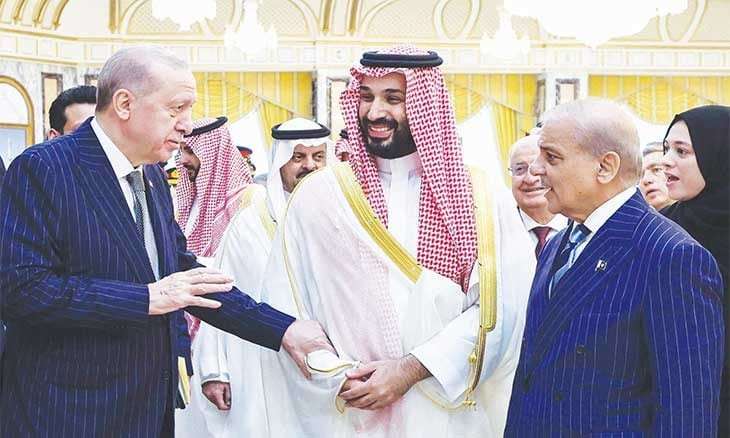
Turkish President Recep Tayyip Erdoğan arrived in Jeddah today, following Pakistani Prime Minister Shehbaz Sharif and army chief Field Marshal Asim Munir, who arrived the day before.
Turkish Foreign Minister Hakan Fidan had stated earlier this year that his country was holding talks on a possible defense agreement with Pakistan and Saudi Arabia, while Turkish officials in security and diplomatic circles told Al Jazeera Net at the time that Ankara was considering joining an alliance encompassing Riyadh and Islamabad.
Earlier, Pakistani Defense Production Minister Raza Hayat Hiraj said Pakistan, Saudi Arabia, and Turkey had drafted a defense agreement following nearly a year of negotiations, telling Reuters that the trilateral agreement was separate from the bilateral Saudi-Pakistani agreement announced the previous year. Saudi Arabia and Pakistan are already bound by a mutual defense agreement the two sides announced in 2025.




Be the first to comment