
Commander Anees Muhammad Khan (Retd)
Senior Research Fellow
National Institute of Maritime Affairs (NIMA) Pakistan
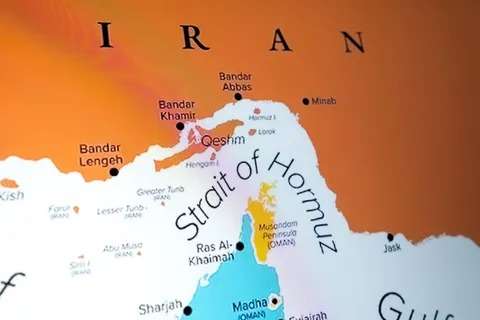
On 28 Feb 26, the United States and Israel initiated Operation Epic Fury, a synchronized program of airstrikes on the Iranian military infrastructure and political leaders. It resulted in the killing of Iranian Supreme Leader, Ali Khamenei. Iran consequently retaliated with a barrage of missiles directed at Israeli cities and American military bases in the gulf including United Arab Emirates, Qatar, and Bahrain. The Islamic Revolutionary Guard Corps(IRGC) then threatened to attack all ships that would pass the Strait of Hormuz. According to latest data released by the Lloyds List of Intelligencedata, there are about two hundred cruise oil tankers and product tankers that are essentially stranded in the Gulf as a consequence of a complete stoppage of the ship passage across the Strait of Hormuz.
As per the U.S. Energy Information Administration (EIA), World Oil Transit Chokepoints (2023) report the Strait of Hormuz is typical a transit route of about 20 million barrels a day of crude and condensates, almost 20% of global petroleum production, and global LNG trade. This strait is thus a sea route that forms the main bloodstream of the imported oil to Pakistan.
In energy sector, Pakistan is very much import-oriented. Ministry of Energy (Petroleum Division), Government of Pakistan statics educate us that the production of Pakistan domestic crude oil ranges between 65000-70000 barrels per day, and national consumption requires imports of 280000-300000 barrels per day. The Pakistan Bureau of statistics (2024–2025), Monthly External Trade Statistics shows that petroleum crude and products always make one of the highest elements of the Pakistan import bill, and the imports of crude alone cost in-between USD 5-6 billion every year, contingent upon the global price levels. The greatest share of crude imports is provided by the Gulf suppliers, especially the Saudi Arabia, United Arab Emirates and Kuwait which constitute more than 85 percent of total volumes. Virtually, all such cargoes pass through Strait of Hormuz and then enter Pakistani ports.
This vulnerability is further exacerbated by the reliance on liquefied natural gas (LNG). International Energy Agency (IEA), Pakistan Energy Profile (2023) report suggest that Pakistan currently imports 8-9 million tonnes per year of LNG mainly from Qatar up to early 2030s.LNG plays a significant role in generation of electricity particularly in high demand seasons. Qatari LNG ships are all transited via Strait of Hormuz, which obviously strengthens the risk of geographic concentration.
Usually, the oil marketing companies in Pakistan are required under the instructions of Oil and Gas Regulatory Authority (OGRA) to maintain the petroleum stocks that would cover about 20-21 days of consumption. Although, the petrol and high-speed diesel reserves in the country are currently at about 28-30 days, this is still below the 90 days of net import of the oil requirement as per International Energy Agency (IEA).
Thus, in case there is a long blockage of the Strait of Hormuz refining throughput would decrease at an alarming rate because of the absence of crude oil. Lack of diesel would hamper transport of freight and agricultural irrigation as well as failure of LNG supply would limit the production of gas generated through power. World Bank (2024) Commodity Markets Outlook report has estimated that the import of energy takes up about 25 30 -percent of the total import bill in Pakistan at high prices; and an extended price shock, would add billions of dollars to the annual imports, destabilizing budgetary and current account structures.
On a positive note, while cognizant of the contemporary situation, a variety of countermeasures are put in place by the Government of Pakistan. Ahigh-level monitoring committee is convened, headed by the Minister of finance to keep a check on the changes in the world oil prices, freight rates and the foreign-exchange risk. In order to strengthen buffer stocks, emergency imports of about 140 million liters of petrol have also been ordered. It has also been reported that since 2023 there have been exploratory diversification exercises such as limited crude procurement from the United States with the view of limiting reliance on the Gulf suppliers. However, the logistical constraints and global competition for alternative supplies limit immediate substitution capacity.
The lesson from above is definite. The energy-security structure that Pakistan has built over years is based on unbroken maritime channeling via a single chokepoint. The Strait of Hormuz is not just some distant geopolitical hot spot; it is one of the determinants of the stability of the domestic economy of the country. Pakistan is thus very susceptible to external shocks without strategic reserves, diversified sourcing, and a faster shift to indigenous renewable energy. Enhanced diversification of the supply beyond Hormuz, the development of phased strategic petroleum reserves, and the institutionalization of maritime-risk assessment into the economic planning are critical to resiliency over the long term.
Energy security should therefore be seen as a part and parcel of national-security policy and not transferred to economic administration only.




Be the first to comment