As navies worldwide accelerate the shift toward unmanned and autonomous capabilities, underwater and surface drones are rapidly emerging as decisive force multipliers in modern maritime warfare. From extending operational reach and reducing risks to sailors, to enabling persistent surveillance, electronic warfare, and undersea dominance, naval drones are reshaping how fleets operate in contested environments.
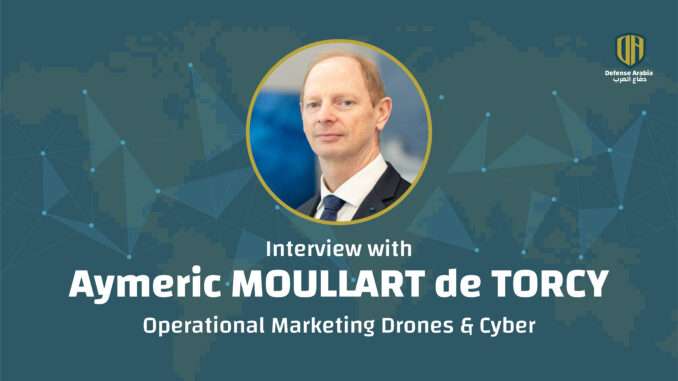
At the forefront of this transformation, Naval Group has made unmanned naval systems, autonomy, and cybersecurity core pillars of its long-term innovation strategy. In this interview, Aymeric Moullart de Torcy, Operational Marketing – Drones & Cyber at Naval Group, shares insights into how naval drones are changing operational concepts, why cyber resilience is now as critical as stealth and endurance, and how technologies such as artificial intelligence and mission autonomy are redefining trust between sailors and machines. He also sheds light on the operational rationale behind the Seagent® XL UUV, a next-generation extra-large unmanned underwater vehicle designed to address the growing challenges of undersea warfare in high-threat environments.
Naval Group is growing its unmanned naval systems. How do you think drones will change naval operations?
Drones provide a capability boost for navies, deployable easily and at a lower cost.
Naval Group is convinced that the integration of naval drone systems is a key factor in the modernization of naval fleets. The use of such drones extends the range and duration of missions, reduces risks for crews, offers cost and efficiency advantages, and contributes to a continuous innovation process to meet the specific needs of navies.
For naval forces, our drones can fulfill surveillance and intelligence missions, electronic warfare, but also conduct anti-submarine or anti-ship operations (ASW), access denial, close protection, or special forces operations.
How does Naval Group handle interoperability and cybersecurity in autonomous naval systems?
At Naval Group, we take the cybersecurity of our systems and equipment very seriously, especially for our drones. We have integrated cyber into all our processes in order to build security measures adapted to the missions and operational constraints of a drone. These measures apply throughout the entire life cycle of the drone from conception, and are complemented by strict digital hygiene rules.
The objective of Naval Group is to ensure the digital integrity of the drone’s systems and its means of communication, and to detect any significant cyber event so that the drone reacts accordingly.
Cybersecurity is more important than ever. How do you include cyber protection in your marketing and product plans?
The design of our drones integrates cyber security needs from the earliest stages in order to ensure the highest level of performance.
Several on-board mechanisms based on proven encryption means ensure the protection of the information transmitted or stored by the drone, including in case of loss or capture thereof.
In case of a cyberattack, embedded surveillance systems allow the drone system to detect and react accordingly in relation to its operational situation.
All these measures are adapted to the very nature of the drone (USV, UUV…), its size and the range of missions that can be entrusted to it.
Which new technologies—AI, autonomy, or cybersecurity—will impact naval operations the most?
Naval Group has been investing in R&D consistently for past years in order to master the new technologies and propose the best integrated naval platforms for our customer navies. In particular the area of energy efficiency (modern batteries, based on lithium ion technology), drones (unmanned underwater platforms of various sizes and missions, mission systems integrating different unmanned vessels, etc), and the use of artificial intelligence in underwater trajectory of platforms (drones) remains at heart of our development strategy.
Key technologies include AI to enhance drones’ ability to navigate safely and perform tactical reasoning during missions, reliable robotic systems for complex operations, underwater communication for improved coordination, innovative power systems to increase endurance, the integration of drone-specific sensors, and lightweight, durable hull materials.
Our Steeris® mission system integrates various types of AI capabilities depending on the function. This system allows autonomous systems to accomplish their missions alone or collaboratively while respecting the operational doctrine.
Steeris correlates data from the various sensors on board the autonomous system to establish the tactical situation around it.
In the face of unforeseen events, such as the presence of an enemy vessel or an adverse environment, Steeris enables the autonomous system to react independently according to the degrees of freedom defined beforehand by the operator.
Artificial intelligence algorithms allow the system to reconfigure its trajectories and behavior based on the evolving situation, thus achieving its objective.
A digital twin of the autonomous system allows operators to perform predictive monitoring of the drone’s actions. A replica of the onboard intelligence, it reproduces the autonomous system’s behavior and actions in a simulated environment. It allows for the projection of the drone’s behavior in the event of communication loss.
The key is the sailor’s trust in this technology. That is why sea trials are carried out regularly to validate Steeris’ ability to successfully complete missions corresponding to the Navy’s use case.
What problems in modern naval warfare was the XL UUV designed to solve?
The Seagent® XL is an autonomous UUV that can be deployed from a dock or from a surface ship. Its long endurance and discretion allow it to operate independently in a hostile environment. The numerous payloads it carries make it a force multiplier within a fleet for offensive and defensive missions.
Distinctive features and performance:
The SEAGENT-XL offers flexible and extensive mission capabilities:
- Single autonomous multi-mission UUV system
- Modular architecture allowing integration of various payload batches, variable for subsea and surface missions
- Equipped with Steeris® for interoperability with naval forces
- Mission versatility: ISR, EO/IR, environmental assessment, electronic warfare, anti-submarine warfare, sea bed warfare, extended MCM, mobile target.
- Cybersecured
- Easy launch and recovery from coastal and surface vessels (containerized version)
- Easy to carry using an ISO shipping container
How interested are navies, especially in areas with rising undersea threats, in the XL UUV?
The Seagent XL respond to :
- The needs to benefit from additional assets dedicated to submarine warfare, with great discretion and versatility
- At the will of the navies to expand their submarine capabilities at a reasonable cost
- At the wish of the clients to be able to penetrate the underwater field
- The need to benefit from great endurance, great capacity, and a very stealthy asset
What missions is the XL UUV mainly designed for—ISR, mine warfare, seabed monitoring, or others?
- Mission versatility: ISR, EO/IR, environmental assessment, electronic warfare, anti-submarine warfare, sea bed warfare, extended MCM, mobile target.




Be the first to comment