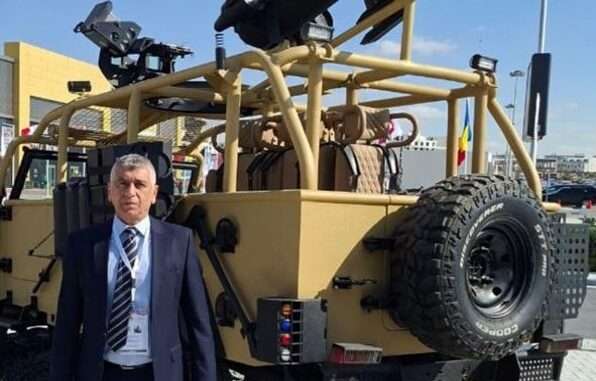
Col. Zafer Mourad

The latest edition of EDEX highlighted a clear shift in the regional defense landscape, with Turkish and Chinese companies taking the lead. ASELSAN stood out as one of the strongest exhibitors, demonstrating advanced light and medium combat systems, tactical communications, and Active Protection Systems. Its combat-proven technologies and competitive pricing made the Turkish booth one of the most dynamic and crowded throughout the exhibition.

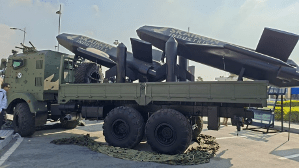
China also maintained a powerful presence, focusing on UAVs, light armored vehicles, portable air-defense systems, and medium-range strike capabilities. Chinese companies approached EDEX with a clear strategy: fast delivery, flexible political conditions, and readiness to discuss technology transfer—making them highly attractive for many regional militaries.
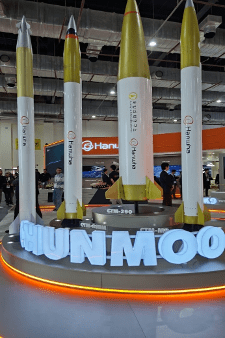
Hanwha delivered a strong presence at EDEX, showcasing its advanced Chunmoo multi-caliber rocket launcher system, known for its flexible range and high precision. The Chunmoo drew significant interest as one of the most capable and rapidly deployable fire-support platforms in its class.
In contrast, the Russian presence was minimal, mainly due to the ongoing war in Ukraine and the need to retain most of its production for its own forces. Many systems that Russia typically markets overseas are currently unavailable for export, resulting in a limited and largely symbolic appearance.
Western participation was generally below expectations, except for a few notable players. Among them, Thales emerged as one of the most visible and attractive Western exhibitors. The company drew significant interest thanks to its advanced C4ISR solutions, radars, secure communications, and integrated defense technologies. Thales’ booth became a focal point for visitors looking for high-end Western systems despite the overall muted European presence.
A major theme this year was Egypt’s emphasis on defense-industry localization. The exhibition showcased Egyptian capabilities in ammunition, light armored vehicles, and tactical systems, alongside a strong push for bilateral cooperation and co-production agreements. Cairo clearly used EDEX as a platform to position itself as a rising manufacturing hub in the region.
Overall, EDEX confirmed a growing tilt toward Eastern suppliers, practical combat-proven systems, and local industrial partnerships—setting a new direction for defense acquisition in the Middle East and Africa
At the core of international relations, power remains the ultimate governing force. It is power that gives diplomacy its weight and ensures security, political stability, and economic resilience. No matter how world leaders attempt to portray international relations as a realm of refined morality, the unspoken truth—fully understood but rarely acknowledged—is that morality often exists only on the surface, while beneath it, power is the only language that truly matters. This is why building military capabilities is not a luxury, but an existential necessity.
From the EDEX exhibition, this reality becomes unmistakable: nations are intensifying their efforts to strengthen their armed forces, enhance readiness, and modernize their capabilities of deterrence. Every defense deal, every advanced combat system, and every investment in military industries is not merely a technical upgrade; it is a direct investment in a state’s position within the arena of international relations, and in its ability to influence, deter, and maneuver.



Be the first to comment