Navantia has reached a significant milestone in the construction of the second series of corvettes for the Royal Saudi Naval Forces (RSNF), with three ships now actively under production. On July 9, the San Fernando shipyard in Cádiz celebrated two key events: the keel laying of the first vessel in this new batch and the initial steel cutting for the third.
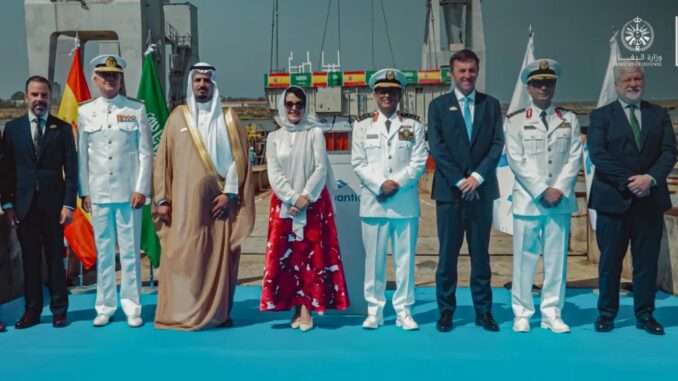
The keel-laying ceremony marked the official start of construction for the future HMS Al-Madinah, which becomes the 571st vessel built by Navantia. The event was attended by RSNF Vice Admiral Mohammed Abdlrahman Alghuraybi and Saudi Arabia’s ambassador to Spain, Princess Haifa bint Abdulaziz Al-Mogrin. They were welcomed by Navantia President Ricardo Domínguez and Corvettes Division Director Alberto Cervantes.
The ceremony featured the traditional signing of a commemorative plaque, later welded to the ship by a Navantia technician, and the symbolic cutting of the first steel plate for the third corvette. With these milestones, all three vessels under the current contract are now officially in production. While the first unit will be delivered from Spain, the second and third ships will be completed in Saudi Arabia, following the successful model of the previous five-ship AVANTE 2200 program.
In addition to shipbuilding, the new contract includes integrated logistics support, comprehensive crew training, and operational sea trials with the Spanish Navy at Rota Naval Base. Navantia is expected to train around 100 Saudi engineers as part of the program. The total workload is estimated at four million labor hours and will support up to 2,000 direct and indirect jobs in the Cádiz region.
These next-generation corvettes, based on the proven AVANTE 2200 design, are engineered for a wide range of missions including maritime security, search and rescue, and the protection of critical infrastructure. The ships will feature multiple advanced systems developed by Navantia, including the HAZEM combat management system—delivered through the SAMINavantia joint venture—the HERMESYS communications suite, and the DORNA fire control system. Key components will also include MTU-licensed propulsion engines, Schelde-licensed gearboxes, and the MINERVA integrated bridge system.




Be the first to comment