Lama Farouk
Defense industrial localization in the Gulf states is no longer limited to establishing assembly lines or transferring some maintenance activities domestically. It is gradually moving toward building capabilities that include local manufacturing of components, technology transfer, supply-chain development, and the establishment of joint ventures with global defense companies. This trajectory is clearly visible in Saudi Arabia, the United Arab Emirates, and Qatar, although the nature of the projects and their degree of maturity vary from one country to another. The projects announced and implemented in recent years, alongside new developments in 2026, show that Gulf localization is not following a single model, but rather a combination of local production, technology transfer, joint ventures, and co-development.
Notably, 2026 does not represent the beginning of this trajectory, but rather a new phase within a process that began years earlier. Projects in the three countries entered production or implementation as early as 2018, 2020, 2022, and 2025, while 2026 witnessed an expansion in the number of new partnerships and projects.
Part One: Saudi Arabia.. From Component Localization to Expanding the Industrial Base
Saudi Arabia represents one of the clearest examples of linking military localization to a stated quantitative target. The General Authority for Military Industries (GAMI) announced that the localization rate of military spending reached 24.89% by the end of 2024, with a target of reaching more than 50% of government spending on military equipment and services by 2030.
It should be noted that the 24.89% figure reflects the level of localization of military spending and does not represent the overall local manufacturing rate of equipment and systems. GAMI also reports a separate local-content indicator of 40.74% of military spending for 2024.
THAAD.. Localization Began in 2022 and Is Expanding in 2026
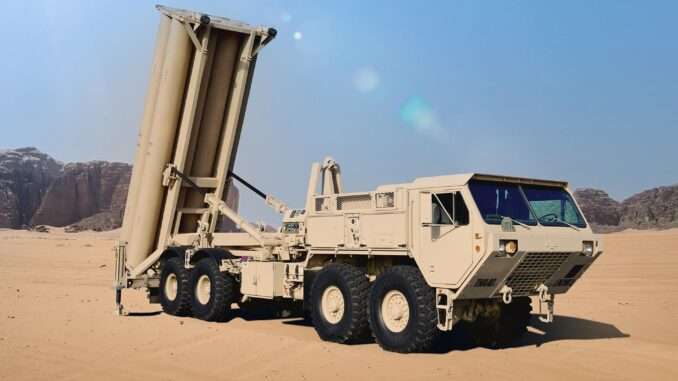
The THAAD program provides a clear example of how the current industrial development is the result of a cumulative process rather than a project that began in 2026. During the World Defense Show in March 2022, GAMI announced its approval of two localization projects in cooperation with Lockheed Martin. The first involved localizing the manufacturing of interceptor missile launch platforms, while the second concerned the local manufacture of missile canisters, as part of a program to localize parts of the THAAD system in the Kingdom.
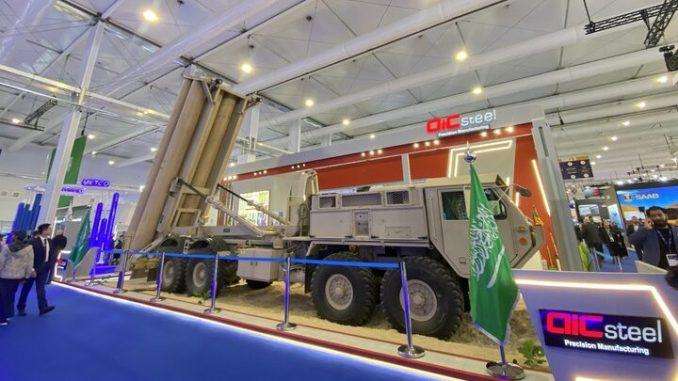
In February 2024, Lockheed Martin awarded Middle East Propulsion Company (MEPC) and Arabian International Company for Steel (AIC Steel) two contracts to manufacture components under the THAAD system localization program. These included interceptor missile canisters and Missile Round Pallet-Transportable (MRP-T) units, providing a second source for the production of some system components inside the Kingdom.
In May 2025, Lockheed Martin and AIC Steel announced the completion of the first batch of locally produced components for the THAAD system’s launch platform during an event held at AIC Steel’s facility in Jeddah. The event also witnessed the completion of the first MRP-T unit under the localization program. This achievement marked the project’s transition to actual local manufacturing of one of the system’s key components.
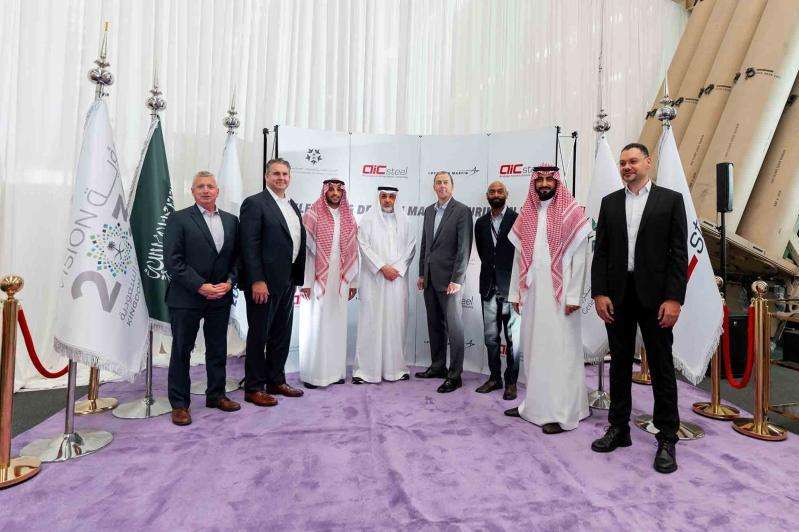
In February 2026, cooperation moved toward expanding local production. Lockheed Martin and AIC Steel signed a memorandum of understanding to explore increasing the production of MRP-T units in Saudi Arabia, while Lockheed Martin and MEPC signed a non-binding memorandum of understanding to explore increasing the local production of THAAD missile canisters, within the framework of the existing localization contracts between the parties.
The significance of the 2026 developments in the THAAD program does not lie in launching localization, but in expanding the scope of local production of components whose localization began years earlier.
HSI32.. An Earlier Model of Technology Transfer and Local Production
Saudi Arabia’s domestic defense manufacturing trajectory is not limited to air-defense programs. In April 2018, Saudi company Zamil Offshore Services signed an agreement with French company CMN to build 39 HSI32 fast interceptor boats for the Royal Saudi Naval Forces, under a program that included building some of the boats in France and assembling 18 boats at Zamil’s facilities in Dammam, in addition to transferring technology to the Kingdom. In October 2020, Saudi Arabia inaugurated the first locally manufactured HSI32 boat, marking a transition in the cooperation from the supply of platforms to the localization of part of their construction capabilities inside the Kingdom.
In February 2023, the Ministry of Defense and GAMI announced the completion of the boat manufacturing and localization project and the receipt of its final batch, in cooperation between Zamil Offshore Services, Advanced Electronics Company, and French company CMN. This brought the project to completion, including the manufacture of a number of boats in the Kingdom, as part of a program for technology transfer and the development of local industrial capabilities.
The HSI32 program represents a different model of localization from the THAAD program in terms of the nature of the localization. In the HSI32 case, the cooperation included the local manufacture of a number of boats and the transfer of the technology associated with them, contributing to the development of industrial capabilities in the construction of fast boats. In the THAAD program, the announced localization projects include the manufacture of interceptor missile launchers and the local production of interceptor missile canisters as part of an advanced missile-defense system.
“Zarqa Al Yamamah”.. Localization of Electro-Optical Systems Since 2022
In March 2022, GAMI announced the localization of the multipurpose electro-optical surveillance system “Zarqa Al Yamamah – ZALI,” manufactured by the National Company for Mechanical Systems. This came under a manufacturing and supply contract concluded by GAMI in partnership with the Ministry of Interior and the National Company for Mechanical Systems, with work focused on developing the system locally and carrying out training and maintenance operations inside the Kingdom by trained Saudi personnel.
The significance of this project lies in the fact that it demonstrates the extension of localization into electro-optical surveillance systems, rather than being limited to larger military platforms and equipment. ZALI is characterized by its ability to perform surveillance, observation, and tracking missions, with operational flexibility through different control systems and the ability to adapt it to multiple patterns of use.
SR2Vector.. Moving into the Field of Attack Drones
In 2026, a new trajectory emerged in the manufacturing of attack drones with the establishment of SR2Vector, a joint venture between Saudi company SR2 Defense Systems and U.S. company Vector Defense, aimed at localizing the manufacturing, assembly, and maintenance of U.S. unmanned systems inside the Kingdom. The two parties announced in March 2026 that they had signed a memorandum of understanding for this purpose, before subsequently announcing the establishment of the joint venture.
In May 2026, the development of SKYWASP was unveiled. It is a long-range, one-way attack drone in the LROWA category, with a reported capability of approximately 1,500 kilometers according to published reports. Reports also discussed the development of a production facility near Riyadh to manufacture these systems in the Kingdom. However, details of the targeted production capacity were not disclosed, leaving the project at this stage within the process of developing and localizing a new industrial capability, rather than a program whose operational production volume can currently be described as publicly disclosed.
Part Two: United Arab Emirates.. Expanding the Production Base and Technical Partnerships
Coyote.. A Production Facility Operating Since 2025
In May 2025, Raytheon, a subsidiary of RTX, opened an industrial facility at Tawazun Industrial Park in Abu Dhabi dedicated to the production, assembly, and testing of the Coyote counter-drone system. The facility covers approximately 21,500 square feet and includes facilities dedicated to the system’s final integration, assembly, and precision testing.
The UAE industrial sector participates in the program through EPI, a subsidiary of EDGE Group, which began manufacturing prototypes of aluminum components and assembly parts for the Coyote program in 2023, before cooperation continued as part of the localization of system production in the UAE. This includes manufacturing, machining, surface treatment, quality assurance, and sub-assembly of components.
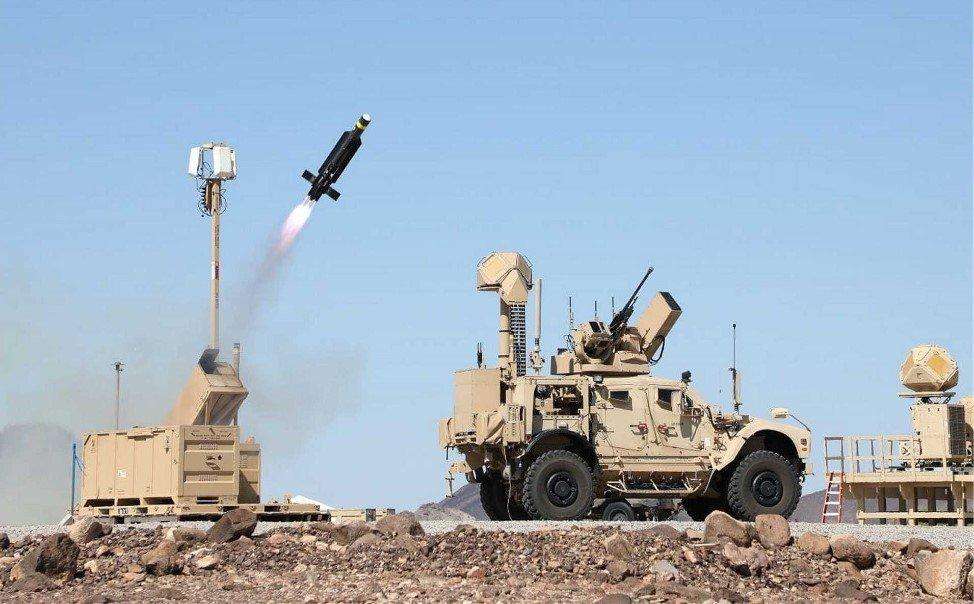
Accordingly, the Coyote facility is not a project under construction in 2026, but a facility opened in 2025 and forming part of the industrial infrastructure supporting the localization of counter-drone system production in the UAE.
Omen and Anduril.. Joint Production of Autonomous Systems
On November 13, 2025, EDGE and U.S. company Anduril announced the establishment of the EDGE–Anduril Production Alliance in the UAE as a joint platform for the production, sales, and support of next-generation autonomous systems, with a focus on their design, development, and production inside the country.
Omen was the first system announced for development and production under the partnership. The UAE confirmed the purchase of the first 50 systems, providing a guaranteed production base for the project and supporting the expansion of local supply chains. The two companies aim to move Omen from the development phase to full production at a serial production rate by the end of 2028, with systems intended for the UAE and regional customers to be produced locally in the UAE. The project’s arrangements are to be completed subject to the necessary U.S. and UAE government approvals and compliance with relevant laws and regulations.
Anduril also announced the establishment of a permanent research, development, and virtual simulation center in the UAE, covering 50,000 square feet, to serve as a regional center for engineering, design, and prototyping, and to support the development, integration, and testing of autonomous systems and related components.
Here, an important difference from traditional assembly models becomes apparent. The partnership is not limited to manufacturing a system developed outside the UAE, but combines co-development, local production, sales, and support, while building engineering and research capabilities inside the country, thereby expanding the scope of localization from manufacturing to earlier stages of the system development cycle.
EM&E and EDGE.. Joint Production While Part of the Manufacturing Remains in Spain
In February 2026, EDGE and Spanish group EM&E announced an agreement to explore the establishment of a joint venture in the UAE, supported by an initial commercial opportunity portfolio estimated at approximately $1.5 billion, with a focus on supplying remote-controlled weapon stations to the UAE and priority international markets.
On June 17, 2026, the two companies signed an agreement to establish the joint venture, raising the estimated value of the commercial opportunity portfolio to $1.725 billion, an increase of 15% over the initial estimates, with operations expected to begin during the fourth quarter of 2026.
The project’s industrial model is based on transferring technology to EDGE’s industrial and technological ecosystem, enabling it to manufacture different parts of the weapon stations inside the UAE, while the manufacture of the remaining product components continues in Spain. The project also includes the manufacture of a new weapon station intended to meet the requirements of the global defense sector.
This detail is particularly important when examining the localization trajectory. The project is not based on transferring the entire manufacturing process of the product to the UAE, but rather on dividing the manufacturing chain between the two countries, whereby specific parts of production and technology are transferred to the UAE industrial base, while other parts of manufacturing remain in Spain.
Chiplets.. Localization Moves into Electronics
In May 2026, the Tawazun Council and Lockheed Martin signed an agreement to establish an advanced facility in the UAE for the design and assembly of Chiplet-based technologies, in partnership with EDGE Group and Khalifa University of Science and Technology. The project aims to build national capabilities in the design and assembly of these technologies and strengthen the UAE’s position in global value chains for microelectronics.
As part of the project, EDGE Group’s HALCON will integrate processors based on Chiplet technologies into advanced guidance and targeting systems, supporting onboard computing capabilities, target identification and tracking, and improved engagement accuracy. The cooperation also includes establishing a specialized research and development center at Khalifa University focused on microelectronics design, the development of national expertise, and applied research related to the industrial sector.
This project represents a shift in the scope of localization from the manufacturing of platforms and equipment to building local capabilities in advanced electronic components and technologies that are central to guidance, targeting, and computing functions, linking defense manufacturing with research and development and the development of technical expertise inside the country.
Hanwha.. From Cooperation to Exploring Localization
In September 2026, EDGE and South Korea’s Hanwha signed a Term Sheet to explore cooperation in developing an integrated air-defense system to meet the UAE’s requirements. This includes the long-range L-SAM air-defense system, additional capabilities for the M-SAM system, as well as the Chunmoo multiple rocket launcher system.
The Term Sheet provides for continued discussions on the scope and structure of the cooperation, including the possibility of establishing a joint venture in the UAE, local production and commercial arrangements, as well as technical cooperation, phased localization, and local production, subject to government approvals and the necessary procedures.
Accordingly, the agreement does not represent the announcement of an operational production line or a final manufacturing contract. Rather, it constitutes an initial framework for a potential industrial partnership whose details are still under negotiation and development. Therefore, at this stage, the project falls within the process of exploring cooperation and localization, rather than among existing local production projects.
Part Three: Qatar.. Building Capabilities Through Joint Ventures and Technical Partnerships
Qatar adopts a model that relies to a large extent on partnerships with global defense companies, directing part of its capability-building efforts toward software, command and control, data processing, and situational awareness, alongside the local development of systems and platforms. This reflects a relatively earlier stage of localization compared with Saudi Arabia and the UAE, as no local manufacturing projects for major platforms comparable to THAAD or Coyote have been announced to date.
GA-ASI and Barzan.. Battle Management Instead of Aircraft Manufacturing
On January 19, 2026, General Atomics Aeronautical Systems (GA-ASI) and Qatari company Barzan Holdings signed a memorandum of understanding to cooperate in developing advanced Battle Management software capabilities on the sidelines of the Doha International Maritime Defence Exhibition and Conference (DIMDEX 2026).
The memorandum provides a framework for cooperation between GA-ASI, GA-Intelligence, and Barzan Holdings to develop software solutions that enhance situational awareness at the theater level and enable intelligence information to be processed, linked, integrated, and distributed efficiently, supporting faster and more accurate decision-making in multi-domain operational environments. The cooperation is also linked to the development of interoperable command-and-control solutions.
Accordingly, the agreement does not represent an announcement of the establishment of a local production line for GA-ASI unmanned aircraft in Qatar. Instead, it focuses on building capabilities in Battle Management software, data exploitation, information integration, and command and control. This reveals a different localization trajectory that does not necessarily begin with manufacturing the aerial platform itself, but rather with developing the software and information capabilities that help manage operations and exploit data from multiple sources.
EDGE and Barzan.. A Joint Venture for Defense Technologies
On the following day, January 20, 2026, EDGE and Barzan Holdings announced their agreement to establish a strategic joint venture in Qatar for the collaborative development of advanced defense technologies.
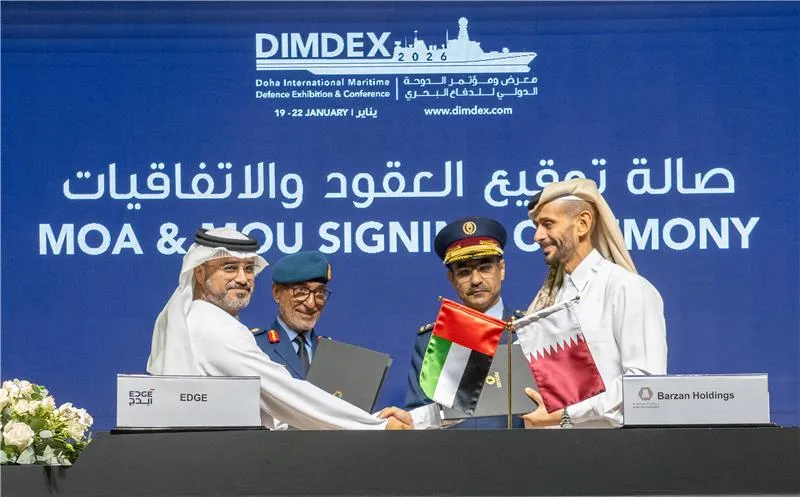
EDGE explained that the joint venture aims to support sustainable industrial capabilities in both the UAE and Qatar by combining the two parties’ expertise and operational and industrial capabilities. The initial announcement did not include financial details about the project or announce a specific location for a production facility belonging to it.
BARQ.. A Project Established in 2018 That Is Expanding in 2026
BARQ should not be regarded as a new project in 2026. BARQ QSTP LLC was established in Qatar in 2018 as a joint venture between ASELSAN, Barzan Holdings, and SSTEK, operating in areas including command-and-control systems, thermal imaging and night-vision cameras, encryption systems, and remotely controlled weapon systems. According to ASELSAN reports, Barzan Holdings owns a 51% stake in the company, compared with 48% for ASELSAN and 1% for SSTEK.
During DIMDEX 2026, ASELSAN and Barzan Holdings signed an agreement to expand the BARQ joint venture by adding new capabilities. This represents a new phase in the cooperation between the two parties, rather than the establishment of a new joint venture from scratch.
What Do the Experiences of the Three Countries Reveal?
The experiences of the three countries show that “localization” is no longer a single concept within Gulf defense industries. In Saudi Arabia, a gradual transition can be observed from localizing specific components in complex systems, as in the THAAD program, to expanding the scope of manufacturing and industrial partnerships in other defense fields. In the case of THAAD, localization focuses on specific components, such as missile canisters and the platforms carrying them, alongside the transfer of expertise and the strengthening of Saudi companies’ manufacturing capabilities.
In the UAE, the model is expanding to include joint production projects and technology transfer, alongside the development of an existing industrial base. This is evident in the EDGE–EM&E project, which includes a framework for joint production and technology transfer that enables parts of weapon stations to be manufactured in the UAE, while the remainder of the product continues to be manufactured in Spain.
As for Qatar, the projects announced in 2026 show a greater focus on technical partnerships, joint ventures, and the development of capabilities related to command and control, software, and electronic systems, alongside the expansion of existing joint ventures such as BARQ. The GA-ASI and Barzan Holdings agreement, for example, reflects a focus on developing advanced Battle Management software and enhancing situational awareness and information processing at the operational level.
However, these developments do not mean that the Gulf states have moved to fully manufacture their defense systems domestically. The level of localization varies from one project to another. Some cooperation remains at the memorandum-of-understanding or establishment stage, while other projects focus on manufacturing specific components or parts of a product, as in THAAD, or on technology transfer and the manufacture of parts of existing systems, as in the EDGE–EM&E project.
The clearest trend is that the Gulf states are gradually increasing their presence within the defense value chain, but through different paths and at different speeds: from importing systems and relying on external suppliers, to localizing specific parts and components, strengthening local manufacturing capabilities, transferring technology and developing suppliers, and, in some projects, reaching joint production and the development of advanced software and technological capabilities. This transition does not appear to follow a unified path across the Gulf states, but is determined by the nature of the system, the industrial partner, the maturity of the project, and the local capabilities available.
The Future of Industrial Competition in the Gulf
If this trajectory continues, defense industrial competition in the Gulf will not be measured solely by the number of systems produced locally, but by the extent to which each country is able to own larger portions of the value chain: design, engineering, components, electronics, software, testing, maintenance, and ultimately the ability to develop and export the product.
The projects announced through 2026 indicate that this transformation is taking place through partnerships with global companies more than through separation from them. THAAD, Coyote, Omen, chiplets, and the EM&E and BARQ projects all demonstrate that technology transfer and joint production have become key tools for building local capabilities.
From this perspective, the question in the coming years will not simply be: How many defense systems do the Gulf states manufacture? Rather: How much of the technology, supply chain, and industrial value associated with these systems has become established within the Gulf?


Be the first to comment