Daniel Michael Anderson – former U.S. Army colonel, independent military expert and analyst specializing in security, defense, and the military-strategic development of Central Asian and Eurasian countries; author of articles for EUobserver
Military transport aviation is rarely the most visible component of air power. Fighters attract attention, air-defence systems define the protection of airspace, and attack aircraft represent combat power. Yet in a large country, the ability to move forces, equipment and supplies over strategic distances can determine how much of that combat power can actually be brought to bear.
For Central Asia, this factor is particularly important.
The region combines enormous distances, uneven infrastructure, dispersed military installations and several different levels of aviation modernisation. Consequently, comparing transport fleets by aircraft numbers alone produces a misleading picture.
The more useful question is whether a country has developed a complete military air-mobility architecture: different transport classes, sufficient fleet depth, trained crews, technical support, suitable airfields and the ability to sustain repeated operations.
By October 2026, the region is beginning to show a clear separation between those countries that are building such an architecture and those that continue to operate primarily individual transport platforms.
The difference is most visible in Kazakhstan.
Kazakhstan: Building an air-mobility architecture
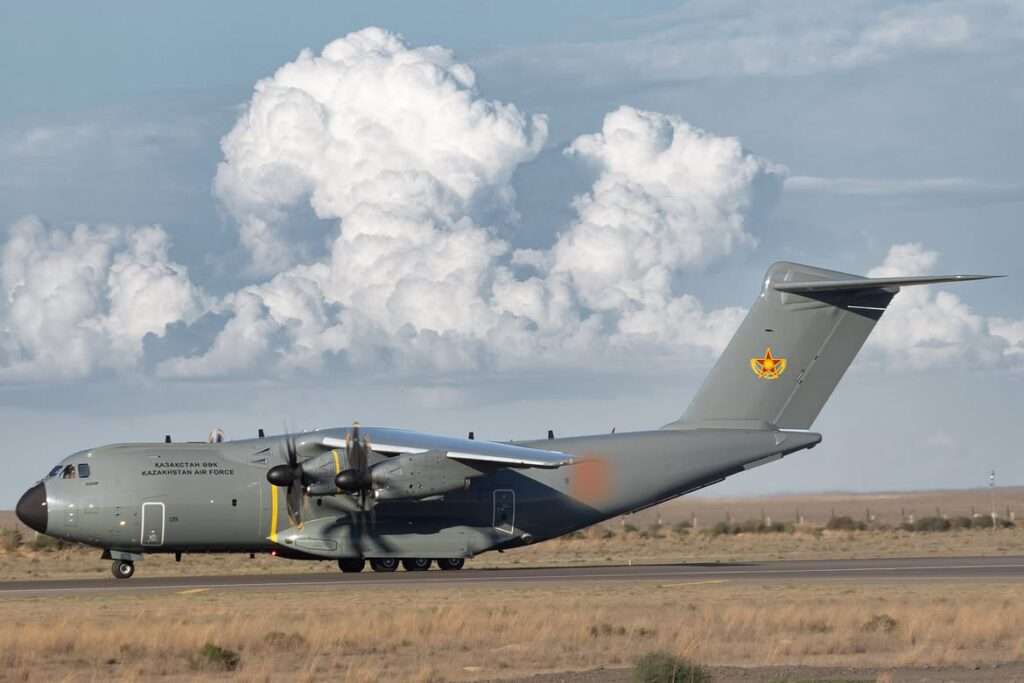
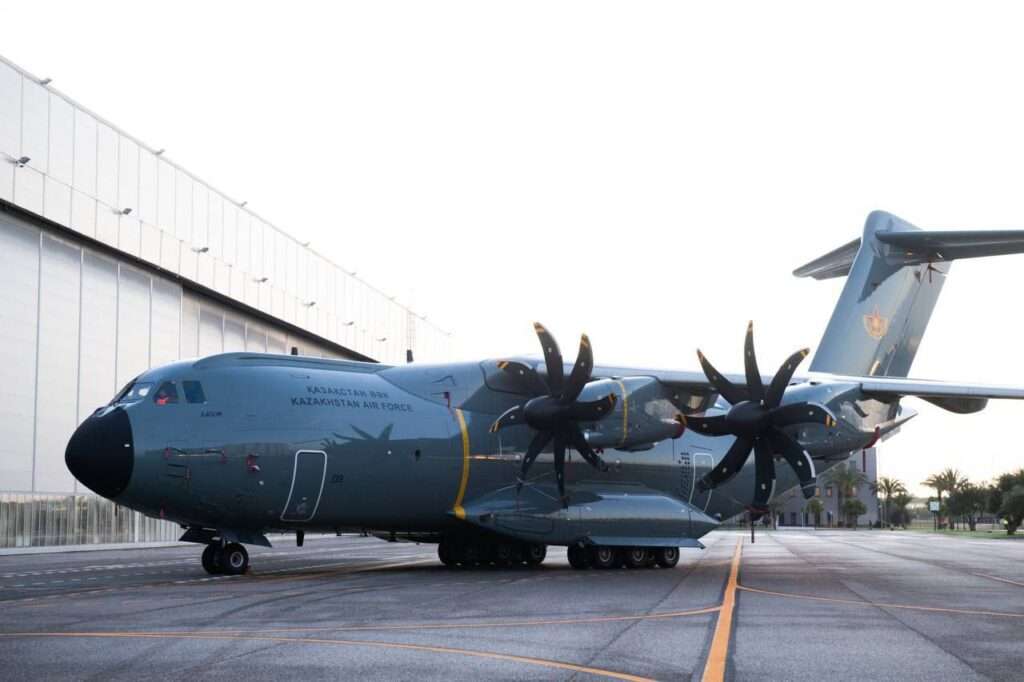
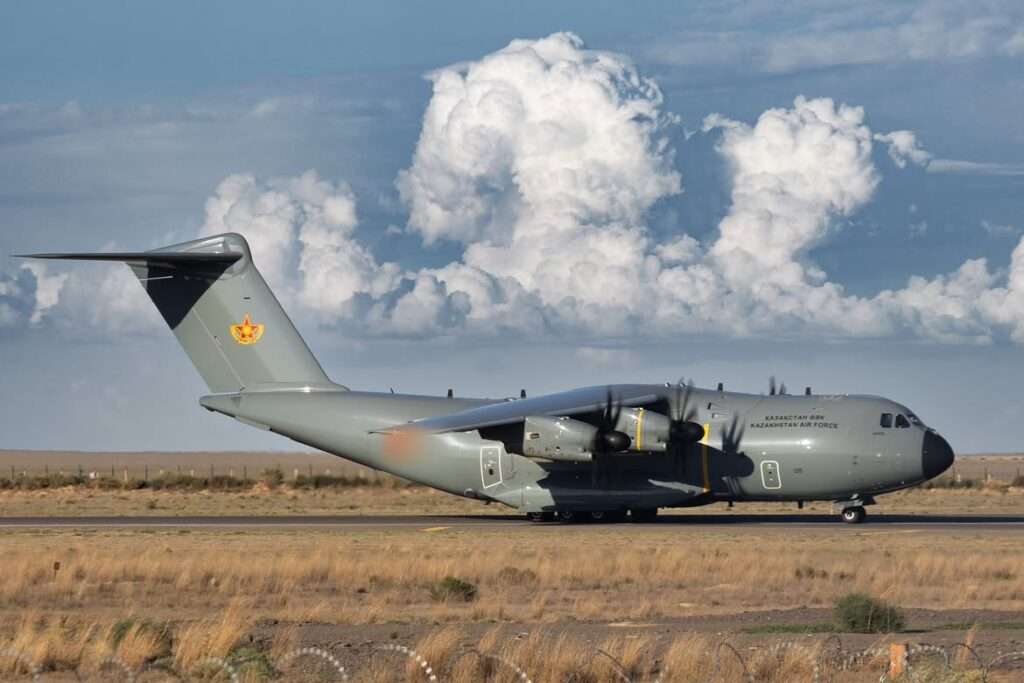
Kazakhstan’s military transport aviation is entering a different stage of development with the arrival of its second Airbus A400M Atlas.
The first A400M was delivered in December 2024. Kazakhstan ordered two aircraft, with training and technical support included in the programme. Airbus has described the A400M as becoming a cornerstone of Kazakhstan’s tactical and strategic airlift capability.
The second aircraft completes that initial A400M acquisition.
The importance of the programme lies not simply in the aircraft’s size.
The A400M can carry up to approximately 37 tonnes of cargo, transport heavy and outsized equipment, and operate from relatively short or less-prepared airfields. Airbus also identifies an airborne capacity of up to 116 paratroopers or 25 tonnes of cargo in relevant configurations.
For Kazakhstan, these characteristics have particular operational significance.
The country covers approximately 2.7 million square kilometres. Military formations, training areas, air bases and logistical nodes are therefore separated by distances that would be considerably less demanding for smaller states.
The requirement is not simply tactical transport.
It is the ability to move substantial military loads between distant sectors without creating a dependence on foreign airlift or multiple intermediate stages.
This is where Kazakhstan’s fleet structure becomes more significant than the number of A400Ms alone.
Airbus states that Kazakhstan now operates 11 C295 aircraft across the Air Force and the Aviation Service of the National Security Committee, in addition to the two A400Ms ordered for the military airlift role.
This creates a layered transport structure.
C295 – medium and routine tactical airlift.
A400M – heavy transport, long-distance movement and larger military loads.
That distinction matters.
A heavy transport aircraft does not need to be used for every personnel or cargo movement when a smaller platform can perform the mission more efficiently.
The result is a transport force with different aircraft performing different levels of the air-mobility task.
This is considerably more important than simply possessing a modern aircraft.
Why two A400Ms matter
A single heavy transport aircraft can provide an important capability.
Two aircraft begin to provide something different: fleet depth.
Two A400Ms do not make Kazakhstan a major global strategic airlift power. That would be an exaggerated conclusion.
They do, however, make it possible to structure the capability around readiness, training and maintenance cycles rather than around a single irreplaceable airframe.
One aircraft can potentially be committed to a task while the second remains available for training, maintenance rotation or another mission.
That is a modest but meaningful form of resilience.
The significance becomes greater when the A400M is considered alongside the country’s existing C295 fleet.
Kazakhstan therefore does not have to employ its largest transport aircraft for every movement.
It possesses a medium layer and a heavy layer.
This is precisely the kind of fleet structure that turns individual aircraft into a broader air-mobility capability.
Uzbekistan: A major new capability, but at the beginning of its transition
Uzbekistan is also undergoing an important transformation.
On 25 September 2026, Embraer formally delivered the first C-390 Millennium to the Uzbekistan Air Force. Uzbekistan thereby became the first C-390 operator in Central Asia. The programme includes training, technical support and spare parts.
The C-390 is a highly capable modern medium transport aircraft.
It can carry up to 26 tonnes, reach speeds of approximately 870 km/h, conduct troop and cargo transport, medical evacuation, search and rescue and humanitarian missions, and operate from temporary or unpaved runways.
Its arrival represents a significant qualitative improvement for Uzbekistan.
But there is an important distinction between introducing a modern platform and building a mature fleet around it.
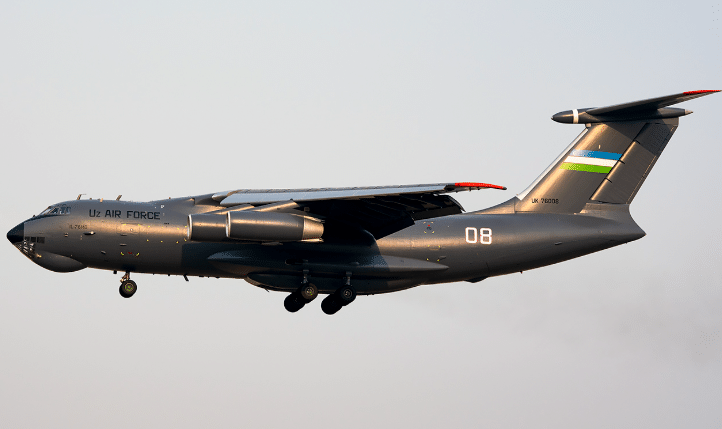
The Uzbek C-390 is entering an air force that continues to operate a mixture of Soviet-origin transport aircraft and European C295Ws. Open-source reporting identifies aircraft including the An-12, An-24, An-26, Il-76 and C295W in the wider transport structure.
Consequently, Uzbekistan is currently managing several generations of transport aviation simultaneously.
This gives Tashkent substantial potential.
It also creates a demanding transition.
A modern aircraft requires trained crews, instructors, engineers, spare parts, simulators, ground equipment and an established maintenance cycle.
The first C-390 therefore represents the beginning of a new capability rather than the end of the transition.
The second aircraft will matter not simply because it adds another airframe, but because fleet depth is one of the foundations of operational availability.
Turkmenistan: Modern tactical transport, limited heavy depth
Turkmenistan follows a different model.
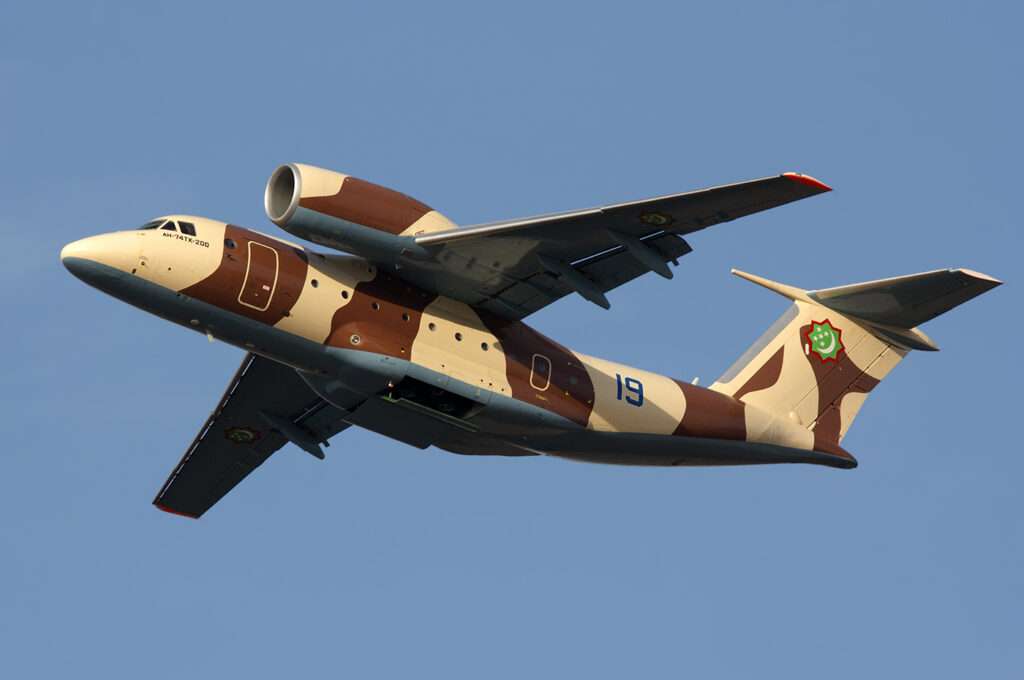
Its transport inventory combines modern C-27J Spartans with Soviet-origin platforms, including the An-74, An-26 and Il-76.
The C-27J provides a useful tactical transport capability.
Its approximately 11-tonne payload class makes it appropriate for regional movement of personnel and supplies, but it occupies a fundamentally different category from the A400M.
The more consequential issue is the heavy component.
A transport force that relies on a single heavy aircraft possesses limited redundancy.
If that aircraft is unavailable for technical or maintenance reasons, the country’s heavy-lift capability can effectively disappear until it returns to service.
This is one of the central distinctions between an aircraft inventory and an operational capability.
Inventory describes what exists. Availability determines what can actually be used.
Kyrgyzstan: A tactical capability constrained by fleet depth
Kyrgyzstan remains heavily dependent on the An-26 class for fixed-wing military transport.
The An-26 remains a useful tactical aircraft for moving personnel and relatively limited quantities of cargo.
But its payload and range place it in a very different category from contemporary medium and heavy transports.
The greater limitation is fleet depth.
A small fleet of ageing aircraft provides little redundancy.
If an aircraft is undergoing maintenance or becomes unavailable, the overall transport capacity can be reduced substantially.
Kyrgyzstan therefore retains a tactical airlift capability without having established the multi-layer transport architecture now emerging elsewhere in the region.
Tajikistan: Continued reliance on legacy tactical airlift
Tajikistan faces a similar structural limitation.
Its fixed-wing military transport capability remains associated primarily with the An-26.
Such an aircraft can still perform useful missions, particularly for domestic transportation.
But it cannot provide the payload, range and flexibility associated with the newest generation of medium and heavy military transports.
More importantly, there is no publicly visible equivalent of the A400M or C-390 transition underway in the Tajik inventory.
The result is a transport capability whose effectiveness depends heavily on the serviceability of a very limited number of legacy aircraft.
The emerging regional capability gap
The Central Asian picture can therefore be understood through three different development models.
Kazakhstan – layered air mobility
Kazakhstan is developing a multi-layer transport architecture, combining a substantial C295 component with two A400Ms.
The important point is not that the A400M is the largest aircraft in the region.
It is that the aircraft is being integrated into an existing transport ecosystem.
This provides Kazakhstan with both medium and heavy transport options and allows the fleet to be used according to mission requirements.
Uzbekistan – transition to modern medium airlift
Uzbekistan is introducing the C-390, one of the most capable new medium military transport aircraft now entering service globally.
This gives the Uzbek Air Force a significant new capability.
But the transition is still underway, with the first aircraft only recently delivered and legacy transport types remaining relevant.
Turkmenistan – mixed tactical and legacy structure
Turkmenistan combines C-27J tactical transport with a limited number of older Soviet platforms.
Its principal structural challenge is fleet depth, particularly in the heavy category.
Kyrgyzstan and Tajikistan – residual tactical capability
Both remain primarily dependent on legacy An-26-class transport aviation, without a comparable publicly visible programme for establishing modern medium- or heavy-lift fleets.
The decisive factor is not the newest aircraft
It would be misleading to reduce this comparison to a contest over which country purchased the newest aircraft.
The real issue is system integration.
A military air-mobility capability requires:
- Payload capacity
- Range
- Airfield flexibility
- Fleet redundancy
- Crew training
- Maintenance infrastructure
- Spare parts and technical support
- Ability to sustain repeated sorties
A modern aircraft without a trained support structure is an asset in transition.
A capable aircraft without adequate fleet depth remains vulnerable to downtime.
And a single heavy aircraft cannot provide the same resilience as a layered fleet containing complementary transport classes.
This is where Kazakhstan’s development becomes particularly significant.
The country is not simply adding a large transport aircraft.
It is creating a hierarchy of air mobility.
Strategic assessment
As of October 2026, the Central Asian military transport sector is increasingly divided by depth rather than by aircraft numbers alone.
Kazakhstan possesses the emerging structure of a layered tactical-to-strategic airlift system, with C295 aircraft providing the medium component and the A400M providing a heavy transport capability. Airbus itself describes the A400M as a cornerstone of Kazakhstan’s tactical and strategic airlift operations.
Uzbekistan is rapidly closing part of the technological gap through the introduction of the C-390. The aircraft provides a substantial new medium-airlift capability, but the Uzbek fleet is still undergoing transition from its mixed Soviet-European composition.
Turkmenistan retains a useful tactical transport component but has less depth in the heavy category.
Kyrgyzstan and Tajikistan remain constrained by small, predominantly legacy transport fleets.
The important conclusion is therefore not that one Central Asian air force possesses simply “more transport aircraft.”
It is that Kazakhstan is developing the most complete transport architecture in the region: medium lift, heavy lift, fleet redundancy, modern Western platforms, training and technical support combined within one structure.
That distinction becomes especially important when the mission changes from transporting personnel to moving military equipment over hundreds or thousands of kilometres and sustaining that movement over time.
In that environment, the decisive advantage does not come from the aircraft with the highest specification on paper.
It comes from the force that can generate sorties repeatedly, move the required payload, sustain its crews and maintenance system, and do so without depending on another country’s airlift capacity.
By that measure, the evolution of Kazakhstan’s transport aviation represents a broader shift in the regional balance of military mobility.
The C-390 gives Uzbekistan a powerful new starting point.
The C-27J gives Turkmenistan a modern tactical instrument.
The An-26 continues to provide Kyrgyzstan and Tajikistan with limited tactical mobility.
But Kazakhstan is moving toward something broader:
not simply a transport fleet, but an integrated military air-mobility system.
And in military logistics, the depth and architecture of the system often matter more than the number of aircraft listed on the inventory.


Be the first to comment