
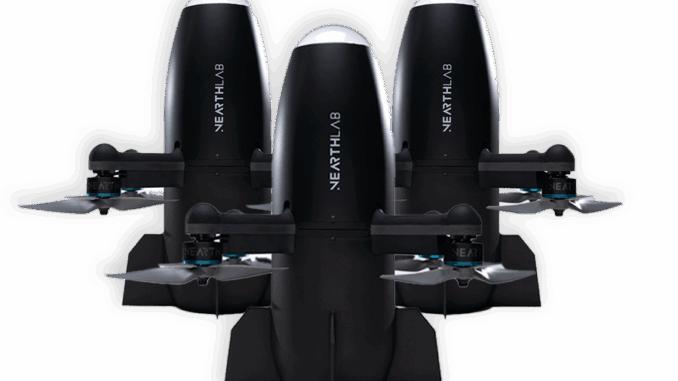
Responding to the rapid rise of small autonomous drones on the modern battlefield, defense technology developers are accelerating efforts to build faster and more cost-effective counter-UAS systems. Among the solutions emerging in this evolving field is KAiDEN, a high-speed kinetic interceptor drone developed by Nearthlab and designed to neutralize hostile unmanned aerial systems during the final stage of engagement.
While electronic countermeasures remain a key component of counter-UAS operations, KAiDEN introduces a physical interception capability designed to neutralize threatening drones before they reach protected areas. As autonomous aerial threats continue to proliferate, such interception capabilities are becoming increasingly important within modern air defense architectures.
The Growing Challenge of Small Drone Threats
Small unmanned aerial systems have transformed the security landscape over the past decade. Lightweight drones that were once used primarily for commercial or recreational purposes are now capable of performing reconnaissance, surveillance, and attack missions in complex operational environments.
These platforms present unique challenges for defense systems. Their small radar signatures and low flight altitudes make them difficult to detect, while their relatively low cost allows adversaries to deploy them in large numbers. In swarm scenarios, multiple drones can approach a target simultaneously from different directions, complicating traditional air defense responses.
As drone capabilities expand, military organizations around the world are reassessing how best to protect critical airspace and infrastructure. Within this context, kinetic interceptor systems are gaining attention as a reliable final layer of defense.
Precision Interception for Modern Air Defense
KAiDEN was designed to meet this emerging operational need. The system functions as a compact, high-speed interceptor capable of pursuing and neutralizing hostile drones before they reach protected areas. By focusing on precise engagements rather than broad defensive firepower, the platform reflects a modern approach to counter-UAS operations.
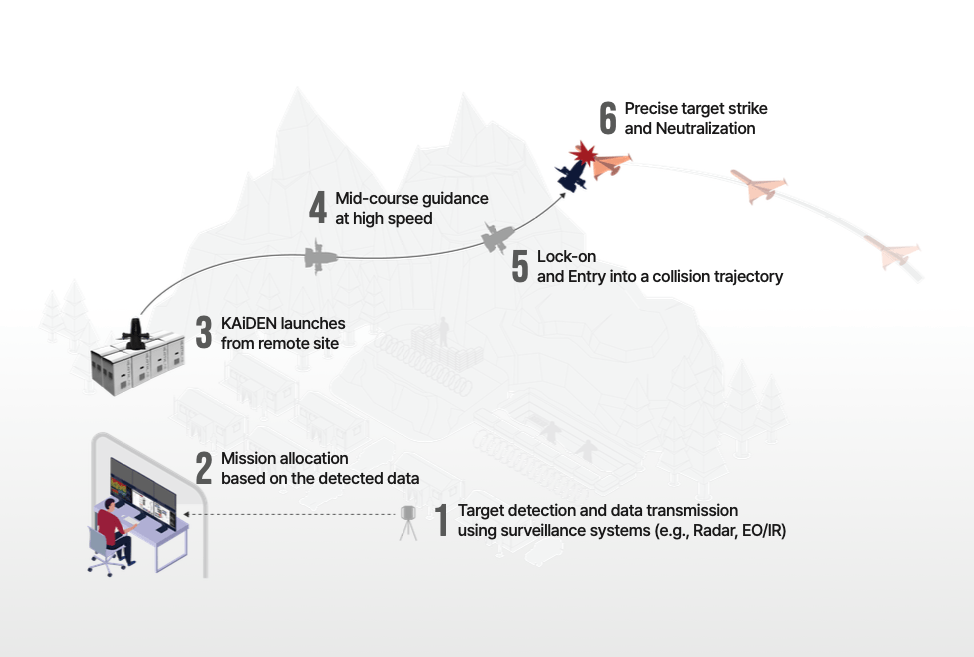
Artificial intelligence plays a key role in the system’s interception process. After receiving targeting data from external sensors such as radar or electro-optical systems, the interceptor uses onboard visual tracking technology to guide itself toward the target during the final stage of flight.
This approach reduces dependence on continuous communication links and allows the interceptor to maintain engagement even in environments where electronic interference may be present.
Designed for Scalable Drone Defense
Another key consideration in KAiDEN’s development is the growing prevalence of swarm drone tactics. Rather than attempting to neutralize multiple threats with a single platform, the system is designed to allow multiple interceptors to be deployed simultaneously when needed.
This approach aligns with the economic realities of modern drone warfare. Because many hostile drones are relatively inexpensive, counter-UAS solutions must also be scalable and cost-effective to maintain a sustainable defensive posture.
By focusing on simplicity, reliability, and rapid deployment, KAiDEN aims to provide a practical option for protecting military installations, infrastructure, and other sensitive sites against emerging drone threats.
Seamless Integration with Existing Defense Systems
Equally important is the system’s compatibility with existing defense infrastructures. As a field-proven solution with a track record of military deployment, KAiDEN seamlessly integrates with legacy C4I (Command, Control, Communications, Computers, and Intelligence) and defense infrastructures, ensuring a unified and highly efficient operational environment.
This interoperability enables operators to add a kinetic interceptor capability to their current defensive architecture without requiring extensive modifications to existing systems.
Adapting to the Future of Drone Warfare
The rapid evolution of unmanned aerial technology continues to reshape the security environment. As drones become faster, more autonomous, and more widely available, protecting airspace will require defense systems capable of responding with equal speed and adaptability.
KAiDEN represents one approach to addressing this challenge. By combining autonomous guidance, high-speed interception, and integration with existing defense networks, the system illustrates how counter-UAS technologies are evolving to meet the realities of modern drone threats.
For defense planners and security professionals, the message is clear: as unmanned systems continue to transform the battlefield, maintaining control of the air domain will increasingly depend on solutions capable of quickly identifying and neutralizing emerging threats.




Be the first to comment