Major General (Retired) Fahad Al-Subaie
In July 2024, the arrival of 6 Chinese Xian Y-20 strategic transport aircraft in Cairo marked a notable development in the evolving defense strategy of Egypt. These aircraft, capable of carrying substantial military payloads over considerable distances, landed in Egypt after a stop in Dubai, their route tracked by open-source intelligence tools. This event is not an isolated incident but rather a prominent indicator of a deepening military partnership between Egypt and China, occurring against a backdrop of what officials from both nations have termed a “golden decade” of bilateral relations. This development warrants careful analysis, particularly considering Egypt’s long-standing historical alignment with the West, most notably with the United States. The arrival of the Y-20s symbolizes a potential recalibration of Egypt’s strategic partnerships and necessitates an examination of the capabilities of this aircraft, the broader context of Egypt’s military modernization with Chinese technology, and the potential ramifications for regional and global power dynamics. This report aims to analyze this evolving relationship within the framework of historical alliances, the strategic implications of the acquired military capabilities, and the broader geopolitical landscape of the Middle East.

A History of Alignment: The US-Egypt Strategic Partnership
Historically, the United States and Egypt have maintained a complex but ultimately significant strategic partnership, particularly in the realm of military cooperation. While initial dealings between the two nations were minimal during periods of Egyptian control by the Ottoman Empire and Britain, the rise of President Gamal Abdel Nasser saw a strain in relations due to his pro-Soviet policies. However, the United States played a role in maintaining Nasser’s power during the 1956 Suez Crisis by compelling Britain and France to cease their invasion. A pivotal shift in this dynamic occurred under Presidents Anwar Sadat and Hosni Mubarak, who aligned Egypt more closely with US and Israeli interests in the region. This realignment was significantly cemented after the 1973 Arab-Israeli War and the subsequent peace process. The resumption of US-Egyptian diplomatic relations in 1974 marked a turning point, paving the way for substantial US support. Egypt’s strategic decision to move away from Soviet arms reliance, announced by Sadat in April 1974, further solidified this shift towards the United States. This strategic decision by Egypt to prioritize peace with Israel and pursue economic modernization created a strong basis for long-term cooperation with the United States, fundamentally reshaping the political landscape of the Middle East.

The cornerstone of this enduring relationship has been the massive scale of US financial assistance to Egypt. Since 1946, the United States has provided Egypt with nearly $90 billion in bilateral foreign aid, with military and economic assistance increasing significantly after 1979 following the Camp David Accords. This aid has played a central role in Egypt’s economic and military development and in furthering the US-Egypt strategic partnership and regional stability. Egypt has consistently been the second-largest recipient of US Foreign Military Financing (FMF) globally, after Israel, receiving more than 20% of global FMF funds. The annual amount of this FMF has remained relatively consistent at around $1.3 billion. Critically, all US military aid to Egypt finances the procurement of weapons systems and services directly from US defense contractors. This sustained financial commitment has fostered a deep dependency within the Egyptian armed forces on US military technology, influencing their doctrines, training protocols, and logistical frameworks over several decades. A sudden or complete departure from this reliance presents significant challenges due to the established interoperability with US systems.
Beyond financial assistance, the US-Egypt partnership has been built upon shared strategic interests in maintaining Middle East peace and stability, fostering economic opportunity, and ensuring regional security. Egypt’s pivotal role in maintaining peace with Israel since the 1979 treaty has been a cornerstone of US policy in the region. Egypt also served as a key partner in the American-led coalition during the 1991 Gulf War, contributing the second-largest contingent of allied forces. Furthermore, the two nations have engaged in close cooperation on counter-terrorism efforts and intelligence sharing, addressing common threats in the region. Egypt’s geographically strategic location, particularly its control over the Suez Canal, a vital artery for global trade and naval transit, has also been a crucial element of this partnership, serving US interests in maintaining access and freedom of navigation. The enduring nature of this cooperation is further evidenced by the annual U.S.-Egypt Military Cooperation Committee (MCC) meetings, which serve as a vital forum for discussing ongoing security concerns and enhancing defense collaboration. The signing of a Defense Cooperation Agreement in 2019 further formalized and strengthened this long-standing strategic relationship. This history of mutual benefit, with the US relying on Egypt for regional stability and access and Egypt gaining significant military modernization and international standing, underscores the depth and importance of this partnership.
However, the relationship has also faced periods of tension, particularly concerning human rights issues. For over a decade, the US Congress has conditioned a portion of the FMF aid to Egypt on improvements in human rights criteria. There have been instances where aid has been withheld or reprogrammed due to concerns over human rights practices within Egypt. The Biden administration, while acknowledging the strategic importance of the relationship, has also stated its commitment to addressing human rights concerns, leading to a balancing act between these competing priorities. This emphasis on human rights conditions in US aid has introduced friction into the relationship. It is plausible that these conditions, perceived by Egypt as interference in its internal affairs, have contributed to Egypt’s exploration of alternative partnerships with nations like China, which tend to prioritize a policy of non-interference.

China’s Expanding Footprint: The Arrival of the Y-20 and Beyond
The arrival of the Xian Y-20 strategic transport aircraft represents a significant step in the burgeoning military relationship between Egypt and China. This aircraft boasts a substantial payload capacity of up to 66 tons and a considerable range of up to 7,800 km without refueling, making it a crucial asset for strategic airlift. The fact that these aircraft were tracked using open-source intelligence tools like FlightRadar24 highlights the transparency, or perhaps even intended visibility, of this military transfer. The acquisition of the Y-20 suggests a new dimension in the logistical capabilities being transferred from China to Egypt. These aircraft could significantly enhance Egypt’s ability to move heavy military equipment over long distances, potentially bolstering its power projection capabilities within the region and beyond. This development indicates an ambition on Egypt’s part to enhance its operational reach and potentially reduce its reliance on traditional Western partners for strategic airlift.
This acquisition is part of a broader pattern of Egypt procuring advanced military hardware from China. Egypt has recently received its first batch of Chinese J-10CE multirole fighter jets, equipped with long-range PL-15 air-to-air missiles. This is notable as the US has historically been reluctant to sell Egypt comparable advanced missile technology. Furthermore, Egypt is in the process of integrating the HQ-9B Chinese air defense system into its military infrastructure. This system is considered a rival to the Russian S-400 and represents a significant upgrade to Egypt’s air defense capabilities. The evolving military partnership also includes the acquisition of armed drones, such as the Wing Loong-1D and ASN-209. Importantly, some of these drones are being manufactured locally in Egypt with Chinese technical support, indicating a deeper level of cooperation that extends beyond mere arms purchases. The simultaneous acquisition of advanced fighter jets, air defense systems, and drones from China across multiple domains of warfare points towards a comprehensive military modernization effort with Chinese technology. This suggests a strategic decision by Egypt to integrate Chinese systems into its armed forces, potentially to gain access to capabilities previously restricted by Western suppliers and to diversify its sources of military technology.
These military developments are occurring during a period characterized by both Egyptian and Chinese officials as a “golden decade” of bilateral relations. This strengthening of ties extends beyond the military sphere to encompass increased economic cooperation, with Egypt playing a significant role in China’s ambitious Belt and Road Initiative (BRI). This broader context of flourishing economic and political relations underscores that the deepening military cooperation is not an isolated phenomenon but rather part of a larger strategic alignment between the two nations.
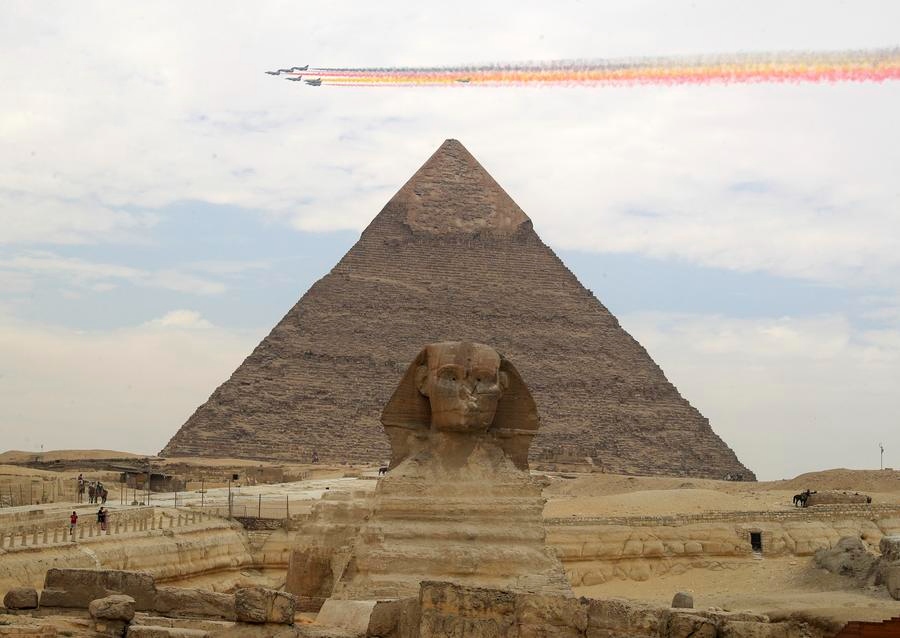
Further highlighting the growing military interoperability, Egypt and China conducted their first-ever joint air force drills, dubbed “Eagles of Civilization 2025,” in April-May 2025. These exercises involved the deployment of advanced Chinese aircraft, including J-10C fighters and Y-20 transports, alongside Egypt’s Russian-made MiG-29M/M2 fighters. The stated aim of these drills was to unify combat concepts between the two sides through theoretical and practical lectures, joint aerial sorties, and simulated air combat management operations, facilitating an exchange of expertise and enhancing the skills of the participating forces. Such joint military exercises, particularly at the air force level, represent a significant advancement in the military relationship, moving beyond simple arms transactions towards building interoperability and mutual trust between the two militaries. This level of engagement indicates a deeper strategic commitment and a willingness to learn from each other’s military practices.
Comparing Arsenals: Chinese vs. Western Military Technology in Egypt
Egypt’s acquisition of Chinese military hardware necessitates a comparison with its existing arsenal, which has historically been dominated by Western, particularly US-made, systems. In the realm of fighter jets, the Chinese J-10CE offers some advantages compared to Egypt’s substantial fleet of US-made F-16s. While the F-16 has a long and established track record, and Egyptian pilots and maintenance crews have extensive experience with the platform , the J-10CE is reported to possess a longer range and is equipped with the advanced PL-15 air-to-air missile. The US has historically refrained from selling Egypt comparable long-range air-to-air missiles like the AIM-120, potentially contributing to Egypt’s interest in the Chinese alternative. While the acquisition of F-35s by Egypt has not been confirmed in the provided snippets, the J-10CE could be seen as a more readily available and potentially cost-effective option for modernizing its air force with advanced capabilities. The procurement of J-10CE fighters addresses some of the limitations Egypt faced due to US restrictions on advanced air-to-air missile capabilities, offering a modern multirole platform with enhanced offensive weaponry.
In terms of air defense systems, the Chinese HQ-9B is a sophisticated long-range system that rivals both the Russian S-400 and comparable Western systems like the US Patriot or THAAD. Integrating the HQ-9B into Egypt’s military architecture provides it with a significantly enhanced capability to defend its airspace against a wide range of threats. This move signals Egypt’s willingness to adopt cutting-edge Chinese technology in a strategically vital area, potentially reducing its reliance on Western or Russian systems for this critical defense layer. The HQ-9B offers Egypt a sophisticated long-range air defense capability that rivals top-tier systems, further bolstering its defensive posture.
Regarding transport aircraft, the Xian Y-20 offers a greater payload capacity and longer range compared to Egypt’s existing fleet of US-made C-130 Hercules aircraft. While the C-130 is a versatile and reliable tactical transport aircraft, the Y-20’s strategic lift capabilities for heavier equipment over longer distances provide Egypt with enhanced power projection and logistical independence. The Y-20 complements Egypt’s existing transport fleet, adding significant capacity for strategic airlift, which is crucial for deploying troops and equipment rapidly across greater distances.
The acquisition and local production of Chinese armed drones like the Wing Loong-1D and ASN-209 provide Egypt with crucial intelligence, surveillance, and reconnaissance (ISR) and strike capabilities. While the US also produces advanced drones like the Predator and Reaper, the willingness of China to engage in local manufacturing and technology transfer offers Egypt a pathway towards greater self-reliance in this critical area. This cooperation provides Egypt with essential modern warfare capabilities, with the added benefit of technology transfer that can contribute to the development of its own defense industrial base.
| Platform Type | Chinese Model | Comparable Western Model | Key Capabilities |
| Fighter Jet | J-10CE | F-16/F-35 | Longer range, PL-15 missile |
| Air Defense System | HQ-9B | Patriot/THAAD | Long-range, rivals S-400 |
| Transport Aircraft | Y-20 | C-130 | Higher payload, longer range |
| Armed Drone | Wing Loong-1D/ASN-209 | Predator/Reaper | ISR and strike capabilities, local manufacturing |
Towards Autonomy: Joint Ventures and Technology Transfer
A significant aspect of the evolving military partnership between Egypt and China is the focus on joint ventures and technology transfer. The local manufacturing of drones like the Wing Loong-1D and ASN-209 with Chinese technical support is a prime example of this. This transfer of technology is crucial for Egypt’s long-term goal of reducing its dependence on foreign suppliers and building a more self-sufficient defense industry. By gaining the ability to produce advanced military equipment domestically, Egypt can enhance its defense autonomy and potentially create opportunities for future exports.

This is not the first instance of successful defense industrial cooperation between the two nations. The K-8E aircraft program, which began in 2000, involved the joint manufacturing of an Egyptian variant of the Chinese Hongdu JL-8 trainer aircraft at the Arab Organization for Industrialization (AOI) Aircraft Factory in Egypt. This long-term project, with an initial plan to produce 60 aircraft over five years, demonstrates a history of successful collaboration in aircraft manufacturing. This established working relationship and the experience gained from the K-8E program likely provide a solid foundation for future joint ventures in more advanced areas of military technology.
The current trend suggests a potential for expanding such collaborations beyond drones and aircraft into other critical defense sectors. Areas like naval technology, missile development, and even cyber security could be future targets for joint ventures and technology transfer initiatives. This deepening cooperation in defense production would further solidify the strategic partnership and enhance Egypt’s military capabilities while also providing China with access to a key regional partner and potential export market.
Regional Realignment: Impact on Middle East Alliances
The recent developments in Egypt’s defense strategy, particularly the deepening military partnership with China, occur at a time of significant geopolitical shifts in the Middle East. The fact that the United States, Egypt’s traditional military partner, has remained publicly silent on the arrival of the Chinese Y-20 aircraft and other acquisitions has raised speculation about a potential regional realignment. This silence could be interpreted in various ways: perhaps the US is adopting a wait-and-see approach, acknowledging Egypt’s sovereign right to diversify its military partners, or it might indicate a strategic recalibration of its own priorities in the region. Regardless of the specific reasons, the lack of immediate public reaction from Washington suggests a potential shift in the dynamics of the long-standing US-Egypt relationship.
Egypt’s move towards China could also influence other traditional US allies in the Middle East. Nations like Saudi Arabia, the UAE, and Jordan, while maintaining strong ties with the US, have also been increasingly engaging with China on economic and, to a lesser extent, security matters. Egypt’s apparent success in balancing its relationships with both the US and China might embolden other regional actors to explore closer ties with Beijing, potentially leading to a dilution of US influence and the emergence of a more multi-polar security architecture in the Middle East.
Egypt has historically played a significant role as a mediator in the Israeli-Palestinian conflict. It remains to be seen how Egypt’s evolving alliances might affect its diplomatic approach to this and other regional conflicts. While closer ties with China, which has its own perspectives on regional issues, could potentially introduce new nuances to Egypt’s diplomatic positions, its fundamental interest in regional stability and the maintenance of its peace treaty with Israel are likely to remain key drivers of its foreign policy.
The deepening of Egypt-China military ties must be viewed within the broader context of China’s growing influence in the Middle East. Beyond economic investments and the BRI, China has been increasingly active in the diplomatic arena, as evidenced by its role in mediating the recent rapprochement between Iran and Saudi Arabia. Egypt’s enhanced military partnership with China is therefore part of a larger trend of China projecting its influence in a region that has long been dominated by the United States. This growing Chinese engagement represents a challenge to the established order and could lead to a more competitive geopolitical landscape in the Middle East.
Geopolitical Forecast: Long-Term Consequences of China’s Defense Presence
If China continues to deepen its defense footprint in traditionally Western-aligned nations like Egypt, several long-term geopolitical consequences could materialize. One potential outcome is a gradual erosion of US influence in Egypt and the broader Middle East. As Egypt becomes more reliant on Chinese military technology, training, and joint exercises, its dependence on the US for its security needs may decrease, potentially impacting US leverage in the region. This could have implications for US access to the Suez Canal, a vital waterway for global commerce and naval deployments, as well as for the broader regional security arrangements that have been in place for decades.
This shift is likely to contribute to an increasingly multi-polar security architecture in the Middle East. Instead of a US-dominated order, the region could see a more complex interplay of influence, with the US, China, and Russia all actively vying for partnerships and projecting their power. This multi-polarity could offer regional actors like Egypt greater strategic flexibility but could also introduce new complexities and potential for miscalculation in regional security dynamics.
While Egypt’s diversification of its military partners could be seen as a move towards greater strategic autonomy, it also carries potential risks. Balancing relationships with multiple major powers, each with its own strategic interests and priorities, can be a delicate act. Misalignments or competing demands could potentially lead to regional instability or increased competition among external powers for influence.
Ultimately, China’s success in establishing a strong military partnership with a key Middle Eastern nation like Egypt has broader implications for global power dynamics. It signifies China’s growing ability and willingness to project its influence into strategically important regions, challenging the long-standing dominance of the United States in the international arena. This development is a significant indicator of the evolving balance of power and the increasing competition between major global powers for influence and strategic advantage.
Conclusion: Navigating a New Era of Military Partnerships
The arrival of the Chinese Y-20 transport aircraft in Cairo is more than just a routine delivery of military hardware; it serves as a potent symbol of the evolving military partnership between Egypt and China. This analysis has highlighted the historical context of the long-standing US-Egypt military alignment, the various drivers behind Egypt’s recent diversification towards Chinese military technology, and the potential implications of this shift for regional alliances and global power dynamics. The acquisition of advanced Chinese fighter jets, air defense systems, and drones, coupled with joint military exercises and a focus on technology transfer, indicates a strategic decision by Egypt to forge a deeper military relationship with China.
The reasons for this shift are multifaceted, likely including Egypt’s desire for greater autonomy in arms procurement, potential frustrations with US restrictions on certain advanced weaponry, and the broader context of strengthening economic and political ties with China. The silence from the United States regarding these developments suggests a period of assessment and potential recalibration of its own strategic approach to the region.
The long-term consequences of this evolving partnership could be significant, potentially leading to a gradual erosion of US influence in a strategically vital region and contributing to a more multi-polar security architecture in the Middle East. While diversification offers Egypt greater strategic flexibility, it also introduces new complexities in managing its relationships with multiple major powers.
Further research and analysis could focus on the specific terms of technology transfer agreements between Egypt and China, the long-term impact on the interoperability of Egypt’s armed forces as it integrates more Chinese systems, and the evolving perspectives of other regional actors on this growing partnership. The shifting sands of military alliances in the Middle East necessitate continuous monitoring and nuanced understanding to navigate this new era of global power dynamics.


Be the first to comment